info@seagull-health.com
SeagullHealth
语言:
search
new
What Are the Side Effects of Echinocandin Capsules (Cresemba)?
501
Article source: Seagull Pharmacy
Sep 12, 2025

Echinocandin Capsules (Cresemba) is an azole antifungal medication. For patients taking this drug, it is crucial to understand its potential side effects, severe adverse reactions that require vigilance, and medication precautions.

What Are the Side Effects of Echinocandin Capsules (Cresemba)?

Gastrointestinal Reactions

Nausea (incidence rate: 26%)

Vomiting (incidence rate: 25%)

Diarrhea (incidence rate: 22%)

Neurological and Systemic Reactions

Headache (incidence rate: 17%)

Back pain (incidence rate: 10%)

Abnormal Laboratory Test Results

Elevated liver function test indicators (incidence rate: 16%)

Hypokalemia (incidence rate: 14%)

Severe Side Effects of Echinocandin Capsules (Cresemba) That Require Vigilance

Hepatic Adverse Reactions

Reports have shown that Cresemba can cause elevations in liver enzymes (alanine transaminase [ALT], aspartate transaminase [AST], alkaline phosphatase, and total bilirubin).

More severe hepatic adverse reactions include hepatitis, cholestasis, or liver failure, especially in patients with severe underlying diseases such as hematological malignancies.

It is recommended to monitor liver function regularly at the start of and during Cresemba treatment.

If clinical signs and symptoms of liver disease potentially related to Cresemba occur, the drug should be discontinued immediately.

Infusion-Related Reactions

Infusion-related reactions may occur during intravenous administration, including hypotension, dyspnea, chills, dizziness, paresthesia, and hypoesthesia.

If these reactions occur, the infusion should be stopped immediately and appropriate measures taken.

Hypersensitivity Reactions and Severe Skin Reactions

Severe hypersensitivity reactions and severe skin reactions (such as anaphylaxis or Stevens-Johnson syndrome) have been reported during treatment with other azole antifungal drugs.

If a severe skin adverse reaction occurs, Cresemba should be discontinued.

Currently, there is no information on cross-allergy between Cresemba and other azole antifungal drugs, but patients allergic to other azoles should use Cresemba with caution.

Embryo-Fetal Toxicity

Animal studies have shown that Cresemba may cause harm to the fetus.

Pregnant women should use this drug only if the potential benefit outweighs the risk to the fetus.

Patients who become pregnant during treatment should inform their doctor.

Lactating women should not breastfeed.

Drug Particle Issue

Insoluble particles may form in the intravenous formulation after reconstitution.

Administration must be done using an in-line filter.

Precautions for Taking Echinocandin Capsules (Cresemba)

Medication for Special Populations

Pregnant women: Use only if the potential benefit outweighs the risk to the fetus; the potential risks should be informed to pregnant women.

Lactating women: Should not breastfeed.

Children: The efficacy in patients under 18 years of age has not been established.

Elderly patients: No dose adjustment is required.

Patients with renal impairment: No dose adjustment is required, including patients with end-stage renal disease.

Patients with hepatic impairment: No dose adjustment is required for patients with mild to moderate hepatic impairment; patients with severe hepatic impairment should use this drug only if the benefit outweighs the risk, and adverse reactions should be closely monitored.

Precautions for Capsule Administration

Can be taken with or without food.

Should be swallowed whole; do not chew, crush, dissolve, or open the capsule.

Precautions for Intravenous Administration

Must use an in-line filter with a pore size of 0.2 to 1.2 micrometers.

The intravenous infusion time should be at least 1 hour, and the compatible diluent is 250 mL.

Should not be administered as an intravenous bolus injection.

Before and after infusion, the intravenous line should be flushed with 0.9% sodium chloride injection or 5% dextrose injection.

After reconstitution, the solution can be stored at 25°C for a maximum of 1 hour; after dilution, the solution can be stored at room temperature for a maximum of 6 hours (if it cannot be used within 6 hours, it should be refrigerated immediately and used within 24 hours).

Note: For internal discussion among medical personnel only. For specific medication, please consult the attending physician. Drug information may change over time. For the latest information, we recommend adding a medical consultant or consulting for free online.
Recommended Articles
How Effective is Isavuconazonium Sulfate Capsules (Cresemba) in Treatment?
Isavuconazonium Sulfate Capsules (Cresemba) is a broad-spectrum triazole antifungal drug, with isavuconazole as its active ingredient. As a new type of antifungal agent, Cresemba demonstrates unique a...
Precautions for Administration of Isavuconazonium Sulfate Capsules (Cresemba)
Isavuconazonium Sulfate Capsules (Cresemba) is a triazole antifungal drug. As a new-generation broad-spectrum antifungal agent, it exerts its antifungal effect by inhibiting the biosynthesis of ergost...
How to Use Isavuconazonium Sulfate Capsules (Cresemba)
Isavuconazonium Sulfate Capsules (Cresemba) is a triazole antifungal drug primarily indicated for the treatment of invasive aspergillosis and mucormycosis.How to Use Isavuconazonium Sulfate Capsules (...
What Are the Side Effects of Nintedanib (Ofev)?
Nintedanib (Ofev) is a targeted drug used for the treatment of idiopathic pulmonary fibrosis (IPF). It slows down disease progression by inhibiting a variety of tyrosine kinases. Its clinical use may ...
Indications for Safinamide (Xadago)
Safinamide (Xadago) is a selective monoamine oxidase type B (MAO-B) inhibitor, used as an adjunctive medication for the treatment of Parkinson's disease. It was first approved for marketing by the...
How to Use Safinamide (Xadago)
Safinamide (Xadago) is a type B monoamine oxidase (MAO-B) inhibitor. It is used as an adjunctive therapeutic agent to levodopa/carbidopa for the treatment of "off" period symptoms in patient...
Precautions for Safinamide (Xadago) Administration
Safinamide (Xadago) is a selective monoamine oxidase type B (MAO-B) inhibitor. It was approved for marketing by the U.S. FDA in 2017 and is used as an adjunctive treatment for Parkinson's disease ...
How Effective is Safinamide (Xadago) in Treatment?
Safinamide (Xadago) is a selective monoamine oxidase type B (MAO-B) inhibitor. Used as an adjunctive therapeutic agent to levodopa/carbidopa, it is indicated for improving "off" period sympt...
Related Articles
Dosage and Administration, Recommended Dose of Elacestrant (Orserdu)
Elacestrant (Orserdu) is a selective estrogen receptor degrader (SERD), which provides an important treatment option for patients with estrogen receptor-positive, HER2-negative advanced or metastatic ...
What Are the Indications for Elacestrant (Orserdu)?
Elacestrant (Orserdu) is a novel endocrine therapy agent that demonstrates significant value in the treatment of advanced breast cancer with specific gene mutations. As an estrogen receptor antagonist...
What Are the Purchase Channels for Elacestrant (Orserdu)?
With the advancement of medical technology, elacestrant (Orserdu), a targeted drug for breast cancer with specific gene mutations, has brought new treatment options for patients. As the first oral sel...
Adverse Reactions of Capmatinib (Tabrecta)
Capmatinib (Tabrecta) is a highly selective MET inhibitor indicated for the treatment of patients with advanced non-small cell lung cancer harboring MET gene mutations. By precisely inhibiting the act...
What are the Precautions for Capmatinib (Tabrecta) Administration?
Capmatinib (Tabrecta) is a targeted therapy drug for MET gene mutations, demonstrating significant efficacy in the treatment of advanced malignancies such as non-small cell lung cancer.What are the Pr...
Dosage and Administration, Recommended Dosage of Capmatinib (Tabrecta)
Capmatinib (Tabrecta) is a highly selective MET inhibitor, offering a precision treatment option for patients with metastatic non-small cell lung cancer (NSCLC) harboring MET exon 14 skipping mutation...
What Are the Indications for Capmatinib (Tabrecta)?
Capmatinib (Tabrecta) is a targeted therapy medication that plays an important role in the treatment of non-small cell lung cancer associated with specific gene mutations. As a MET kinase inhibitor, i...
What Are the Purchase Channels for Capmatinib (Tabrecta)?
Capmatinib (Tabrecta) is a highly selective MET inhibitor that has demonstrated significant efficacy in patients with metastatic non-small cell lung cancer (NSCLC) harboring MET exon 14 skipping mutat...
New Drugs
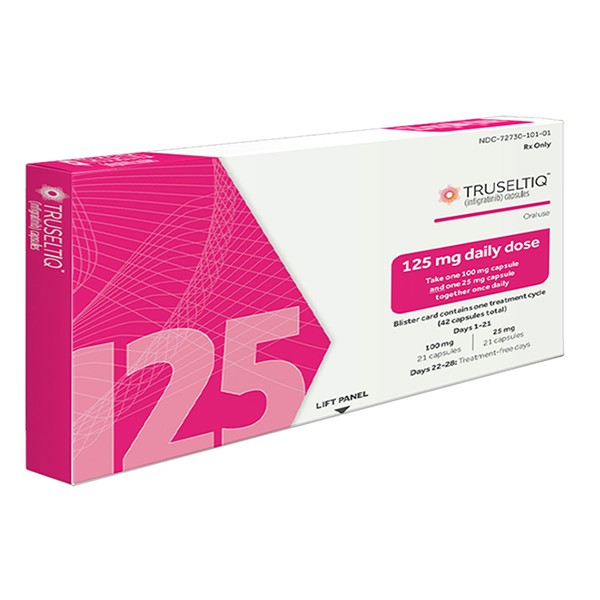
Infigratinib(Truseltiq)
Treatment of previously treated, unresectable locally advanced or metastatic...
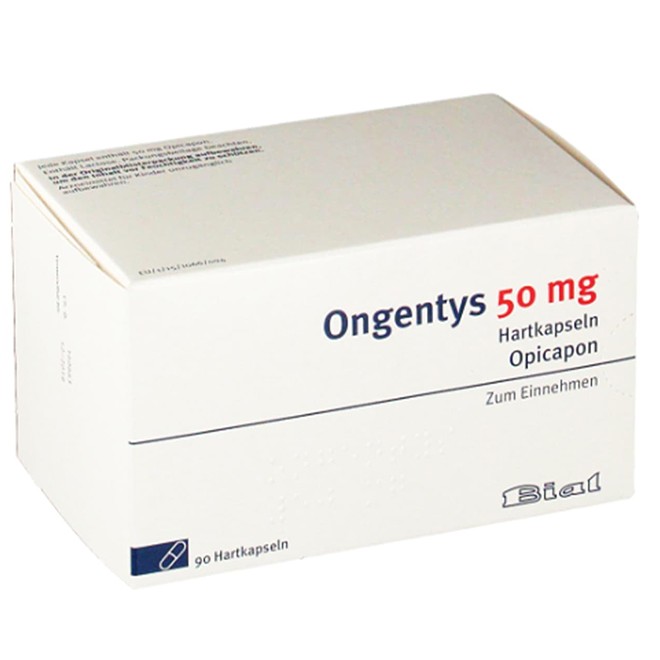
Opicapone(Ongentys)
Opicapone(Ongentys)
Adjunctive treatment to levodopa/carbidopa for reducing "off" episodes in...
Deflazacort(Emflaza)
Treatment of Duchenne muscular dystrophy (DMD) in patients aged 2 years and...
Faricimab-svoa(Vabysmo)
Treatment of neovascular age-related macular degeneration, diabetic macular...
Counselling Service
Global Drug Search
Clinical Research Recruitment
Overseas Medical Treatment
Remote Consultations
Note: Our medical consultant will contact you as soon as possible. We promise to strictly protect your privacy.
Submit
Business
  • Core products
  • Antitumor drugs
  • General drug
  • Antiviral drugs
  • Biological agents
Contact Us 
  • mailbox:info@lucius.la
Welcome to consult
ucius Pharmaceuticals (Lao) Co.,Ltd All rights reserved