info@seagull-health.com
SeagullHealth
语言:
search
new
How to Use Sirolimus Albumin-bound (Fyarro)
504
Article source: Seagull Pharmacy
Sep 10, 2025

Sirolimus Albumin-bound (Fyarro) is an mTOR inhibitor indicated for the treatment of adult patients with locally advanced unresectable or metastatic malignant perivascular epithelioid cell tumors (PEComas).

How to Use Sirolimus Albumin-bound (Fyarro)

Recommended Dosage Regimen

The standard recommended dosage is 100 mg/m², administered via intravenous infusion, with each infusion lasting for 30 minutes.

The administration frequency follows a 21-day treatment cycle, with one dose given on Day 1 and another on Day 8 of each cycle.

This treatment regimen should be continued until disease progression occurs or unacceptable toxicities develop.

Drug Reconstitution and Administration

Sirolimus Albumin-bound (Fyarro) is supplied as a lyophilized powder. Before use, it must be reconstituted with 20 mL of 0.9% Sodium Chloride Injection.

Special attention should be paid to the reconstitution process: The injection should be slowly injected along the inner wall of the vial to avoid direct impact on the lyophilized powder. After injection, allow the vial to stand for at least 5 minutes to fully wet the powder, then gently swirl or invert the vial for at least 2 minutes until the powder is completely dissolved.

The reconstituted suspension should be a milky white, homogeneous liquid with no visible particles. If precipitates or particles are observed, the preparation must be discarded.

Dosage Adjustment of Sirolimus Albumin-bound (Fyarro)

Dosage Adjustment Related to Adverse Reactions

For stomatitis (incidence rate up to 79%):

In case of Grade 2–3 stomatitis, suspend administration until symptoms resolve to Grade ≤1. Maintain the original dosage after the first recurrence; reduce the dosage if recurrence occurs again.

For Grade 4 stomatitis, permanently discontinue the drug.

For myelosuppression (incidence rate: 68% for anemia, 35% each for thrombocytopenia and neutropenia), dosage adjustment is required based on blood test results:

Suspend administration if hemoglobin (Hb) < 8 g/dL; resume treatment with the original dosage after recovery.

Suspend administration if platelets < 100 × 10⁹/L; resume treatment with a reduced dosage after recovery.

For infections (incidence rate 59%):

For Grade 3 infections, suspend administration until symptoms resolve, then resume with a reduced dosage.

For Grade 4 infections, suspend administration and consider permanent discontinuation.

For hypokalemia (incidence rate 44%):

For Grade 2 hypokalemia, suspend administration until symptoms resolve to Grade ≤1, then resume with the original dosage.

For Grade ≥3 hypokalemia, reduce the dosage.

For hyperglycemia (incidence rate 12%): For Grade ≥3 hyperglycemia, suspend administration until symptoms resolve to Grade ≤2, then resume with a reduced dosage.

Dosage Adjustment Related to Drug Interactions

Special caution is required when Fyarro is used concomitantly with CYP3A4 and/or P-gp inhibitors or inducers.

Concomitant use of potent CYP3A4 and/or P-gp inhibitors or inducers should be avoided.

When used concomitantly with moderate or weak CYP3A4 inhibitors, the dosage of Fyarro should be reduced to 56 mg/m².

Precautions for Sirolimus Albumin-bound (Fyarro) Use in Special Populations

Patients with Hepatic Impairment

For patients with mild hepatic impairment (total bilirubin ≤ upper limit of normal [ULN] and aspartate aminotransferase [AST] > ULN, or total bilirubin > 1–1.5 × ULN), the dosage should be reduced to 75 mg/m².

For patients with moderate hepatic impairment (total bilirubin > 1.5–3.0 × ULN), the dosage should be reduced to 56 mg/m².

Use of Fyarro should be avoided in patients with severe hepatic impairment.

Pregnant Women

Based on animal studies and its mechanism of action, Fyarro may cause fetal harm.

In animal experiments, oral sirolimus exhibited embryo/fetal toxicity even at subtherapeutic doses.

Pregnant women should be informed of the potential risks to the fetus. Women of childbearing potential should use effective contraceptive measures during treatment and for 12 weeks after the last dose.

Lactating Women

Currently, there are no data on the distribution of Fyarro in human milk. However, considering the pharmacological effects of sirolimus, it may cause serious adverse reactions in breastfed infants.

It is recommended to avoid breastfeeding during treatment and for 2 weeks after the last dose.

Note: For internal discussion among medical personnel only. For specific medication, please consult the attending physician. Drug information may change over time. For the latest information, we recommend adding a medical consultant or consulting for free online.
Recommended Articles
How to Use ExtraSuperTadarise
ExtraSuperTadarise is a combined preparation, with Tadalafil and Dapoxetine as its main active ingredients. It is used for the treatment of male erectile dysfunction (ED) and premature ejaculation (PE...
How Effective is Cuvrior (Trientine) in Treatment?
Cuvrior (trientine) is a copper chelating agent, with trientine tetrahydrochloride as its main active ingredient. It is indicated for the treatment of Wilson's disease in adult patients who have a...
How Effective is ExtraSuperTadarise?
ExtraSuperTadarise is a combined medication primarily used for the treatment of male erectile dysfunction (ED) and premature ejaculation (PE). Its unique formulation integrates two active ingredients,...
Precautions for Administration of ExtraSuperTadarise
ExtraSuperTadarise is a compound preparation mainly containing Tadalafil and Dapoxetine. It is used for the treatment of male erectile dysfunction (ED) and premature ejaculation (PE). Due to the parti...
What is Selumetinib (Koselugo)?
Selumetinib (Koselugo) is a targeted therapeutic drug for diseases caused by specific gene mutations. Developed by AstraZeneca, it was first approved for marketing by the U.S. FDA in 2020.What is Selu...
What are the Side Effects of Dificid (Fidaxomicin)?
Dificid (Fidaxomicin) is a macrolide antibiotic specifically indicated for the treatment of diarrhea caused by Clostridioides difficile (CDAD).What are the Side Effects of Dificid (Fidaxomicin)?Common...
How Effective is Dificid (Fidaxomicin) in Treatment?
Dificid (Fidaxomicin) is a macrolide antibacterial agent primarily indicated for the treatment of Clostridioides difficile-associated diarrhea (CDAD). As an antibacterial drug that selectively inhibit...
Precautions for Administration of Dificid (Fidaxomicin)
Dificid (Fidaxomicin) is a macrolide antibacterial agent specifically indicated for the treatment of diarrhea caused by Clostridioides difficile (CDAD). It is suitable for pediatric patients aged 6 mo...
Related Articles
How to Use Sirolimus Albumin-bound (Fyarro)
Sirolimus Albumin-bound (Fyarro) is an mTOR inhibitor indicated for the treatment of adult patients with locally advanced unresectable or metastatic malignant perivascular epithelioid cell tumors (PEC...
Indications of Sirolimus Albumin (Fyarro)
Sirolimus Albumin (Fyarro) is a novel antineoplastic agent specifically indicated for the treatment of adult patients with locally advanced unresectable or metastatic malignant perivascular epithelioi...
Who is the manufacturer of Fyarro(Nab-Sirolimus) albumin?
Sirolimus albumin is a doxetine drug that works by inhibiting the growth and division of cancer cells. Studies have found that the drug has a higher concentration in tumor tissue, which means that mor...
Precautions for Fyarro(sirolimus) Albumin (Fyarro)?
Fyarro(sirolimus) albumin, which was approved by the US Food and Drug Administration in November 2021, can be used to treat malignant perivascular epithelioid cell tumors. As an mTOR inhibitor, w...
How to use Fyarro(sirolimus) albumin
Fyarro(sirolimus) albumin has shown significant effectiveness in the treatment of malignant perivascular epithelioid cell tumors, not only improving the survival rate of patients, but also having...
Diseases that may be caused by the use of Fyarro(sirolimus) albumin
Fyarro(sirolimus) albumin (Fyarro) is a drug developed by Edison Pharmaceuticals (AADI) in the United States. The following mainly explains the diseases that may be caused by the use of Fyarro(si...
The survival time of malignant perivascular epithelioid cell tumors exceeds 3 years
In the human body, TSC1 and TSC2 proteins inhibit mammalian target of rapamycin (mTOR) in the form of a complex. Studies have shown that in malignant perivascular epithelioid cell tumors, there is act...
What is Fyarro(sirolimus) albumin?
Fyarro(sirolimus) albumin is a new drug that has been verified by scientific research and clinical trials. Through research and experiments, Fyarro(sirolimus) albumin has been proven to have...
New Drugs
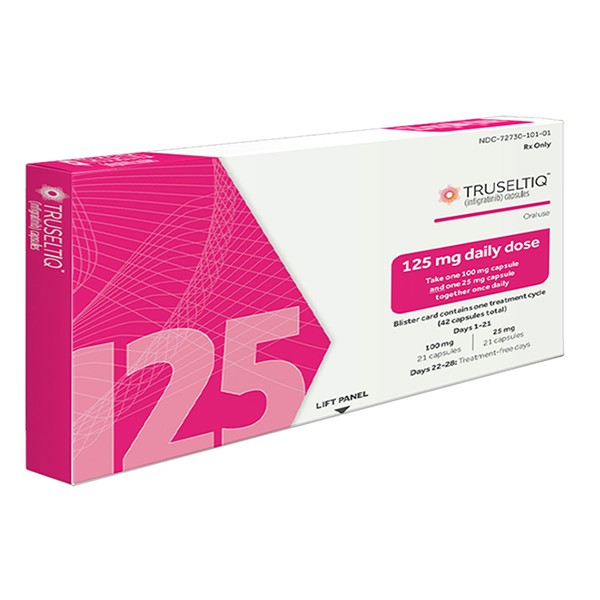
Infigratinib(Truseltiq)
Treatment of previously treated, unresectable locally advanced or metastatic...
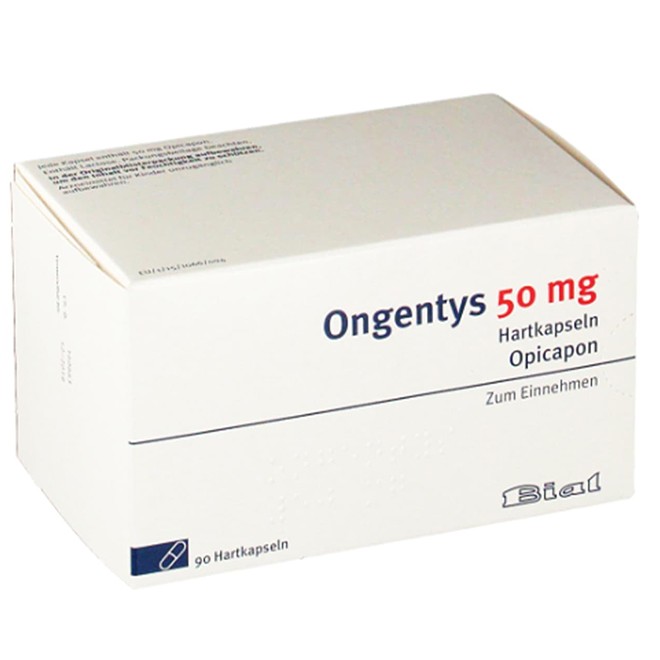
Opicapone(Ongentys)
Opicapone(Ongentys)
Adjunctive treatment to levodopa/carbidopa for reducing "off" episodes in...
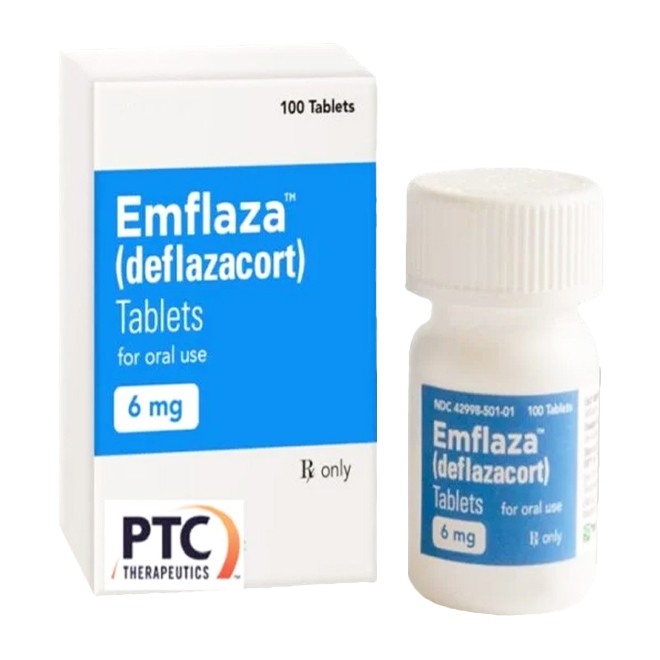
Deflazacort(Emflaza)
Treatment of Duchenne muscular dystrophy (DMD) in patients aged 2 years and...
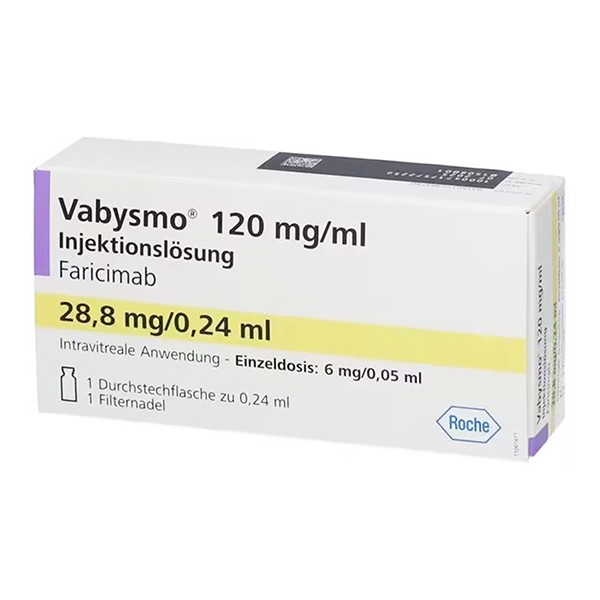
Faricimab-svoa(Vabysmo)
Treatment of neovascular age-related macular degeneration, diabetic macular...
Counselling Service
Global Drug Search
Clinical Research Recruitment
Overseas Medical Treatment
Remote Consultations
Note: Our medical consultant will contact you as soon as possible. We promise to strictly protect your privacy.
Submit
Business
  • Core products
  • Antitumor drugs
  • General drug
  • Antiviral drugs
  • Biological agents
Contact Us 
  • mailbox:info@lucius.la
Welcome to consult
ucius Pharmaceuticals (Lao) Co.,Ltd All rights reserved