info@seagull-health.com
SeagullHealth
语言:
search
new
Dosage and Administration of Lazertinib, Recommended Dosage
504
Article source: Seagull Pharmacy
Dec 29, 2025

Lazertinib is a kinase inhibitor indicated in combination with Amivantamab for the first-line treatment of adult patients with locally advanced or metastatic non-small cell lung cancer (NSCLC) harboring specific epidermal growth factor receptor (EGFR) mutations (exon 19 deletions or exon 21 L858R substitution mutations).

Dosage and Administration of Lazertinib, Recommended Dosage

Standard Dosage and Administration

(1) Lazertinib must be administered in combination with Amivantamab as part of a complete treatment regimen.

(2) Recommended dose: The recommended dosage of Lazertinib is 240 mg, administered orally once daily, with or without food.

(3) Administration method: Lazertinib tablets should be swallowed whole; they must not be crushed, split or chewed. When Lazertinib and Amivantamab are administered on the same day, Lazertinib may be taken at any time prior to Amivantamab infusion.

(4) Treatment duration: Treatment should continue until disease progression or unacceptable toxicity occurs.

(5) Missed dose: If a dose is missed and is remembered within 12 hours of the scheduled time, the patient should be instructed to take the missed dose immediately. If more than 12 hours have elapsed since the scheduled dose time, the patient should skip the missed dose and take the next dose at the regularly scheduled time.

(6) Management of vomiting: If vomiting occurs at any time following administration of Lazertinib, the patient should take the next dose at the regularly scheduled time; an additional dose should not be taken to make up for the vomited dose.

Dosage Modifications for Lazertinib

Venous Thromboembolic (VTE) Events

(1) Grade 2 or 3 VTE: Interrupt Lazertinib and Amivantamab. Initiate anticoagulant therapy per clinical indication. Once anticoagulant therapy is initiated, resume Lazertinib and Amivantamab at the same dose level.

(2) Grade 4 VTE or recurrent Grade 2/3 VTE (despite adequate anticoagulation): Interrupt Lazertinib and permanently discontinue Amivantamab. Lazertinib may be continued at the same dose level upon initiation of anticoagulant therapy, at the physician’s discretion.

(3) Prophylactic therapy: To reduce the risk of VTE, prophylactic anticoagulation is recommended for the first four months following initiation of the combination therapy.

Interstitial Lung Disease (ILD)/Pneumonitis

(1) ILD/pneumonitis of any grade (suspected): Immediately interrupt Lazertinib and Amivantamab.

(2) For confirmed ILD/pneumonitis, permanently discontinue Lazertinib and Amivantamab.

Use in Specific Populations

Patients with Hepatic or Renal Impairment

(1) Mild or moderate renal impairment: No dosage adjustment is recommended. Studies have not been conducted in patients with severe renal impairment or end-stage renal disease.(2) Mild or moderate hepatic impairment: No dosage adjustment is recommended. Studies have not been conducted in patients with severe hepatic impairment.(3) Pediatric patients: The efficacy of Lazertinib in pediatric patients has not been established.

Pregnant Women

(1) Animal studies have demonstrated that Lazertinib may cause fetal harm.

(2) Pregnant women and females of reproductive potential should be informed of the potential risk to the fetus.

(3) Females of reproductive potential are advised to use effective contraception during treatment and for 3 weeks following the last dose of Lazertinib.

Lactating Women

(1) It is unknown whether Lazertinib or its metabolites are excreted in human milk.

(2) Due to the potential risk of serious adverse reactions in breastfed infants, lactating women are advised not to breastfeed during treatment and for 3 weeks following the last dose of Lazertinib.

Note: For internal discussion among medical personnel only. For specific medication, please consult the attending physician. Drug information may change over time. For the latest information, we recommend adding a medical consultant or consulting for free online.
Recommended Articles
Dosage and Administration, Recommended Dose of Flopropione Tablets (Cospanon)
Flopropione Tablets (Cospanon) is a medicine used to relieve spasms of the biliary tract, pancreas and urinary system. Clinically, it is commonly prescribed for biliary dyskinesia, cholelithiasis, cho...
What are the Precautions for Medication with Flopropione Tablets (Cospanon)?
Flopropione Tablets (Cospanon) is a drug indicated for relieving smooth muscle spasms of the hepatobiliary tract, pancreas and urinary system.What are the Precautions for Medication with Flopropione T...
Adverse Reactions of Flopropione Tablets (Cospanon)
Flopropione Tablets (Cospanon) is a drug commonly used for the treatment of smooth muscle spasms caused by hepatobiliary tract diseases, pancreatitis, urinary calculi and other conditions. Its active ...
Where to Purchase Lisinopril (Longes)
Lisinopril (Longes) is a commonly used angiotensin-converting enzyme inhibitor, which is mainly indicated for the treatment of hypertension and chronic heart failure under specific conditions. As a pr...
What are the Indications for Lazertinib?
Lazertinib is an oral kinase inhibitor that received its first approval in the United States in 2024. In combination with Amivantamab, another medicinal product, it provides a novel treatment option f...
Where to Purchase Lazertinib
Lazertinib is an oral kinase inhibitor for combined use with Amivantamab, offering a novel treatment option for patients with advanced non-small cell lung cancer (NSCLC) harboring specific epidermal g...
What are the Precautions for Pretomanid Administration?
Pretomanid is an oral nitroimidazooxazine antimycobacterial agent. As part of a combination therapeutic regimen with bedaquiline and linezolid, it is specifically indicated for the treatment of specif...
Adverse Reactions of Pretomanid
Pretomanid is an oral nitroimidazooxazine antimycobacterial agent indicated for the treatment of pulmonary tuberculosis (TB) in adults with extensively drug-resistant (XDR) or multidrug-resistant (MDR...
Related Articles
Dosage and Administration, Precautions, and Healthy Lifestyle for Cenobamate
Cenobamate is a novel once-daily oral antiepileptic drug. Correct dosage and administration, strict adherence to precautions, and a healthy lifestyle are critical to ensuring its efficacy and safety.I...
Side Effects of Cenobamate and Management Strategies
Cenobamate is an effective novel antiepileptic drug, but it is associated with a range of side effects.I. Side Effects of Cenobamate1. Most Common Side Effects (Incidence ≥10% and higher than placebo)...
Safinamide (Xadago): Domestic Launch and Purchase Guide in China
As an adjunctive treatment for Parkinson’s disease, the accessibility of safinamide in China is a major concern for patients.I. Domestic Launch Status1. Not Yet Launched in Chinese Mainland(1) As of A...
Analysis of the Therapeutic Value and Accessibility of Safinamide (Xadago)
As an adjunctive treatment for "off" episodes in Parkinson’s disease, safinamide’s clinical efficacy, medical insurance coverage, and pricing are common concerns for patients and their famil...
Dosage and Administration, Precautions, and Healthy Living Guidelines for Anagrelide (Agrylin)
Anagrelide is a prescription platelet-lowering medication that must be used precisely under the guidance of a physician.I. Dosage and Administration1. Adult Starting Dose(1) The recommended starting d...
Anagrelide (Agrylin): Side Effects, Management Strategies and Storage Guidelines
Anagrelide is a platelet-lowering agent with well-established efficacy, yet it is associated with a variety of adverse reactions.I. Common Side Effects1. Adverse Reactions with an Incidence Rate ≥ 5%T...
Drug Overview and Administration Guidance for Topiroxostat
Topiroxostat is a non-purine selective xanthine oxidase inhibitor indicated for the treatment of gout and hyperuricemia.I. Pharmaceutical Properties and Mechanism of Action1. Active Ingredient and Dos...
Key Clinical Application Guidelines for Topiroxostat
Topiroxostat is a non-purine selective xanthine oxidase inhibitor that exerts a uric acid-lowering effect by inhibiting uric acid production.I. Indications and Target Population1. Approved Indications...
New Drugs
Infigratinib(Truseltiq)
Treatment of previously treated, unresectable locally advanced or metastatic...
Opicapone(Ongentys)
Opicapone(Ongentys)
Adjunctive treatment to levodopa/carbidopa for reducing "off" episodes in...
Deflazacort(Emflaza)
Treatment of Duchenne muscular dystrophy (DMD) in patients aged 2 years and...
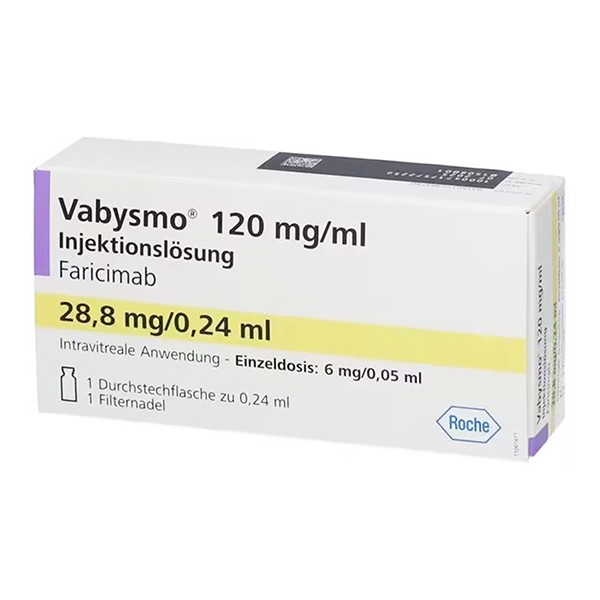
Faricimab-svoa(Vabysmo)
Treatment of neovascular age-related macular degeneration, diabetic macular...
Counselling Service
Global Drug Search
Clinical Research Recruitment
Overseas Medical Treatment
Remote Consultations
Note: Our medical consultant will contact you as soon as possible. We promise to strictly protect your privacy.
Submit
Business
  • Core products
  • Antitumor drugs
  • General drug
  • Antiviral drugs
  • Biological agents
Contact Us 
  • haiousales@gmail.com
Welcome to consult
Seagull Pharmacy.,Ltd All rights reserved