info@seagull-health.com
 SeagullHealth
 search


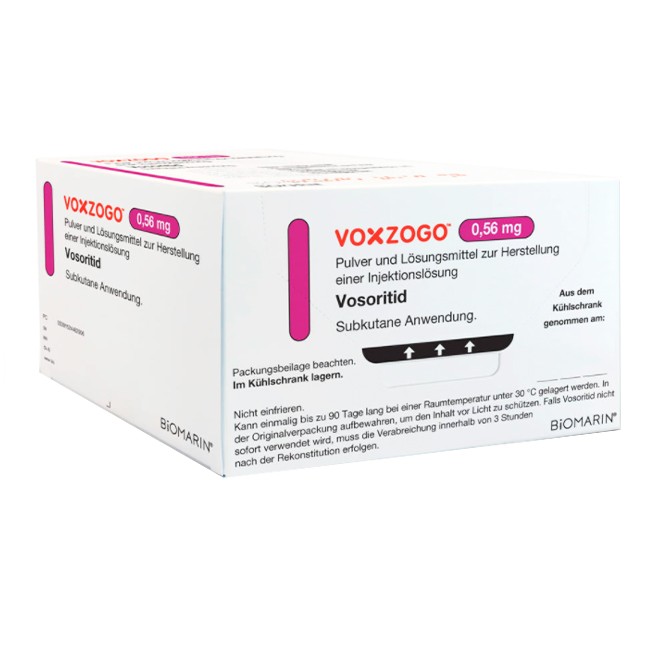


Vosoritide(VOXZOGO)
Reminder: The outer packaging is for reference only, please purchase and use under the guidance of a pharmacist. For read by medical and pharmaceutical professionals only.
VOXZOGO(Vosoritide) Instructions:Uses,Dosage, Side Effects
VOXZOGO (vosoritide) is a recombinant analog of C-type natriuretic peptide (CNP), designed to address the underlying pathophysiology of achondroplasia, the most common form of disproportionate short stature. By binding to natriuretic peptide receptor-B (NPR-B), vosoritide antagonizes the overactive fibroblast growth factor receptor 3 (FGFR3) signaling pathway, which is responsible for impaired endochondral bone growth in achondroplasia. This mechanism promotes chondrocyte proliferation and differentiation, thereby enhancing linear bone growth.
Clinically, VOXZOGO is administered as a once-daily subcutaneous injection, with the dosage individualized according to the patient’s actual body weight. The drug is supplied as a lyophilized powder requiring reconstitution prior to administration. The most common adverse reactions include injection site reactions, vomiting, arthralgia, decreased blood pressure, and elevated alkaline phosphatase. VOXZOGO is not recommended for patients with significant renal impairment (eGFR < 60 mL/min/1.73 m²). Use in pregnancy, lactation, and other special populations is either not recommended or not specified in the specification.
VOXZOGO is indicated to increase linear growth in pediatric patients with achondroplasia who have open epiphyses. This indication is approved under accelerated approval based on improvement in annualized growth velocity. Continued approval may depend on confirmatory clinical benefit.
Dosage is based on actual body weight, administered subcutaneously once daily.
Injection volume and vial strength are determined by weight and reconstituted concentration.
Growth and weight should be monitored every 3–6 months; adjust dose as needed.
Reconstitute with provided diluent; use within 3 hours of reconstitution.
Rotate injection sites; avoid areas of erythema, swelling, or tenderness.
Discontinue permanently upon closure of epiphyses.





- Core products
- Antitumor drugs
- General drug
- Antiviral drugs
- Biological agents
- haiousales@gmail.com