

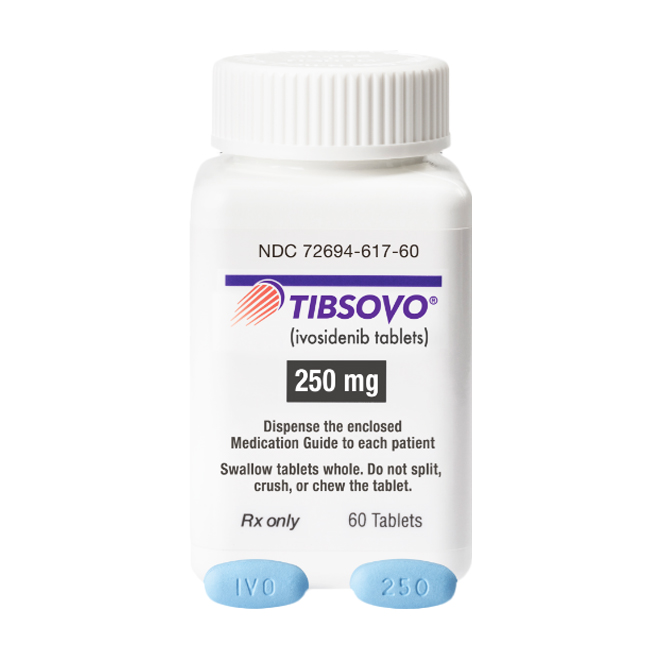
Ivosidenib (Tibsovo) is an isocitrate dehydrogenase 1 (IDH1) inhibitor, primarily indicated for the treatment of patients with acute myeloid leukemia, myelodysplastic syndromes, and cholangiocarcinoma who harbor specific IDH1 gene mutations.
Adverse Reactions of Ivosidenib (Tibsovo)
Hematological Adverse Reactions
Leukopenia: Incidence rate is approximately 65%.
Thrombocytopenia: Incidence rate is approximately 58%.
Decreased hemoglobin: Incidence rate is approximately 56%.
Gastrointestinal Reactions
Diarrhea: Incidence rate is approximately 35%.
Nausea: Incidence rate is approximately 41%.
Vomiting: Incidence rate is approximately 23%.
Adverse Reactions Involving Other Organ Systems
Fatigue: Incidence rate is approximately 43%.
Arthralgia: Incidence rate is approximately 36%.
Myalgia: Incidence rate is approximately 25%.
Severe Adverse Reactions of Ivosidenib (Tibsovo)
Differentiation Syndrome
Newly diagnosed AML treated with combination of azacitidine: Incidence rate is approximately 15%.
Newly diagnosed AML treated with monotherapy: Incidence rate is approximately 25%.
Relapsed/refractory AML: Incidence rate is approximately 19%.
Clinical manifestations: Non-infectious leukocytosis.
Peripheral edema, fever, dyspnea.
Pleural or pericardial effusion, hypotension, hypoxia.
Emergency management: Immediately initiate dexamethasone 10 mg intravenous injection (once every 12 hours).
Or other oral/intravenous corticosteroids at an equivalent dose.
Hemodynamic monitoring should be performed concurrently.
QTc Interval Prolongation
Approximately 14% of AML patients experience QTcF > 500 milliseconds.
22% of patients have a QTcF increase of > 60 milliseconds from baseline.
Management requirements: An electrocardiogram (ECG) should be performed prior to treatment initiation.
ECG monitoring should be conducted weekly during the first three weeks of treatment.
Thereafter, ECG monitoring should be performed monthly until the end of treatment.
Precautions for Ivosidenib (Tibsovo)
CYP3A4 Inhibitors
Strong or moderate CYP3A4 inhibitors may increase the plasma concentration of ivosidenib.
This may elevate the risk of QTc interval prolongation.
Concomitant use with strong or moderate CYP3A4 inhibitors should be avoided as much as possible.
If concomitant use is deemed necessary, the dose of ivosidenib should be reduced to 250 mg once daily.
Key Monitoring Indicators
Hematological monitoring: Hemoglobin, platelet count, white blood cell count.
Cardiac electrophysiological monitoring: Electrocardiogram, electrolytes.
Liver function monitoring: Alkaline phosphatase, aspartate aminotransferase.
Precautions for Administration
Take once daily, at roughly the same time each day.
May be taken with or without food.
Avoid co-administration with high-fat meals.
Swallow the tablets whole; do not split, crush, or chew.
Management of Special Situations
Management after vomiting: If vomiting occurs after administration, do not take an additional dose; wait until the next scheduled dosing time.
Management of missed dose: If a dose is missed or not taken at the regular time, take the missed dose as soon as possible, but this must be at least 12 hours apart from the next scheduled dose.

Free Inquiry