

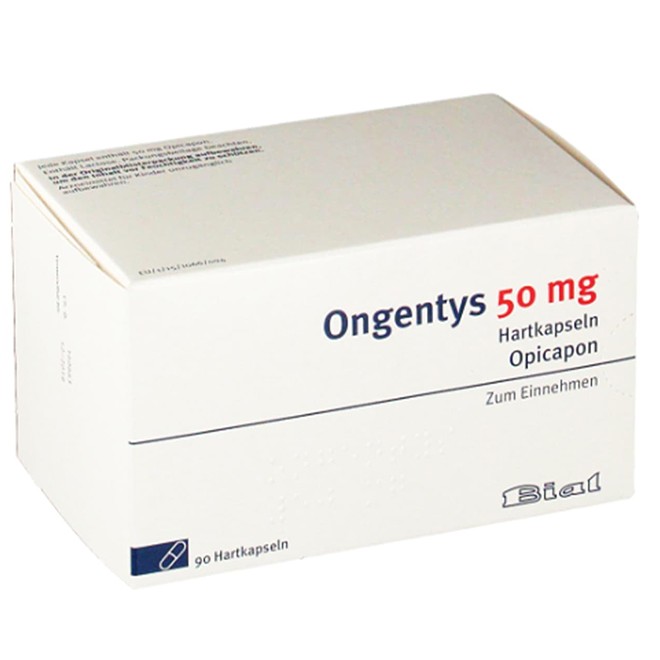
Opicapone (Ongentys) is a selective and reversible catechol-O-methyltransferase (COMT) inhibitor indicated as an adjunctive therapy to levodopa/carbidopa in patients with Parkinson’s disease for the control of “off” episodes.
What are the Precautions for Opicapone (Ongentys) Administration?
Precautions for Medication Use
Administration Timing and Diet:It is recommended to take orally once daily at bedtime. Food intake should be avoided within 1 hour before and after administration.
Patients with Hepatic Impairment:For patients with moderate hepatic impairment (Child-Pugh Class B), the recommended dose is 25 mg once daily at bedtime. Use in patients with severe hepatic impairment (Child-Pugh Class C) is contraindicated.
Contraindications
It is contraindicated in patients concurrently receiving non-selective monoamine oxidase (MAO) inhibitors, as well as patients with a history of pheochromocytoma, paraganglioma, or other catecholamine-secreting tumors.
Serious Adverse Reactions Requiring Vigilance
These include cardiovascular effects (e.g., arrhythmia, increased heart rate, abnormal blood pressure changes), sudden onset of sleep during daily activities (which may occur without premonitory drowsiness), hypotension/syncope, as well as hyperpyrexia and confusion following treatment discontinuation.
Special Populations
It may cause fetal harm when administered to pregnant women. Caution should be exercised in breastfeeding women. Use in patients with end-stage renal disease (ESRD) is contraindicated. Use in patients with a history of major psychotic disorders is not recommended.
Medication Monitoring for Opicapone (Ongentys)
Medication Monitoring Items
Cardiovascular Monitoring:When co-administered with drugs metabolized by COMT (e.g., isoprenaline, adrenaline, noradrenaline, dopamine, dobutamine), close monitoring of cardiac rhythm, heart rate, and blood pressure changes is required.
Dyskinesia Monitoring:This drug may induce or exacerbate dyskinesia. Close observation is necessary; if needed, the dosage of levodopa or other dopaminergic drugs may be reduced.
Psychotic Symptom Monitoring:If a patient develops hallucinations, delusions, irritability, or aggressive behavior, consideration should be given to discontinuing the medication.
Impulse Control/Compulsive Behavior Monitoring:Attention should be paid to whether the patient experiences intense urges for gambling, sexual activity, spending, or binge eating; these behaviors may resolve after treatment discontinuation.
Hepatic and Renal Function Monitoring:Dose reduction is required for patients with moderate hepatic impairment. Use in patients with severe hepatic impairment is contraindicated. Use in patients with end-stage renal disease is also contraindicated.

Free Inquiry