info@seagull-health.com
SeagullHealth
语言:
search
new
Adverse Reactions of Cenobamat
502
Article source: Seagull Pharmacy
Jan 23, 2026

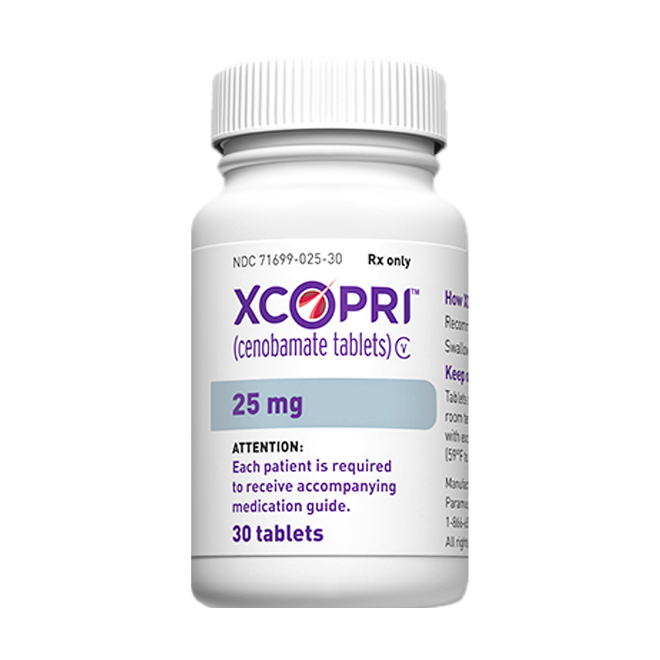
Cenobamat is a medication indicated for the treatment of partial-onset seizures in adult patients. While it demonstrates significant efficacy in seizure control, like other antiepileptic drugs, it may be associated with a range of adverse reactions.

Adverse Reactions of Cenobamat

Common Adverse Reactions

Somnolence and Fatigue: This is one of the most common adverse reactions. Patients may experience abnormal drowsiness, lassitude, lack of energy or asthenia.

Dizziness and Balance Disorders: Including sensations such as dizziness, vertigo, unsteady gait and ataxia (impaired physical coordination).

Visual Disturbances: Mainly manifested as diplopia (double vision); blurred vision may also occur.

Headache: Headache may develop in some patients.

Serious Adverse Reactions of Cenobamat

Severe Hypersensitivity Reactions (DRESS/Multiorgan Hypersensitivity Reaction)

This is a rare but life-threatening systemic hypersensitivity reaction that may involve multiple organs including the skin, lymph nodes, liver, kidneys and heart.

Clinical features may include: skin rash (though not always present).

Fever, lymphadenopathy, and swelling of the face or eyes.

Unexplained severe fatigue, myalgia and sore throat.

Important Warning: If fever, skin rash or any of the aforementioned symptoms occur during treatment, discontinue the medication immediately and seek emergency medical assistance.

QT Interval Shortening

Cenobamat may cause QT interval shortening on electrocardiogram (ECG).

The drug is contraindicated in patients with familial short QT syndrome, as this condition itself is associated with a high risk of sudden cardiac death and ventricular fibrillation.

For other patients, although no dangerous cases of QT interval shortening to less than 300 milliseconds were observed in clinical studies, caution should still be exercised.

Precautions: Concomitant use with other drugs that also prolong QT interval should be avoided to prevent additive effects. Patients who experience prolonged palpitations or syncope should inform their physician promptly.

Risk of Suicidal Ideation and Behavior

Like all antiepileptic drugs, cenobamat may slightly increase the risk of suicidal thoughts or behaviors.

Monitoring Requirements: Patients, their family members and caregivers should closely monitor for changes in mood and behavior, particularly the emergence or exacerbation of depression, anxiety, agitation, aggressiveness, significant mood swings, or any thoughts of self-harm or suicide.

If any of these signs appear, contact a physician immediately.

Withdrawal Reactions and Discontinuation Precautions

Prolonged use of cenobamat may lead to physical dependence.

Abrupt discontinuation is strictly prohibited, as it may trigger a rebound increase in seizure frequency or even status epilepticus (a life-threatening emergency).

If discontinuation is necessary, the dosage must be tapered gradually over a period of at least two weeks under the guidance of a physician.

Immediate discontinuation should only be considered when life-threatening adverse reactions such as severe hypersensitivity occur.

Precautions for Cenobamat Administration

Patients with Hepatic or Renal Impairment

Hepatic Impairment: Caution is advised in patients with mild to moderate hepatic impairment, with the maximum recommended daily dosage not exceeding 200 mg. The use of cenobamat is not recommended in patients with severe hepatic impairment.

Renal Impairment: Caution is required in patients with mild, moderate or severe renal impairment, and dosage adjustment may be necessary. The drug is not recommended for use in end-stage renal disease patients undergoing dialysis.

Contraception

Cenobamat may reduce the efficacy of hormonal oral contraceptives.

During cenobamat treatment, patients must use additional or alternative non-hormonal contraceptive methods (e.g., condoms, intrauterine devices) to prevent unintended pregnancy.

Drug Interactions

Drugs that increase cenobamat concentration: For example, phenytoin. When co-administered, the dosage of phenytoin usually needs to be reduced by up to 50%.

Drugs whose concentration is decreased by cenobamat: For example, lamotrigine, carbamazepine, and certain drugs metabolized via CYP2B6 and CYP3A enzymes (including some oral contraceptives). Dosage adjustment of these drugs may be required.

Drugs whose concentration is increased by cenobamat: For example, phenobarbital, clobazam, and certain drugs metabolized via the CYP2C19 enzyme. Dosage reduction of these drugs may be needed.

Note: For internal discussion among medical personnel only. For specific medication, please consult the attending physician. Drug information may change over time. For the latest information, we recommend adding a medical consultant or consulting for free online.
Cenobamat(Xcopri)
Cenobamat(Xcopri)
It is used for the treatment of partial-onset seizures in adults (with or...
WeChat Scan
Free Inquiry
Recommended Articles
What are the Precautions for Cenobamat Administration?
Cenobamat is an antiepileptic drug indicated for the treatment of partial-onset seizures in adults. As a novel medication, its administration must be strictly in accordance with the doctor’s instructi...
What Are the Purchase Channels for Opicapone (Ongentys)?
Opicapone (Ongentys) is an adjunctive medication for the treatment of Parkinson’s disease. It enhances the efficacy of levodopa by inhibiting the COMT enzyme and is indicated for patients experiencing...
What are the indications for Opicapone (Ongentys)?
Opicapone (Ongentys) is an oral capsule preparation, which was first approved for marketing in the United States in 2020. As a selective and reversible peripheral catechol-O-methyltransferase (COMT) i...
Dosage and Administration, Recommended Dosage of Opicapone (Ongentys)
Opicapone (Ongentys) is a novel, highly selective and reversible peripheral catechol-O-methyltransferase (COMT) inhibitor, which was approved for marketing in the United States in 2020.Dosage and Admi...
What are the Precautions for Opicapone (Ongentys) Administration?
Opicapone (Ongentys) is a selective and reversible catechol-O-methyltransferase (COMT) inhibitor indicated as an adjunctive therapy to levodopa/carbidopa in patients with Parkinson’s disease for the c...
Adverse Reactions of Opicapone (Ongentys)
Opicapone (Ongentys) is an adjunctive therapeutic drug for Parkinson’s disease (PD). As a combination therapy with levodopa/carbidopa, it is indicated to reduce the occurrence of wearing-off phenomena...
What Are the Purchase Channels for Roflumilast Tablets (Daxas)?
Roflumilast Tablets (Daxas) is a selective phosphodiesterase 4 (PDE4) inhibitor, primarily indicated for reducing the risk of acute exacerbations in patients with severe chronic obstructive pulmonary ...
What are the Indications for Roflumilast Tablets (Daxas)?
Roflumilast Tablets (Daxas) are a selective phosphodiesterase 4 (PDE4) inhibitor, primarily indicated for the treatment of chronic obstructive pulmonary disease (COPD).What are the Indications for Rof...
Related Articles
Adverse Reactions of Cenobamat
Cenobamat is a medication indicated for the treatment of partial-onset seizures in adult patients. While it demonstrates significant efficacy in seizure control, like other antiepileptic drugs, it may...
What are the Precautions for Cenobamat Administration?
Cenobamat is an antiepileptic drug indicated for the treatment of partial-onset seizures in adults. As a novel medication, its administration must be strictly in accordance with the doctor’s instructi...
Dosage and Administration of Cenobamat: Recommended Dosage
Cenobamat is a prescription medication indicated for the treatment of focal-onset seizures in adult patients. Proper administration of this drug is crucial to ensure therapeutic efficacy and minimize ...
What Are the Indications for Cenobamat?
Cenobamat is an oral antiepileptic drug primarily indicated for the treatment of partial-onset seizures in adults. First approved in the United States in 2019, it is classified as a novel antiepilepti...
What Are the Purchase Channels for Cenobamat?
Cenobamat is a novel antiepileptic drug indicated for the treatment of partial-onset seizures in adults. Owing to its remarkable efficacy, an increasing number of patients and their families have begu...
Precautions for Cenobamate
Cenobamate, also known as Xcopri, is an anti-neurological drug used to treat partial neurological seizures. It regulates the activity of GABAA receptors and reduces the overexcitation of neurons, ther...
Possible side effects of Cenobamat
Cenobamat is also called Ontozry, Xcopri, and Senbacot. The active ingredient is Cenobamat. It is suitable for treating the onset of partial diseases in adult patients. It is not yet available in my c...
Cenobamat Use Guidelines
Phenobarbital is a drug used to treat certain types of epilepsy. The correct use of Cenobamat is important for achieving optimal efficacy and reducing side effects. This article will provide deta...
New Drugs
Infigratinib(Truseltiq)
Treatment of previously treated, unresectable locally advanced or metastatic...
Opicapone(Ongentys)
Opicapone(Ongentys)
Adjunctive treatment to levodopa/carbidopa for reducing "off" episodes in...
Deflazacort(Emflaza)
Treatment of Duchenne muscular dystrophy (DMD) in patients aged 2 years and...
Faricimab-svoa(Vabysmo)
Treatment of neovascular age-related macular degeneration, diabetic macular...
Counselling Service
Global Drug Search
Clinical Research Recruitment
Overseas Medical Treatment
Remote Consultations
Note: Our medical consultant will contact you as soon as possible. We promise to strictly protect your privacy.
Submit
Business
  • Core products
  • Antitumor drugs
  • General drug
  • Antiviral drugs
  • Biological agents
Contact Us 
  • haiousales@gmail.com
Welcome to consult
Seagull Pharmacy.,Ltd All rights reserved