

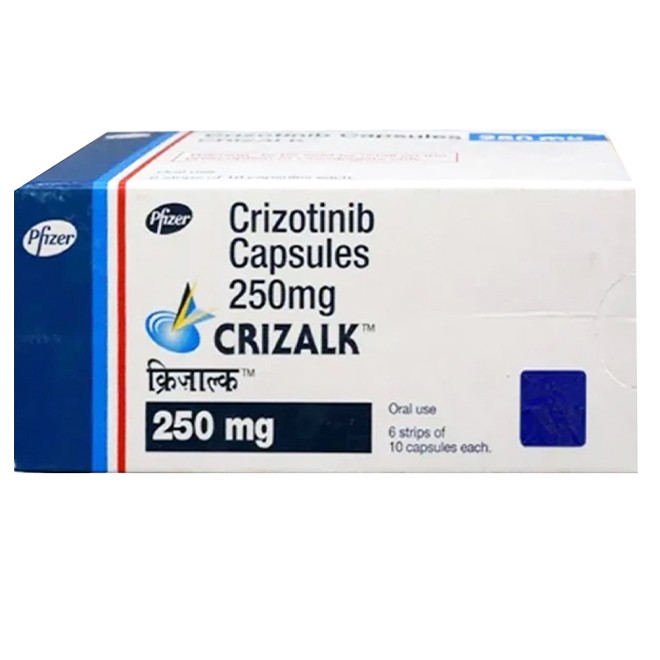
Crizotinib is a multi-target kinase inhibitor that demonstrates significant efficacy in diseases such as ALK-positive or ROS1-positive non-small cell lung cancer (NSCLC), ALK-positive anaplastic large cell lymphoma (ALCL), and inflammatory myofibroblastic tumors (IMTs). While achieving clinical benefits, it is crucial to fully understand the characteristics of its adverse reactions, warnings of severe side effects, and key points of standardized medication use.
What Are the Side Effects of Crizotinib?
In Patients with Non-Small Cell Lung Cancer (NSCLC)
The most common adverse reactions (≥25%) include: visual disturbance (71%), nausea (56%), diarrhea (61%), vomiting (46%), edema (49%), constipation (43%), and elevated transaminases (ALT: 79% / AST: 66%).
In Patients with Anaplastic Large Cell Lymphoma (ALCL)
The most common adverse reactions (≥35%) include: diarrhea (92%), vomiting (92%), nausea (77%), visual disturbance (65%), headache (58%), musculoskeletal pain (46%), and stomatitis (46%).
In Patients with Inflammatory Myofibroblastic Tumors (IMTs)
Adults: Visual disturbance (57%), nausea (43%), edema (29%).
Children: Vomiting (93%), nausea (86%), diarrhea (64%), abdominal pain (57%), rash (57%), visual disturbance (50%), upper respiratory tract infection (64%), cough (64%).
Severe Adverse Reactions of Crizotinib
Hepatotoxicity (Incidence: 0.1%)
It may cause fatal liver injury, manifested as elevated ALT/AST (>5 times the upper limit of normal in 11% of cases), which mostly occurs within the first 2 months of treatment.
Liver function must be monitored every 2 weeks; treatment should be suspended, the dose reduced, or permanently discontinued based on the severity.
Interstitial Lung Disease (ILD)/Pneumonitis (Incidence: 2.9%)
It can be life-threatening in severe cases, with 0.5% being fatal ILD.
It usually occurs within 3 months after the start of treatment.
Once diagnosed, treatment must be permanently discontinued immediately.
QTc Interval Prolongation (Incidence: 2.1%)
It may induce malignant arrhythmias such as torsades de pointes.
Electrocardiograms and electrolytes must be monitored regularly; for patients with QTc > 500ms, medication should be suspended and the dose adjusted.
Severe Vision Loss (Incidence: 0.2%)
It may cause partial or complete vision loss due to optic atrophy or other reasons.
Visual symptoms should be evaluated monthly during treatment; if severe vision loss is detected, treatment must be permanently discontinued.
Precautions for Crizotinib
Standards for Dose Adjustment
The dose should be accurately calculated based on different indications and body surface area.
The standard dose for adult NSCLC is 250mg twice daily, while the recommended dose for pediatric patients is 280mg/m² twice daily.
Administration Methods
Capsules: Must be swallowed whole; chewing is not allowed.
Oral Granules: Must be removed from the capsule shell before administration.
Key Monitoring Points
Liver function: Monitored every 2 weeks for the first 2 months of treatment, then monthly thereafter.
Blood cell count: Monitored weekly for the first month, then at least monthly thereafter.
Ophthalmic examination: Retinal examination should be performed before treatment and every 3 months during treatment.

Free Inquiry