

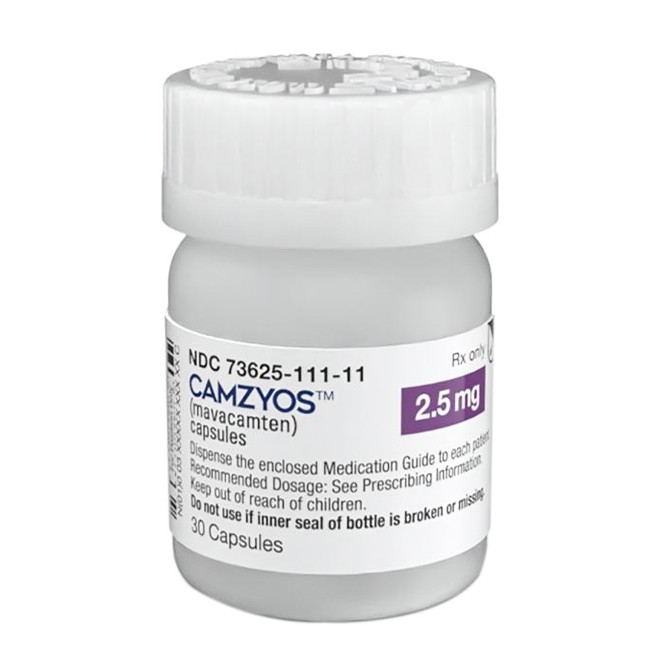
Mavacamten (Camzyos) is used for the treatment of obstructive hypertrophic cardiomyopathy with significant efficacy, but side effects may occur during administration.
I. Common Side Effects
1. Dizziness and Syncope
(1) In clinical studies, dizziness and syncope (transient loss of consciousness) were the most common adverse reactions.
(2) These two reactions are mostly related to the drug’s effects on cardiac function and blood pressure, and usually occur in the early stage of treatment or during dose adjustment.
2. Cardiac Function-Related Effects
(1) By inhibiting cardiac myosin to reduce myocardial contractility, this product may cause a reversible decrease in left ventricular ejection fraction (LVEF).
(2) Some patients may develop new or worsening heart failure manifestations such as dyspnea, chest pain, fatigue, palpitations, and lower extremity edema.
3. Other Potential Reactions
(1) A small number of patients may experience fatigue, hypotension, and other symptoms.
(2) It should be noted that individual responses to the drug vary. Patients with different CYP2C19 metabolizer genotypes have substantial differences in drug exposure, leading to varying risks of side effects.
II. Side Effect Management and Mitigation Methods
1. Regular Monitoring Is Essential
(1) Echocardiography must be performed regularly before and during treatment to monitor LVEF and left ventricular outflow tract gradient.
(2) If LVEF falls below 50%, treatment should be interrupted, and a physician will assess whether to resume therapy after cardiac function recovers.
(3) Regular monitoring enables early detection of cardiac dysfunction and prevents severe heart failure.
2. Prompt Symptom Reporting
(1) Immediate medical attention is required if new or worsening dyspnea, chest pain, extreme fatigue, palpitations, lower extremity swelling, rapid weight gain, or pre-syncope occurs.
(2) Patients should record changes in symptoms to facilitate timely dose adjustment or treatment interruption by the physician.
3. Avoidance of Precipitating Factors
(1) During acute conditions such as severe infection or arrhythmia (e.g., atrial fibrillation), the risk of heart failure increases; treatment interruption or delay in dose up-titration is recommended.
(2) Do not use medications that affect cardiac function without medical authorization during treatment, such as specific combinations of certain antiarrhythmics, calcium channel blockers, and beta-blockers.
4. Standardized Concomitant Medication
(1) Many over-the-counter medications (e.g., omeprazole, cimetidine) may affect the metabolism of mavacamten, increase drug exposure, and raise the risk of heart failure.
(2) Before using any new medication, inform the treating physician for professional assessment of drug interaction risks and dose adjustment.
III. Storage Requirements
1. Temperature Conditions
(1) Mavacamten capsules should be stored at room temperature between 20°C and 25°C (68°F and 77°F).
(2) Short-term temperature fluctuations between 15°C and 30°C (59°F and 86°F) are permitted, but prolonged exposure to excessively high or low temperatures should be avoided.
2. Handling
(1) The bottle cap should be tightly closed after each use to prevent moisture absorption.
(2) Capsules should be swallowed whole; do not open or chew them.
3. Light and Moisture Protection
(1) The medication should be stored in a dry, light-protected place, away from humid environments such as bathrooms and kitchens.
(2) Avoid direct sunlight or proximity to heat sources such as radiators and stoves.
(3) All medications must be kept out of reach of children to prevent accidental ingestion.
4. Disposal of Expired Medication
(1) Expired medication must not be used.
(2) Discard unused medication properly in accordance with the package insert or pharmacist’s instructions to avoid accidental use or environmental pollution.

Free Inquiry