

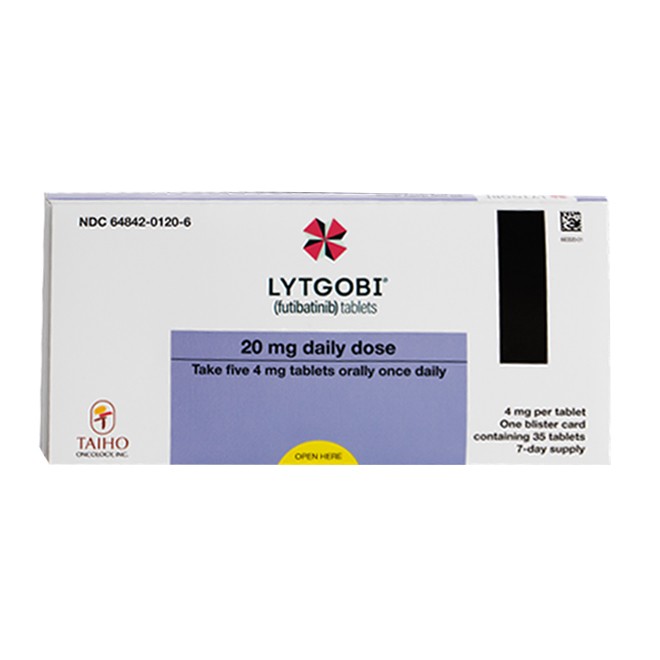
Futibatinib is a kinase inhibitor indicated for the treatment of adult patients with previously treated, unresectable, locally advanced or metastatic intrahepatic cholangiocarcinoma who harbor fibroblast growth factor receptor 2 (FGFR2) gene fusions or other rearrangements.
Dosage and Administration of Futibatinib
Recommended Dose
The recommended dose of futibatinib is 20 mg orally once daily.
Patients may opt for either five 4 mg tablets, or a combination of one 16 mg tablet plus one 4 mg tablet.
Treatment should continue until disease progression or unacceptable toxicity occurs.
Administration Method
It is recommended that patients take the medication at approximately the same time each day, either with food or on an empty stomach.
The tablets should be swallowed whole. Do not crush, chew, split, or dissolve the tablets, so as to ensure the stable release and absorption of the drug.
Management of Missed Dose or Vomiting
If a patient misses a dose by more than 12 hours, or experiences vomiting after taking the medication, no additional dose is required.
Resume the normal dose at the next scheduled administration time. Do not take a double dose to make up for the missed one.
Dose Modification of Futibatinib
Dose Reduction Criteria
First dose reduction: Decrease the dose to 16 mg orally once daily (equivalent to four 4 mg tablets or one 16 mg tablet).
Second dose reduction: Further decrease the dose to 12 mg orally once daily (equivalent to three 4 mg tablets).
If the patient cannot tolerate the daily dose of 12 mg, permanent discontinuation of futibatinib is required.
Dose Modification for Specific Adverse Reactions
Ocular toxicity: In case of retinal pigment epithelial detachment (RPED), treatment can usually be continued at the current dose with ophthalmologic monitoring. If symptoms resolve within 14 days, continue the medication. If symptoms do not resolve, suspend administration until symptoms subside, then resume treatment at the previous or a lower dose.
Hyperphosphatemia: This is a common reaction related to the pharmacological effects of futibatinib. Measures should be taken based on the serum phosphate level.
For serum phosphate levels between 5.5–7 mg/dL, maintain the current dose and initiate hypophosphatemic therapy.
Use in Special Populations
Pregnant Women and Women of Reproductive Potential
Futibatinib has potential teratogenic risks to the fetus, which may cause fetal malformation, growth retardation, or even fetal death.
A pregnancy test must be performed for women of reproductive potential before initiating treatment.
During treatment and within 1 week after the last dose, female patients and their male partners (if the male’s female partner is of reproductive potential or pregnant) must use effective contraceptive measures.
Lactating Women
There are currently no data available on whether futibatinib or its metabolites are excreted in human milk.
Considering the potential serious risks to breastfed infants, it is recommended that women should not breastfeed during treatment and within 1 week after the last dose.

Free Inquiry