

Futibatinib is a targeted drug indicated for the treatment of cholangiocarcinoma with specific genetic abnormalities. As a prescription medication, it must be used under the guidance of a physician. For patients and their family members in need of this drug, it is crucial to understand the legitimate purchase channels, key precautions, and methods to identify counterfeit drugs.
What Are the Purchase Channels for Futibatinib?
Overseas Purchase
Patients may opt to consult and purchase the drug at hospital pharmacies or licensed pharmacies in countries or regions where futibatinib has been approved for marketing.
Since drug prices may be affected by factors such as regional differences and exchange rate fluctuations, patients need to make a budget and plan in advance before purchasing.
Purchase via Medical Service Institutions
Patients can consult domestic overseas medical service institutions that cooperate with international pharmacies or pharmaceutical companies.
These institutions typically provide legal import channels and offer professional consultation and guidance.
Precautions for Purchasing Futibatinib
Strictly Follow Doctor’s Advice and Purchase with a Prescription
Futibatinib is a prescription drug, and a valid prescription must be issued by a qualified oncologist based on the patient’s genetic testing results and disease assessment.
Do not self-diagnose, purchase, or administer the drug without medical supervision.
Confirm Necessary Examinations Before Medication Initiation
According to the drug label, a comprehensive ophthalmologic examination (including optical coherence tomography) must be performed before the start of treatment to establish a baseline of visual function, with regular re-examinations during the treatment course.
Ensure that these necessary medical evaluations have been completed before purchasing the drug.
Understand and Prepare for Common Adverse Reactions
Common adverse reactions of futibatinib include hyperphosphatemia, nail toxicity, ocular toxicity (e.g., dry eye, retinopathy), fatigue, and gastrointestinal reactions.
Prior to purchase, patients should fully communicate with their physician to understand the potential adverse reactions and corresponding management strategies (e.g., use of phosphate-lowering drugs, artificial tears).
Pay Attention to Drug Interactions
Concurrent use of futibatinib with certain medications may affect efficacy or increase toxicity.
Inform your physician of all medications you are taking (including prescription drugs, over-the-counter drugs, and dietary supplements), especially potent CYP3A inhibitors (e.g., some antifungal agents) or inducers (e.g., rifampicin).
Avoid consuming grapefruit or drinking grapefruit juice during treatment.
How to Identify Authentic and Counterfeit Futibatinib?
Check the Outer Packaging and Labeling
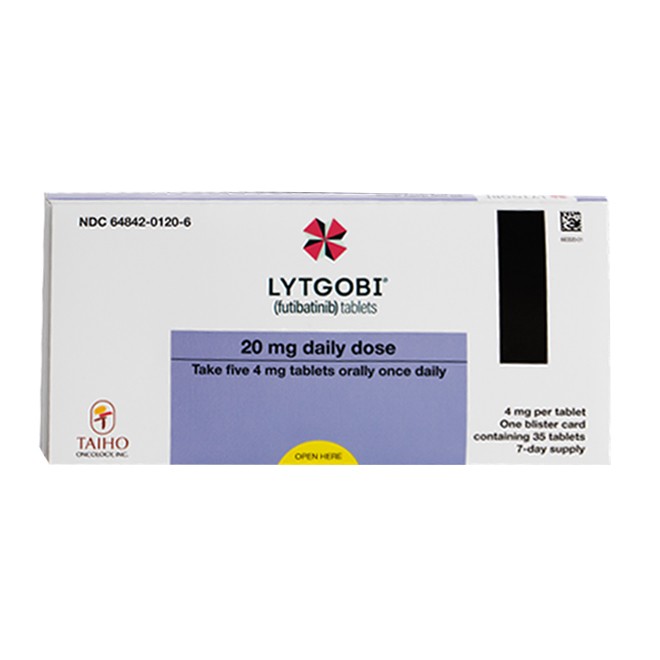
The outer packaging of futibatinib from legitimate channels should feature clear printing and complete information.
Brand name and generic name: Clearly marked with LYTGOBI and futibatinib.
Specification: Verify whether it is the 4 mg or 16 mg tablet formulation.
Manufacturing information: Clearly indicate the manufacturer as Taiho Pharmaceutical Co., Ltd., along with repackager or distributor information (if applicable).
Approval number: Check for the drug registration approval number (import drug license number) issued by the National Medical Products Administration (NMPA) of China.
Batch number and expiration date: The text should be legible without any signs of alteration.
Verify the Physical Characteristics of the Drug
4 mg tablets: Round, engraved with 4MG on one side and FBN on the other side.
16 mg tablets: Round, engraved with 16MG on one side and FBN on the other side.
The tablets should have a uniform texture, without fragmentation, deliquescence, discoloration, or unusual odor.

Free Inquiry