info@seagull-health.com
SeagullHealth
语言:
search
new
How to Use Deflazacort (Calcort)
505
Article source: Seagull Pharmacy
Oct 17, 2025

Deflazacort (Calcort) is a glucocorticoid drug with anti-inflammatory and immunosuppressive effects. Clinically, it is mainly used to treat various inflammatory diseases and autoimmune diseases. The rational use of deflazacort requires consideration of the patient's specific conditions, the severity of the disease, and potential side effects.

How to Use Deflazacort (Calcort)

Route and Timing of Administration

Deflazacort is usually administered orally, and it is recommended to take the full daily dose at one time before 8 a.m.

This administration timing mimics the circadian rhythm of the body's natural cortisol secretion, which can minimize the inhibition of the hypothalamic-pituitary-adrenal axis.

For patients requiring high-dose treatment, the daily dose may also be divided into 2-4 administrations. However, administration after evening should be avoided as much as possible to reduce adverse reactions such as insomnia.

Precautions for Administration with Food

Deflazacort can be taken with food or on an empty stomach. To ensure a stable blood drug concentration, it is recommended to take it at the same fixed time every day or follow the doctor's specific instructions.

A high-fat diet may slightly increase the absorption of the drug, but it usually does not significantly affect the clinical effect.

For patients with gastrointestinal sensitivity, it is recommended to take the drug with food to reduce stomach discomfort.

Principles of Discontinuation

Deflazacort should not be discontinued suddenly after long-term use; instead, the dose should be gradually reduced.

Sudden discontinuation may lead to adrenal insufficiency, manifested as symptoms such as fatigue, hypotension, and hypoglycemia.

The dose reduction plan should be formulated based on the duration of medication and the dose level. Usually, the dose is reduced every 5-7 days until complete discontinuation.

Special attention to gradual dose reduction is required for patients who have used the drug for more than 2 weeks.

Dose Adjustment of Deflazacort (Calcort)

Adjustment During Treatment

During the treatment process, the dose should be adjusted according to the therapeutic effect and tolerance.

After the symptoms are controlled, the dose should be gradually reduced to the minimum effective dose.

If the therapeutic effect is not satisfactory, after ruling out other factors (such as compliance issues, drug interactions, etc.), an appropriate increase in dose may be considered.

The magnitude of each dose adjustment usually does not exceed 25-50% of the current dose, and the interval between adjustments is not less than 3-5 days.

Adjustment for Patients with Liver Dysfunction

Special attention is required when deflazacort is used in patients with liver dysfunction.

Since the liver is the main organ for glucocorticoid metabolism, liver function impairment may lead to slowed drug clearance and increased blood drug concentration.

For patients with mild to moderate liver dysfunction, it is recommended to reduce the initial dose by 20-50%.

Patients with severe liver dysfunction should avoid using the drug or use it with extreme caution, and closely monitor for adverse reactions.

Medication for Special Populations of Deflazacort (Calcort)

Pediatric Medication

Long-term use of glucocorticoids in children may affect growth and development, so the indications and course of treatment must be strictly controlled.

The lowest effective dose should be used, and growth indicators should be monitored regularly.

For children who must receive long-term treatment, alternate-day administration therapy may be considered to reduce the inhibition of growth.

Live vaccine vaccination for children should be postponed until at least 3 months after discontinuing glucocorticoids.

Geriatric Medication

Elderly patients using deflazacort are more prone to adverse reactions such as hypertension, diabetes, and osteoporosis.

It is recommended to start with the lower limit of the adult dose and closely monitor blood pressure, blood glucose, and electrolytes.

Attention should be paid to the risk of drug interactions, as the elderly often use multiple drugs simultaneously.

For elderly patients with cognitive impairment, special attention should also be paid to the management of medication compliance.

Note: For internal discussion among medical personnel only. For specific medication, please consult the attending physician. Drug information may change over time. For the latest information, we recommend adding a medical consultant or consulting for free online.
Recommended Articles
Precautions for Administration of Deflazacort (Calcort)
Deflazacort (Calcort) is a glucocorticoid drug primarily used for the treatment of Duchenne muscular dystrophy (DMD) and other inflammatory or autoimmune diseases. As a hormonal drug that requires lon...
How Effective is Deflazacort (Calcort) in Treatment?
Deflazacort (Calcort) is a glucocorticoid drug, and its active ingredient, Deflazacort, exerts anti-inflammatory and immunosuppressive effects.How Effective is Deflazacort (Calcort) in Treatment?Main ...
What Are the Side Effects of Deflazacort (Calcort)?
Deflazacort (Calcort) is a glucocorticoid drug primarily used for the treatment of Duchenne muscular dystrophy (DMD) as well as other inflammatory or autoimmune diseases. Although its efficacy is well...
How to Use Tretinoin Capsules
Tretinoin Capsules are a retinoid-based targeted drug used for the treatment of acute promyelocytic leukemia (APL). It exerts therapeutic effects by inducing the differentiation of leukemic cells and ...
Indications for Deflazacort (Calcort)
Deflazacort (Calcort) is a glucocorticoid drug mainly used to treat a variety of inflammatory and autoimmune diseases.Indications for Deflazacort (Calcort)Duchenne Muscular Dystrophy (DMD)Deflazacort ...
Precautions for Eltrombopag (Revolade) Use
Eltrombopag (Revolade) is a thrombopoietin receptor agonist used to treat chronic immune thrombocytopenia (ITP), chronic hepatitis C-associated thrombocytopenia, and severe aplastic anemia. It increas...
How to Use Eltrombopag (Revolade)
Eltrombopag (Revolade) is a thrombopoietin receptor agonist, primarily used clinically for the treatment of chronic immune thrombocytopenia (ITP), chronic hepatitis C-associated thrombocytopenia, and ...
Indications for Eltrombopag (Revolade)
Eltrombopag (Revolade) is a thrombopoietin receptor agonist developed by GlaxoSmithKline, mainly used to treat thrombocytopenia caused by various reasons.Indications for Eltrombopag (Revolade)Chronic ...
Related Articles
Dosage and Administration, Recommended Dosage of Capmatinib (Tabrecta)
Capmatinib (Tabrecta) is a highly selective MET inhibitor, offering a precision treatment option for patients with metastatic non-small cell lung cancer (NSCLC) harboring MET exon 14 skipping mutation...
What Are the Indications for Capmatinib (Tabrecta)?
Capmatinib (Tabrecta) is a targeted therapy medication that plays an important role in the treatment of non-small cell lung cancer associated with specific gene mutations. As a MET kinase inhibitor, i...
What Are the Purchase Channels for Capmatinib (Tabrecta)?
Capmatinib (Tabrecta) is a highly selective MET inhibitor that has demonstrated significant efficacy in patients with metastatic non-small cell lung cancer (NSCLC) harboring MET exon 14 skipping mutat...
Adverse Reactions of Ivosidenib (Tibsovo)
Ivosidenib (Tibsovo) is an isocitrate dehydrogenase 1 (IDH1) inhibitor, primarily indicated for the treatment of patients with acute myeloid leukemia, myelodysplastic syndromes, and cholangiocarcinoma...
What Are the Precautions for Using Ivosidenib (Tibsovo)?
Ivosidenib (Tibsovo) is a targeted therapy medication primarily indicated for the treatment of patients with malignant hematologic diseases harboring specific gene mutations.What Are the Precautions f...
Dosage and Administration, Recommended Dosage of Ivosidenib (Tibsovo)
Ivosidenib (Tibsovo) is a targeted isocitrate dehydrogenase 1 (IDH1) inhibitor that demonstrates significant value in the treatment of malignant tumors with specific gene mutations.Dosage and Administ...
What Are the Indications for Ivosidenib (Tibsovo)?
Ivosidenib (Tibsovo) is an oral isocitrate dehydrogenase-1 (IDH1) inhibitor indicated for patients with various malignant tumors harboring specific IDH1 gene mutations. By inhibiting the activity of m...
What Are the Purchase Channels for Ivosidenib (Tibsovo)?
Ivosidenib (Tibsovo) is an important targeted therapy drug against IDH1 mutations, demonstrating significant efficacy in diseases such as acute myeloid leukemia and cholangiocarcinoma. For patients in...
New Drugs
Infigratinib(Truseltiq)
Treatment of previously treated, unresectable locally advanced or metastatic...
Opicapone(Ongentys)
Opicapone(Ongentys)
Adjunctive treatment to levodopa/carbidopa for reducing "off" episodes in...
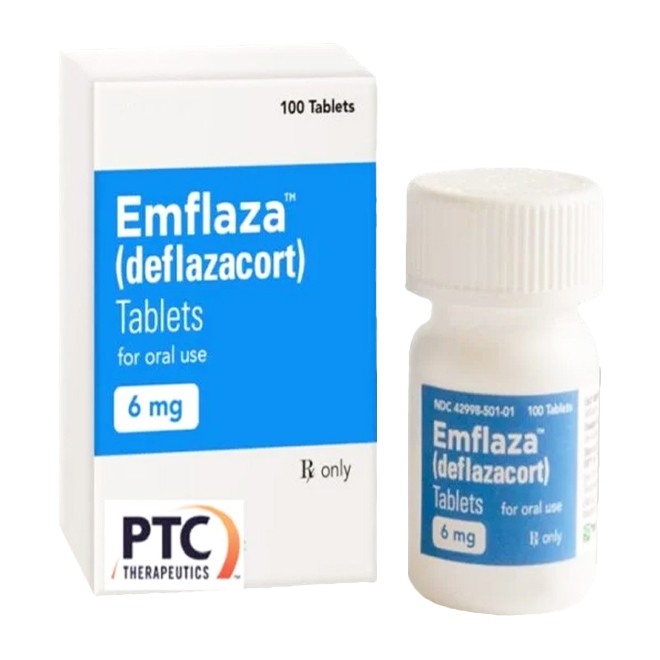
Deflazacort(Emflaza)
Treatment of Duchenne muscular dystrophy (DMD) in patients aged 2 years and...
Faricimab-svoa(Vabysmo)
Treatment of neovascular age-related macular degeneration, diabetic macular...
Counselling Service
Global Drug Search
Clinical Research Recruitment
Overseas Medical Treatment
Remote Consultations
Note: Our medical consultant will contact you as soon as possible. We promise to strictly protect your privacy.
Submit
Business
  • Core products
  • Antitumor drugs
  • General drug
  • Antiviral drugs
  • Biological agents
Contact Us 
  • mailbox:info@lucius.la
Welcome to consult
ucius Pharmaceuticals (Lao) Co.,Ltd All rights reserved