

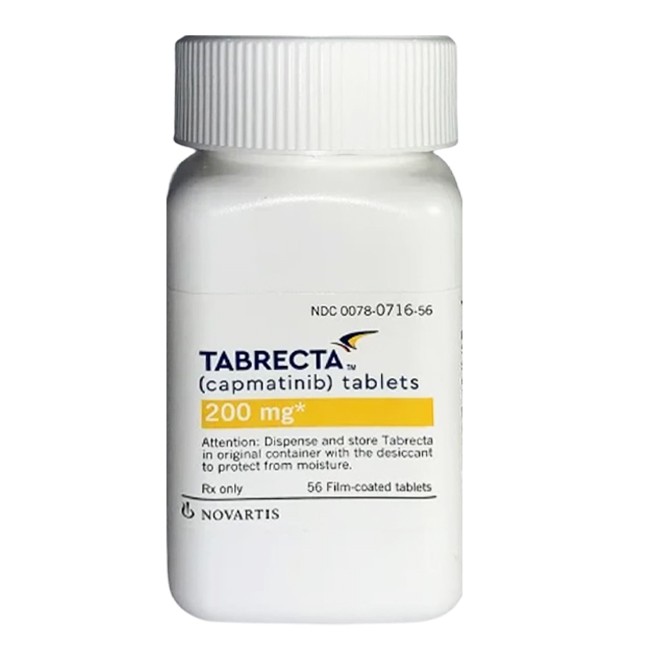
Capmatinib is used for metastatic non-small cell lung cancer with a mutation that leads to MET exon 14 skipping. It has no absolute contraindications, but several adverse reactions require close monitoring and dosage adjustment. The following explains three aspects.
1. Contraindications and Use Restrictions
1. No Absolute Contraindications
The prescribing information states that capmatinib has no contraindications.
However, this does not mean all patients can use it safely; assessment based on individual circumstances is required.
2. Restrictions in Special Populations
Pregnant women: may cause fetal harm; contraindicated.
Breastfeeding women: do not breastfeed during treatment and for 1 week after the last dose.
Children: safety and effectiveness have not been established.
Severe renal impairment: not studied; not recommended.
3. Concomitant Medications to Avoid
Strong or moderate CYP3A inducers: avoid concomitant use, otherwise efficacy may be reduced.
Strong CYP3A inhibitors: monitor adverse reactions closely.
St. John's wort: do not use concomitantly.
4. Contraception Requirements
Females of reproductive potential should use effective contraception during treatment and for 1 week after the last dose.
Male patients with female partners of reproductive potential should also use contraception until 1 week after the last dose.
2. Adverse Reactions Requiring Close Monitoring
1. Interstitial Lung Disease/Pneumonitis
Can be fatal and is one of the most serious adverse reactions.
Presentation: new or worsening respiratory symptoms such as dyspnea, cough, and fever.
Management: withhold immediately if suspected; permanently discontinue after ruling out other causes.
2. Hepatotoxicity
Presents as elevated transaminases and bilirubin.
Monitoring: check liver function regularly before and during treatment.
Management: withhold, reduce dose, or permanently discontinue based on severity.
3. Pancreatic Toxicity
Presents as elevated amylase and lipase; severe cases may develop pancreatitis.
Monitoring: test regularly at baseline and during treatment.
Management: withhold for Grade 3, then reduce dose after recovery; permanently discontinue for Grade 4 or pancreatitis.
4. Hypersensitivity Reactions
Presentation: fever, chills, pruritus, rash, decreased blood pressure, nausea, and vomiting.
Management: withhold if suspected; permanently discontinue in severe cases.
5. Photosensitivity Reactions
Animal studies suggest a risk of photosensitivity.
Recommendation: use sun protection during treatment and limit ultraviolet exposure.
6. Embryo-Fetal Toxicity
Animal studies show it can cause malformations.
Recommendation: contraindicated in pregnancy; strict contraception for people of reproductive potential.
3. Common Adverse Reactions and Dosage Adjustment
1. Common Adverse Reactions
Edema, nausea, musculoskeletal pain, and fatigue.
Vomiting, dyspnea, cough, and decreased appetite.
Others: constipation, diarrhea, rash, dizziness, fever, and weight loss.
2. Dose Reduction Schedule
First reduction: 300 mg twice daily.
Second reduction: 200 mg twice daily.
Permanently discontinue in patients unable to tolerate 200 mg twice daily.
3. Hepatotoxicity Dosage Adjustment
Increased transaminases without increased bilirubin: withhold for Grade 3; if recovered within 7 days, resume at the same dose; otherwise reduce dose; permanently discontinue for Grade 4.
Increased transaminases with increased bilirubin: permanently discontinue.
Isolated increased bilirubin: withhold for Grade 2, then resume at the same dose or a reduced dose after recovery; withhold for Grade 3, then resume at a reduced dose or permanently discontinue after recovery; permanently discontinue for Grade 4.
4. Pancreatic Toxicity Dosage Adjustment
Grade 3 increased lipase or amylase: withhold until recovery to ≤ Grade 2 or baseline; reduce dose if recovered within 14 days, otherwise permanently discontinue.
Grade 4 or pancreatitis: permanently discontinue.
5. Adjustment for Other Adverse Reactions
Grade 2: maintain dose; if intolerable, withhold, then reduce dose after resolution.
Grade 3: withhold, then reduce dose after resolution.
Grade 4: permanently discontinue.
6. Key Patient Education Points
Seek medical attention immediately for new or worsening respiratory symptoms.
Seek medical attention immediately for symptoms of liver injury or pancreatitis.
Avoid ultraviolet exposure during treatment and use sun protection.
Inform the doctor of all concomitant medications and supplements.

Free Inquiry