

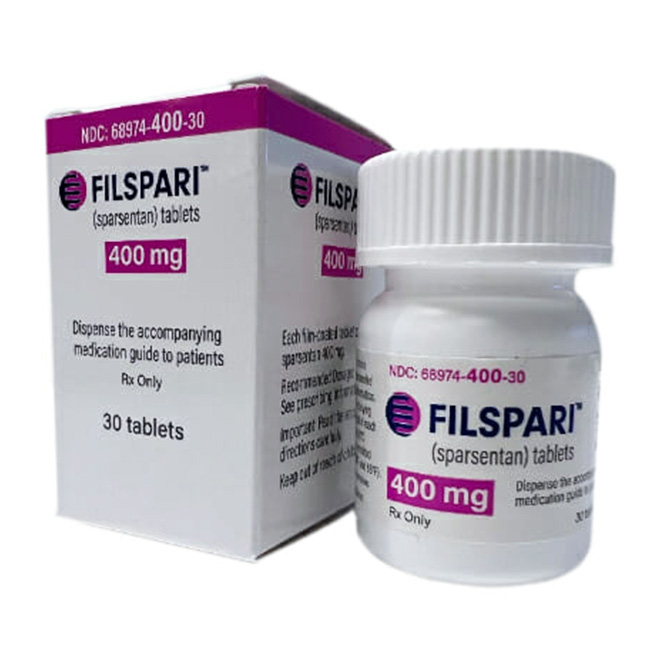
Sparsentan (Filspari) is a dual antagonist of endothelin and angiotensin II receptors, which was first approved in the United States in 2023. This medication is mainly used to slow the decline of renal function in adult patients with primary immunoglobulin A nephropathy (IgAN) who are at risk of disease progression. As a prescription drug, the use of Sparsentan must strictly follow specific medication guidelines, and individualized treatment strategies should be implemented for different patient populations.
Dosage and Administration of Sparsentan (Filspari)
The recommended initial dose of Sparsentan is 200 mg taken orally once daily.
After 14 days of treatment, if the patient tolerates the drug well, the dose should be increased to the recommended maintenance dose of 400 mg once daily.
The medication should be taken with food to optimize absorption.
Preparation Before Medication Use
Before initiating Sparsentan treatment, renin-angiotensin-aldosterone system (RAAS) inhibitors and endothelin receptor antagonists (ERAs) must be discontinued to avoid drug interactions and potential risks.
Precautions for Administration
Patients should swallow the tablets whole with water; chewing, crushing, or splitting the tablets is not allowed.
Any Sparsentan tablets that are chipped, cracked, or damaged in appearance should not be taken.
It is recommended to take the medication at a fixed time in the morning or before dinner, and maintain a consistent administration schedule relative to meals.
Management of Missed Doses
If a dose is missed, the regular dose should be taken at the next scheduled time. Double or extra doses should not be taken to make up for the missed dose.
Dose Adjustment of Sparsentan (Filspari)
Dose Adjustment Based on Adverse Reactions
Initial dose reduction: Decrease from 400 mg once daily to 200 mg once daily.
If a further dose reduction is required, consideration should be given to temporarily discontinuing or permanently discontinuing Sparsentan.
Liver Function Monitoring and Adjustment
Before treatment, aminotransferase levels and total bilirubin should be measured. Sparsentan should not be initiated in patients with aminotransferase levels exceeding 3 times the upper limit of normal.
Management of Specific Situations
When a patient resumes Sparsentan treatment after a temporary discontinuation due to adverse reactions, re-titration should be considered starting from 200 mg once daily. If well-tolerated after 14 days, the dose can be increased to 400 mg once daily.
Medication Use in Special Populations for Sparsentan (Filspari)
Patients with Hepatic Impairment
Sparsentan should be avoided in patients with hepatic impairment of any severity (Child-Pugh Class A-C) due to the potential risk of severe liver damage.
Pregnant and Lactating Women
Pregnancy: Sparsentan may cause fetal harm when used during pregnancy, so it is contraindicated in pregnant women. Women of childbearing potential should use effective contraceptive measures during treatment and for two weeks after the end of treatment.
Lactation: Breastfeeding is not recommended during treatment.
Pediatric Patients
The efficacy of Sparsentan in pediatric patients has not been established.

Free Inquiry