

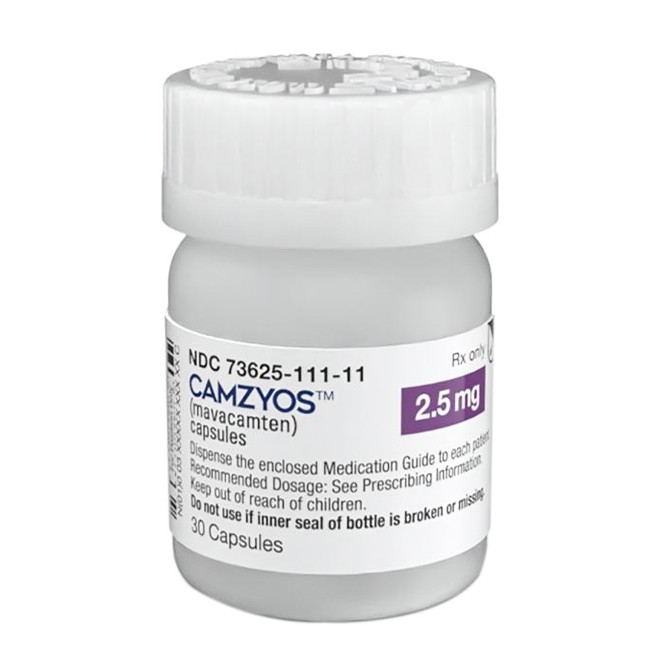
Mavacamten (Camzyos) is a cardiac myosin inhibitor indicated for the treatment of adult patients with symptomatic New York Heart Association (NYHA) Class II-III obstructive hypertrophic cardiomyopathy (HCM) to improve their functional capacity and symptoms. However, its use is associated with a series of potential risks, adverse effects and stringent medication management requirements that demand high attention.
Adverse Effects of Mavacamten (Camzyos)
Cardiac-Related Effects
The core mechanism of mavacamten is to inhibit excessive myocardial contraction, which inevitably leads to a certain degree of reduction in left ventricular ejection fraction (LVEF).
Reversible reduction in LVEF to below 50% has been reported in approximately 6% of treated patients, with most cases recovering following treatment discontinuation.
Common Systemic Adverse Reactions
Dizziness: Occurring in approximately 27% of patients.
Syncope: Reported in approximately 6% of patients.
Key Risks of Mavacamten (Camzyos)
Heart Failure Risk
This constitutes the most serious risk of mavacamten. The drug impairs cardiac systolic function and may induce or exacerbate heart failure caused by systolic dysfunction.
The risk of heart failure is significantly increased in the following situations: patients with severe comorbidities (e.g., severe infections).
Development of cardiac arrhythmias (e.g., atrial fibrillation or other uncontrolled tachyarrhythmias).
Concomitant use of other drugs that reduce cardiac contractility or interact with mavacamten.
Embryo-Fetal Toxicity
Based on animal study data, mavacamten may cause fetal harm, leading to fetal malformations, reduced body weight and abnormal skeletal development.
Prior to the initiation of treatment, it is mandatory to confirm that females of reproductive potential are not pregnant.
Effective contraceptive measures must be adopted during treatment and for 4 months after the last dose.
It should be noted that mavacamten may reduce the efficacy of certain combined hormonal contraceptives containing progestogen; the addition of non-hormonal contraceptive methods (e.g., condoms) is recommended.
Precautions for Mavacamten (Camzyos)
Pre-Treatment Assessment
Pre-treatment evaluation: Patients must have an LVEF of ≥55% before the initiation of treatment.
Regular monitoring: During treatment, LVEF and left ventricular outflow tract (LVOT) gradient during the Valsalva maneuver must be monitored regularly via echocardiography (e.g., at Weeks 4, 8, 12, and every 3 to 6 months thereafter).
Treatment Interruption and Dose Adjustment
Treatment must be interrupted if LVEF is <50% at any visit.
If LVEF is between 50% and 55%, the current dose should be maintained with enhanced monitoring.
Once LVEF recovers to ≥50%, treatment may be restarted at a reduced dose level.
Individualized titration: The dose should be adjusted individually based on echocardiographic results and clinical symptoms, with the goal of effectively reducing the LVOT gradient while maintaining an LVEF of ≥50%.

Free Inquiry