

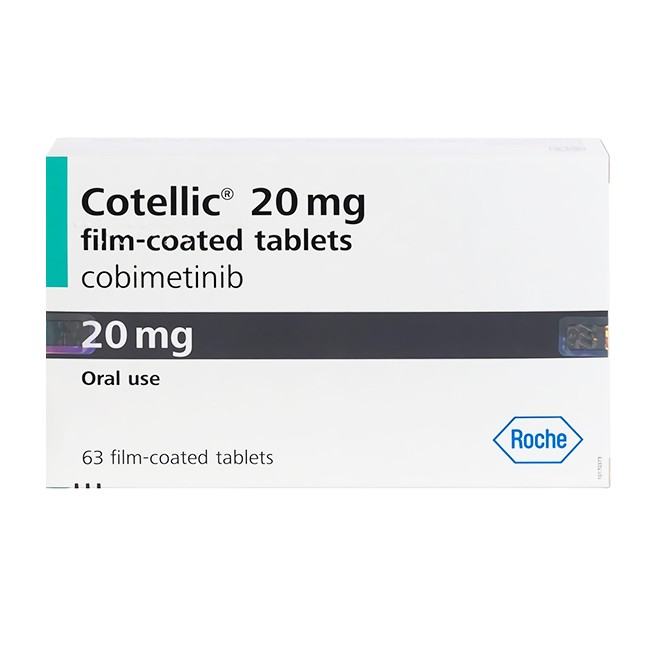
Cobimetinib (Cotellic) is a therapeutic drug for melanoma with BRAF V600E or V600K mutations, used in combination with Vemurafenib. BRAF V600E or V600K mutations are the most common types of mutations in melanoma, accounting for approximately 50%. These mutations lead to abnormal activation of BRAF kinase, which in turn promotes the proliferation and growth of tumor cells. The role of cobimetinib is to inhibit the activity of BRAF kinase, thereby blocking the mutant signaling pathway and reducing the growth and spread of tumor cells.
Cobimetinib (Cotellic):Clinical Uses, Recommended Dosage, Treatment Effect
This article provides a detailed explanation of cobimetinib's indications, usage and dosage, side effects, contraindications, and clinical efficacy.
(I) Indications
Cobimetinib is indicated for adult patients with unresectable or metastatic melanoma with BRAF V600E or V600K mutations, in combination with Vemurafenib.
Cobimetinib as a single agent is indicated for the treatment of histiocytic tumors.
(II) Usage and Dosage
Patient Selection for Melanoma Treatment
Before initiating treatment with cobimetinib and Vemurafenib, confirm the presence of BRAF V600E or V600K mutations in the tumor specimen using an FDA-approved melanoma BRAF V600 mutation detection method.
Recommended Dosage
(1) The recommended dosage regimen for cobimetinib is 60 mg (3 tablets of 20 mg each) orally once daily, administered for the first 21 days of each 28-day cycle, until disease progression or unacceptable toxicity.
(2) Cobimetinib can be taken with or without food.
(3) If a dose of cobimetinib is missed or vomiting occurs after taking the drug, the next dose should be administered at the scheduled time according to the dosing plan.
Dosage Adjustments
(1) Concomitant Use with CYP3A Inhibitors
① Do not use cobimetinib concomitantly with strong or moderate CYP3A inhibitors.
② If a patient taking 60 mg of cobimetinib must unavoidably use a moderate CYP3A inhibitor for a short period (14 days or less), the dose of cobimetinib should be reduced to 20 mg. After discontinuing the moderate CYP3A inhibitor, resume the original cobimetinib dose of 60 mg.
③ In patients taking reduced doses of cobimetinib (40 or 20 mg daily), use alternatives to strong or moderate CYP3A inhibitors.
(2) Adverse Reactions
Refer to the complete prescribing information for recommended dosage adjustments when cobimetinib is used in combination with Vemurafenib.
(III) Target Population
Adults. Pregnant and lactating women, as well as elderly and pediatric patients, should use the medication under the guidance of a doctor.
(IV) Contraindications
Not explicitly identified.
(V) Side Effects
Unresectable or Metastatic Melanoma
(1) The most common adverse reactions (incidence ≥ 20%) are diarrhea, photosensitivity reaction, nausea, fever, and vomiting.
(2) The most common (incidence ≥ 5%) grade 3-4 laboratory abnormalities are increased gamma-glutamyl transferase (GGT), increased creatine phosphokinase (CPK), hypophosphatemia, increased alanine transaminase (ALT), lymphopenia, increased aspartate transaminase (AST), increased alkaline phosphatase, and hyponatremia.
Histiocytic Tumors
(1) The most common adverse reactions (incidence ≥ 20%) are acneiform dermatitis, diarrhea, infection, fatigue, nausea, edema, dry skin, maculopapular rash, pruritus, dyspepsia, vomiting, dyspnea, and urinary tract infection.
(2) The most common (incidence ≥ 5%) grade 3-4 laboratory abnormalities include hyponatremia, increased blood creatine phosphokinase, hypokalemia, increased blood creatinine, increased aspartate transaminase, hypocalcemia, lymphopenia, leukopenia, and anemia.
(VI) Precautions
Refer to the complete prescribing information for cobimetinib in combination with Vemurafenib for serious risks associated with this combination.
New Primary Malignancies
Cobimetinib can cause new primary cutaneous and non-cutaneous malignancies.
(1) Cutaneous Malignancies
Perform a dermatological evaluation before starting treatment and every two months during treatment. Manage suspicious skin lesions by excision and skin pathological assessment. Dose adjustment of cobimetinib is not recommended. When used in combination with Vemurafenib, dermatological monitoring should be conducted within 6 months after discontinuing cobimetinib.
(2) Non-cutaneous Malignancies
Based on its mechanism of action, Vemurafenib may promote the growth and development of malignancies. Patients receiving cobimetinib in combination with Vemurafenib should be monitored for signs or symptoms of non-cutaneous malignancies.
Bleeding
(1) The use of cobimetinib can cause bleeding, including major bleeding defined as symptomatic bleeding in critical sites or organs.
(2) Discontinue cobimetinib in case of grade 3 bleeding events. If improvement to grade 0 or 1 occurs within 4 weeks, resume cobimetinib at a lower dose level. Discontinue cobimetinib for grade 4 bleeding events and grade 3 bleeding events that do not improve.
Cardiomyopathy
(1) The use of cobimetinib can cause cardiomyopathy. The safety of cobimetinib in patients with a baseline left ventricular ejection fraction (LVEF) below the lower limit of normal (LLN) or below 50% of the LLN has not been established.
(2) Assess LVEF before initiating treatment, 1 month after starting treatment, and every 3 months thereafter until cobimetinib is discontinued. Manage left ventricular dysfunction events by interrupting, reducing the dose, or discontinuing treatment. For patients restarting cobimetinib after dose reduction or interruption, assess LVEF at approximately 2 weeks, 4 weeks, 10 weeks, and 16 weeks, then as clinically indicated.
Severe Skin Reactions
Cobimetinib can cause severe rashes and other skin reactions. Interrupt, reduce the dose, or discontinue cobimetinib.
Serous Retinopathy and Retinal Vein Occlusion
Cobimetinib can cause ocular toxicity, including serous retinopathy (subretinal fluid accumulation). Perform regular ophthalmologic evaluations and assess patients who report new or worsening visual disturbances. If serous retinopathy is confirmed, suspend cobimetinib until visual symptoms improve. Manage serous retinopathy by interrupting treatment, reducing the dose, or discontinuing the drug.
Hepatotoxicity
Cobimetinib can cause hepatotoxicity. Monitor liver function tests before starting cobimetinib and monthly during treatment, or more frequently as clinically needed. Interrupt, reduce the dose, or discontinue cobimetinib if grade 3 or 4 liver function test abnormalities occur.
Rhabdomyolysis
Cobimetinib can cause rhabdomyolysis. Measure baseline serum creatine phosphokinase and creatinine levels before starting cobimetinib, regularly during treatment, and when clinically indicated. If creatine phosphokinase is elevated, evaluate for signs and symptoms of rhabdomyolysis or other causes. Depending on the severity of symptoms or creatine phosphokinase elevation, interrupt or discontinue administration.
Severe Photosensitivity Reactions
The use of cobimetinib may cause photosensitivity reactions, including severe ones. Advise patients to avoid sun exposure, wear protective clothing, and use broad-spectrum UVA/UVB sunscreen and lip balm (SPF ≥ 30) during outdoor activities. Adjust the dose for grade 2 or higher photosensitivity reactions that are intolerable.
Embryo-Fetal Toxicity
Taking cobimetinib during pregnancy can cause harm to the fetus. Inform pregnant women of the potential risk to the fetus. Advise women of reproductive potential to use effective contraception during treatment with cobimetinib and for 2 weeks after the last dose.
(VII) Therapeutic Efficacy
Trial Design
A phase III randomized trial was conducted in patients with unresectable stage IIIC or IV melanoma with BRAF V600 gene mutations. Cobimetinib was administered orally at 60 mg daily for 21 days with 7 days off, while Vemurafenib was administered orally at 960 mg twice daily without interruption.
Trial Results
The objective response rate was 68% in patients receiving Vemurafenib in combination with cobimetinib, with a median progression-free survival of 9.9 months.
(VIII) Drug Interactions
Effect of Strong or Moderate CYP3A Inhibitors on Cobimetinib
Concomitant use of cobimetinib with itraconazole (a strong CYP3A4 inhibitor) increases the systemic exposure of cobimetinib by 6.7-fold. Avoid concomitant use of cobimetinib with strong or moderate CYP3A inhibitors. If a patient taking 60 mg of cobimetinib must unavoidably use a moderate CYP3A inhibitor for a short period (14 days or less), including certain antibiotics (e.g., erythromycin, ciprofloxacin), the dose of cobimetinib should be reduced to 20 mg. After discontinuing the moderate CYP3A inhibitor, resume the previous dose of cobimetinib. For patients taking reduced doses of cobimetinib (40 or 20 mg daily), use alternatives to strong or moderate CYP3A inhibitors.
Effect of Strong or Moderate CYP3A Inducers on Cobimetinib
Concomitant use of cobimetinib with strong CYP3A inducers may reduce the systemic exposure of cobimetinib by more than 80% and decrease its efficacy. Avoid concomitant use of cobimetinib with strong or moderate CYP3A inducers, including but not limited to carbamazepine, efavirenz, phenytoin, rifampin, and St. John's wort.
(IX) Storage Conditions
Cobimetinib is a white tablet and should be stored at room temperature below 30°C.
[Friendly Reminder]: Some product instructions are updated frequently. Please refer to the actual product for details.

Free Inquiry