

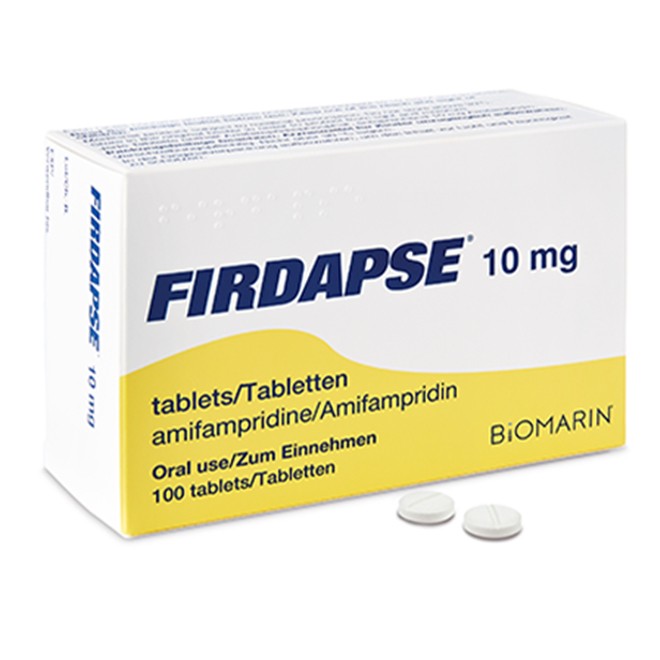
Amifampridine (Firdapse) can be used to treat myasthenia gravis, a neuromuscular disorder characterized by symptoms such as muscle weakness and fatigue. Amifampridine enhances neuromuscular transmission in patients, thereby improving muscle weakness.
Amifampridine(Firdapse):Clinical Uses, Recommended Dosage, Treatment Effect
This article provides a detailed account of amifampridine, covering its indications, dosage and administration, side effects, contraindications, clinical efficacy, and more.
(I) Indications
Amifampridine is a potassium channel blocker indicated for the treatment of Lambert-Eaton Myasthenic Syndrome (LEMS) in adult and pediatric patients aged 6 years and older.
(II) Dosage and Administration
1. Dosage Information
Table 1 outlines the recommended dosage regimens of amifampridine for adult patients and pediatric patients aged 6 years and older. The recommended dosage regimen for pediatric patients is based on the patient's body weight. Dosage adjustments should be made every 3-4 days according to clinical response and tolerability.
2. Patients with Renal Impairment
For patients with renal impairment, the recommended starting dose is the lowest recommended initial daily dose (i.e., 15 mg per day for pediatric patients weighing ≥ 45 kg and adult patients, and 5 mg per day for pediatric patients weighing < 45 kg), administered in divided oral doses. There is no recommended dosage of amifampridine for patients with end-stage renal disease.
3. Patients with Hepatic Impairment
For patients with hepatic impairment of any severity, the recommended starting dose of amifampridine is the lowest recommended initial daily dose (i.e., 15 mg per day for pediatric patients weighing ≥ 45 kg and adult patients, and 5 mg per day for pediatric patients weighing < 45 kg), administered in divided oral doses.
4. Patients with Known Poor N-Acetyltransferase 2 (NAT2) Metabolism
For patients with known poor N-acetyltransferase 2 (NAT2) metabolism, the recommended starting dose is the lowest recommended initial daily dose (i.e., 15 mg per day for pediatric patients weighing ≥ 45 kg and adult patients, and 5 mg per day for pediatric patients weighing < 45 kg), administered in divided oral doses.
5. Medication Instructions
Amifampridine can be taken on an empty stomach.
When a patient requires a dose of less than 5 mg/mL, has difficulty swallowing tablets, or needs a feeding tube, a 1 mg/mL suspension can be prepared (e.g., place the required number of tablets in a 50 to 100 mL container, add 10 mL of sterile water per tablet, wait for 5 minutes, then shake thoroughly for 30 seconds).
Tablets do not need to be crushed before preparing the suspension. After preparation, the correct dose of the suspension can be drawn up using an oral syringe and administered either orally or via a feeding tube.
Storage of the 1 mg/mL suspension: Refrigerate the suspension and shake it well before each administration. The suspension can be stored under refrigeration at 2°C to 8°C (36°F to 46°F) for up to 24 hours. Any unused portion of the suspension must be discarded after 24 hours.
(III) Target Population
Adults. Pregnant women, lactating women, pediatric patients, and elderly patients should use this medication under the guidance of a physician.
(IV) Contraindications
Amifampridine is contraindicated in patients with a history of seizures and in patients with hypersensitivity to amifampridine phosphate or other aminopyridines.
(V) Side Effects
The most common adverse reactions (occurring in > 10% of patients) are: paresthesia, upper respiratory tract infection, abdominal pain, nausea, diarrhea, headache, elevated liver enzymes, back pain, hypertension, and muscle spasms.
(VI) Precautions
1. Seizures
Amifampridine may cause seizures. In patients without a history of seizures, the incidence of seizures observed with amifampridine at the recommended dosage was approximately 2%, occurring at various times after the initiation of treatment. Many of these patients were taking medications or had comorbid conditions that could lower the seizure threshold. Seizures may be dose-dependent. For patients who experience a seizure during treatment, consideration should be given to discontinuing amifampridine or reducing its dosage. Amifampridine is contraindicated in patients with a history of seizures.
2. Hypersensitivity Reactions
In clinical trials, no administration-related hypersensitivity reactions or allergic reactions to amifampridine have been reported. If an allergic reaction occurs, amifampridine should be discontinued and appropriate treatment initiated.
(VII) Therapeutic Efficacy
1. Study Design
Patients receiving stable treatment with amifampridine were randomly assigned in a 1:1 double-blind manner to either continue amifampridine treatment (n=13) or switch to placebo treatment (n=13) for 4 days. Efficacy was assessed at the end of the 4-day double-blind withdrawal period.
2. Study Outcome Measures
Of the patients randomly assigned to the amifampridine group, 61% were receiving cholinesterase inhibitor therapy, compared with 54% of patients randomly assigned to the placebo group.
3. Study Results
From baseline to Day 4, the placebo group showed a significantly greater worsening in Quantitative Myasthenia Gravis (QMG) score than the amifampridine group (p=0.0004), and also a significantly greater worsening in Subject Global Impression (SGI) score than the amifampridine group (p=0.0003). These results indicate that, in the study, patients randomly assigned to the placebo group experienced a significantly greater degree of worsening in muscle weakness and a more pronounced overall impression of the impact of the study treatment on their physical health, compared with patients who continued amifampridine treatment during the double-blind period.
(VIII) Drug Interactions
1. Drugs That Lower the Seizure Threshold
Concomitant use of amifampridine with drugs that lower the seizure threshold may increase the risk of seizures.
2. Drugs with Cholinergic Effects
Concomitant use of amifampridine with drugs that have cholinergic effects (e.g., direct or indirect cholinesterase inhibitors) may enhance the cholinergic effects of both amifampridine and these drugs, and increase the risk of adverse reactions.
(IX) Storage Conditions
Store amifampridine tablets at 20°C to 25°C (68°F to 77°F), with allowable excursions between 15°C to 30°C (59°F to 86°F).
Kind Reminder: The instructions for some drug products are updated frequently. Please refer to the actual drug product for the most current information.

Free Inquiry