

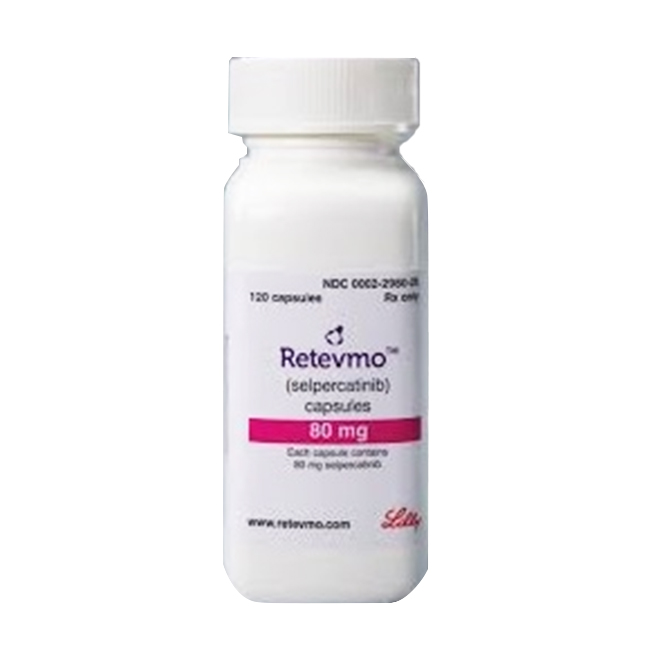
Selpercatinib (Retevmo) is an oral, selective RET kinase inhibitor, indicated for the treatment of non‑small cell lung cancer, medullary thyroid carcinoma, and other thyroid cancers with RET gene fusion or mutation.
Side Effects of Selpercatinib (Retevmo)
Common Side Effects
Hepatic disorders: elevated aspartate aminotransferase (AST) (51%), elevated alanine aminotransferase (ALT) (45%).
Metabolic and electrolyte abnormalities: increased blood glucose (44%), decreased blood calcium (41%), decreased blood sodium (27%), increased blood creatinine (37%), elevated alkaline phosphatase (36%), increased total cholesterol (31%).
Hematologic abnormalities: leukopenia (43%), thrombocytopenia (33%), decreased albumin (42%).
Gastrointestinal reactions: dry mouth (39%), diarrhea (37%), constipation (25%), nausea (23%), abdominal pain (23%).
Systemic reactions: hypertension (35%), fatigue (35%), edema (33%), rash (27%).
Serious Side Effects
Hepatotoxicity
Manifestations: Severe hepatic injury occurred in approximately 2.6% of patients. Elevations in AST and ALT are common, of which 8–9% may be Grade 3–4.
Monitoring and management: Monitor liver function before initiation, every 2 weeks during the first 3 months of treatment, and monthly thereafter.
If marked elevations in liver enzymes occur, treatment interruption, dose reduction, or permanent discontinuation should be implemented based on severity.
Hypertension
Manifestations: Hypertension occurred in 35% of patients, including 17% with Grade 3 hypertension; Grade 4 was infrequent.
Monitoring and management: Blood pressure should be controlled before treatment. Monitor blood pressure 1 week after initiation and at least monthly thereafter.
For persistent Grade 3 hypertension: interrupt treatment until blood pressure is controlled, then resume at a reduced dose. For Grade 4 hypertension: permanently discontinue.
QT Interval Prolongation
Manifestations: The drug can cause concentration‑dependent QTc prolongation. QTc >500 ms occurred in 6% of patients; an increase ≥60 ms from baseline occurred in 15%.
Monitoring and management: High‑risk patients (e.g., known long QT syndrome, heart failure) require periodic ECG, electrolytes, and thyroid function monitoring.
Avoid co‑administration with strong/moderate CYP3A inhibitors or drugs known to prolong QT interval.
For Grade 3 prolongation: interrupt treatment and reduce dose. For Grade 4: permanently discontinue.
Hemorrhagic Events
Manifestations: Grade ≥3 hemorrhagic events occurred in 2.3% of patients, including fatal cerebral hemorrhage, hemoptysis, etc.
Management: Permanently discontinue in the event of severe or life‑threatening bleeding.
Precautions
Drug Interactions
CYP3A inhibitors/inducers: Avoid co‑administration with strong/moderate CYP3A inhibitors (e.g., itraconazole) or inducers (e.g., rifampicin); dose adjustment is required if combined.
CYP2C8/CYP3A substrates: This drug may increase plasma concentrations of relevant agents; monitor and adjust doses during co‑administration.
Others: Avoid combination with St. John’s wort, some antiarrhythmics, etc.
Use in Special Populations
Patients with hepatic impairment: Dose reduction is required in severe hepatic impairment (e.g., from 160 mg to 80 mg twice daily).
Patients with renal impairment: No dose adjustment is needed for mild or moderate renal impairment; no recommended dose for severe impairment.
Pediatric patients: Indicated only for patients aged ≥12 years. Efficacy has not been established in younger patients.
Patient Education and Self‑Monitoring
Regular monitoring of blood pressure, liver function, ECG, and electrolytes is required during treatment.
Prompt medical attention should be sought for jaundice, hypertensive symptoms, palpitations, abnormal bleeding, rash, non‑healing wounds, etc.
Males and females of reproductive potential must use highly effective contraception. Breastfeeding is not recommended during treatment and for at least 1 week after the last dose.

Free Inquiry