

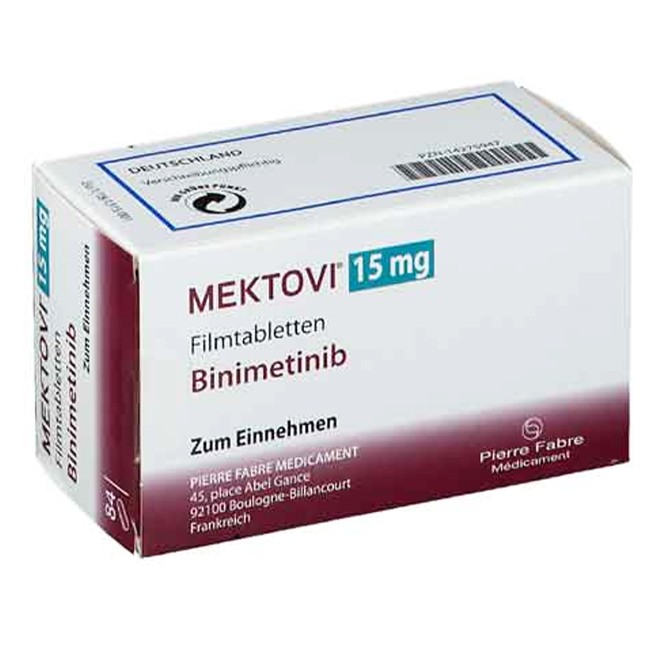
Binimetinib (Mektovi) is a kinase inhibitor, usually used in combination with encorafenib, for the treatment of unresectable or metastatic melanoma positive for BRAF V600E or V600K mutations, as well as metastatic non-small cell lung cancer (NSCLC) positive for BRAF V600E mutations.
Dosage and Administration, Recommended Dose of Binimetinib (Mektovi)
Genetic Testing Requirements Before Medication Use
Before using binimetinib, the presence of BRAF V600E or V600K mutations in patients must be confirmed by an FDA-approved detection method.
For melanoma, tumor tissue samples should be used for testing.
For non-small cell lung cancer, either tumor tissue or plasma samples can be used.
If no mutation is detected in the plasma sample, further testing of the tumor tissue should be conducted.
Recommended Dose and Administration Method
The recommended dose of binimetinib is 45 mg per dose, taken orally twice daily, with an interval of approximately 12 hours between each dose. It must be used in combination with encorafenib.
Binimetinib can be taken with or without food, as food does not affect its absorption.
If a dose is missed, it should be taken immediately upon remembering. However, if the time to the next scheduled dose is less than 6 hours, the missed dose should be skipped, and the next dose should be taken as planned.
If vomiting occurs after taking the medication, no additional dose should be taken to make up for it; the next dose should be taken as scheduled.
Duration of Treatment
Patients should continue to receive binimetinib in combination with encorafenib until disease progression or the occurrence of unacceptable toxic reactions.
If encorafenib is permanently discontinued, binimetinib should also be discontinued at the same time.
Dose Adjustment of Binimetinib (Mektovi)
Dose Adjustment Based on Adverse Reactions
The dose of binimetinib can be adjusted according to the severity of adverse reactions.
The first dose reduction is 30 mg per dose, taken twice daily.
If the dose is still not tolerable, permanent discontinuation of the medication should be considered.
Cardiomyopathy
If the left ventricular ejection fraction (LVEF) decreases asymptomatically by more than 10% and falls below the lower limit of the normal range, the medication should be suspended and an evaluation should be conducted.
If symptomatic heart failure occurs or the LVEF decreases by more than 20%, the medication should be permanently discontinued.
Venous Thromboembolism
In case of uncomplicated deep vein thrombosis or pulmonary embolism, the medication should be suspended.
If symptoms improve, the medication can be resumed at a reduced dose.
In case of life-threatening pulmonary embolism, the medication should be permanently discontinued.
Dose Management for Other Adverse Reactions
For other adverse reactions such as bleeding and severe rash, measures such as suspending the medication, reducing the dose, or permanently discontinuing the medication should also be taken according to their severity.
If adverse reactions persist or worsen after dose adjustment, permanent discontinuation of binimetinib should be considered.
Medication Use in Special Populations for Binimetinib (Mektovi)
Patients with Hepatic Impairment
Patients with mild hepatic impairment do not require dose adjustment.
For patients with moderate or severe hepatic impairment (total bilirubin higher than 1.5 times the upper limit of normal and any AST level), the recommended dose should be reduced to 30 mg per dose, taken twice daily.
The blood concentration of binimetinib may increase in these patients, so close monitoring of adverse reactions is necessary.
Patients with Renal Impairment
Currently, there is no data indicating that dose adjustment is required for patients with mild to severe renal impairment.
In patients with severe renal impairment, no significant changes in the pharmacokinetics of binimetinib have been observed, but it is still recommended to closely monitor relevant indicators during medication use.
Pregnant and Lactating Women
Binimetinib may cause harm to the fetus and is contraindicated in pregnant women.
Women of childbearing age should undergo a pregnancy test before medication use and take effective contraceptive measures during treatment and within 30 days after the last dose.
Lactating women should discontinue breastfeeding during treatment and within 3 days after the last dose.

Free Inquiry