

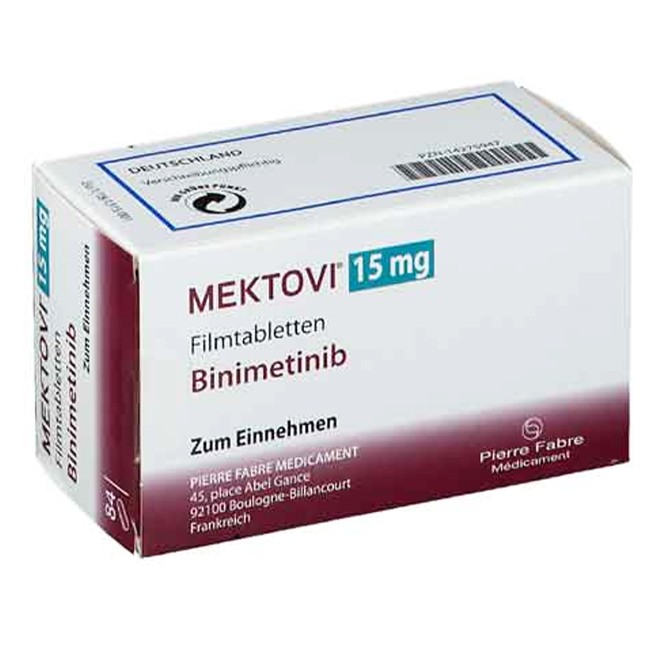
Binimetinib (Mektovi) is a selective mitogen-activated protein kinase (MEK) inhibitor. It primarily blocks the RAS/RAF/MEK/ERK signaling pathway by inhibiting the activity of MEK1 and MEK2, thereby suppressing the growth of tumor cells. This medication must be used in combination with encorafenib, and is indicated for the treatment of unresectable or metastatic melanoma positive for BRAF V600E or V600K mutations, as well as metastatic non-small cell lung cancer (NSCLC) positive for BRAF V600E mutations.
Side Effects of Binimetinib (Mektovi)
Common Side Effects in Melanoma Patients
Fatigue: Incidence rate of 43%.
Nausea: Incidence rate of 41%.
Diarrhea: Incidence rate of 36%.
Vomiting: Incidence rate of 30%.
Abdominal pain: Incidence rate of 28%.
Common Side Effects in Non-Small Cell Lung Cancer (NSCLC) Patients
Fatigue: Incidence rate of 61%.
Nausea: Incidence rate of 58%.
Diarrhea: Incidence rate of 52%.
Musculoskeletal pain: Incidence rate of 48%.
Vomiting: Incidence rate of 37%.
Severe Side Effects of Binimetinib (Mektovi)
Cardiac Dysfunction
Cardiomyopathy: Manifested as a decrease in left ventricular ejection fraction (LVEF), which may lead to heart failure.
Patients should undergo cardiac function assessment before treatment, in the first month of treatment, and every 2-3 months thereafter.
Symptoms: Seek medical attention immediately if symptoms such as shortness of breath, lower extremity edema, or palpitations occur.
Venous Thromboembolism
Deep vein thrombosis or pulmonary embolism: A small number of patients may develop blood clots, which can be life-threatening in severe cases.
Seek medical attention immediately if symptoms such as unilateral limb swelling, chest pain, or difficulty breathing occur.
Severe Ocular Disorders
Retinal vein occlusion: May cause severe vision loss or even blindness; once diagnosed, binimetinib must be permanently discontinued.
Uveitis: Manifested as red eyes, eye pain, and vision loss; requires ophthalmological evaluation and medication adjustment.
Interstitial Lung Disease
Pneumonia or pulmonary fibrosis: A small number of patients may experience respiratory symptoms such as cough and shortness of breath, requiring immediate imaging examinations.
If drug-related lung disease is diagnosed, the medication must be permanently discontinued.
Hepatotoxicity
Transaminase elevation: Some patients may experience abnormal liver function; in severe cases, dose adjustment or drug discontinuation is required.
Liver enzyme indicators should be regularly monitored during treatment.
Precautions for Binimetinib (Mektovi) Use
Pre-Medication Assessment
Genetic testing: The presence of BRAF V600E or V600K mutations must be confirmed using an FDA-approved detection method before starting medication.
Baseline examinations: Include cardiac function, liver function, renal function, ophthalmological examinations, and skin assessment.
Monitoring During Treatment
Regular rechecks: Include cardiac function, liver function, creatine kinase, visual acuity, and skin examinations.
Symptom recording: Patients should record any new or worsening symptoms and report them to the doctor in a timely manner.

Free Inquiry