info@seagull-health.com
SeagullHealth
语言:
search
new
Usage, Precautions and Healthy Living Guidelines for Japanese Tinnitus Relief Agent (Stomin)
506
Article source: Seagull Pharmacy
May 13, 2026

This is a commonly prescribed therapeutic drug for tinnitus in Japan. Mastering the correct usage and dosage, understanding precautions, and adopting a healthy lifestyle can help improve efficacy and reduce adverse reactions.

I. Usage and Dosage of Stomin

1. Standard Adult Dosage

(1) The usual adult dose is 2 tablets per dose, 3 times daily, taken orally after meals.

(2) The total daily dose is 6 tablets, containing 180mg of nicotinamide and 36mg of papaverine hydrochloride.

2. Significance of Postprandial Administration

(1) "Postprandial" means within 30 minutes after a meal.

(2) This reduces direct gastric mucosal irritation, lowering the risk of gastrointestinal side effects such as loss of appetite and heartburn.

3. Individualized Adjustment

(1) Dosage may be adjusted appropriately depending on age and symptoms.

(2) Elderly patients often require reduced dosage due to declining physiological functions; for those with mild or severe symptoms, the doctor will adjust the dose accordingly.

(3) Do not adjust the dosage on your own.

II. Precautions for Use

1. Safety Warning on Administration Method

(1) Medications in PTP packaging must be removed from the PTP sheet before taking.

(2) Swallowing the PTP sheet directly may cause sharp edges to pierce the esophageal mucosa, leading to serious complications such as perforation and mediastinitis.

2. Review of Contraindications

(1) Contraindicated in patients with a history of hypersensitivity to any component of this product.

(2) Patients with glaucoma (symptoms may worsen).

(3) Patients with atrioventricular block (may trigger paroxysmal tachycardia).

3. Monitoring for Side Effects

(1) Observe physical reactions during medication; common side effects include loss of appetite, heartburn, palpitations, dizziness, drowsiness, constipation, dry mouth, rash, and facial flushing.

(2) If any abnormalities occur, discontinue use promptly and consult a doctor. Rare but serious allergic liver injury should also be watched for.

4. Precautions for Special Populations

(1) Pregnant women: Use only if the potential benefit justifies the potential risk.

(2) Breastfeeding women: Weigh the benefits and risks before deciding whether to continue breastfeeding.

(3) Children: No clinical trial data available; use is not recommended.

(4) Elderly: Use reduced dosage and monitor closely.

5. Drug Interaction Reminder

No specific interactions are listed, but as it contains papaverine, caution is needed when used concomitantly with antihypertensives, CNS depressants, or other vasodilators. Inform your doctor of all medications you are taking.

6. Missed Dose Management

(1) If you miss a dose, take it as soon as you remember. If it is almost time for the next dose, skip the missed dose and take the next dose as scheduled.

(2) Never take a double dose.

III. Healthy Lifestyle for Patients

1. Avoiding Factors That Worsen Tinnitus

(1) Reduce noise exposure: Avoid prolonged exposure to high-volume environments (KTV, construction sites, high-volume headphones); wear noise-protective earplugs when necessary.

(2) Control caffeine intake: Strong tea, coffee, energy drinks may intensify tinnitus perception.

(3) Quit smoking and limit alcohol: Nicotine constricts blood vessels, reducing inner ear blood flow; alcohol may dilate blood vessels and interact with the drug's effects.

2. Diets Beneficial for Inner Ear Health

(1) Foods rich in B vitamins: Whole grains, lean meats, eggs, legumes – to support nerve function.

(2) Foods rich in antioxidants: Dark-colored vegetables, blueberries, nuts – to reduce oxidative stress damage.

(3) Adequate hydration: 1.5–2 liters per day – to avoid dehydration that may impair inner ear circulation.

3. Regular Routine and Stress Management

(1) Ensure adequate sleep: 7–8 hours per night; drowsiness may be more pronounced early in treatment – adjust your schedule accordingly.

(2) Manage stress: Long-term anxiety and tension can worsen tinnitus perception – try deep breathing, meditation, or listening to soft music.

(3) Avoid excessive fatigue: Tinnitus often intensifies under fatigue – balance work and rest.

Note: For internal discussion among medical personnel only. For specific medication, please consult the attending physician. Drug information may change over time. For the latest information, we recommend adding a medical consultant or consulting for free online.
Recommended Articles
Side effects, relief methods and storage requirements of Acotiamide (Acofide)
Acofide has shown good safety in clinical trials, but some users may still experience adverse reactions.I. What are the side effects of Acofide?1. Common side effects (incidence ≥1%)According to Japan...
Dosage and Administration, Precautions, and Healthy Lifestyle for Acofide (Acotiamide)
Correct use of acotiamide is key to ensuring efficacy and safety.I. Dosage and Administration1. Standard Dosage(1) The standard adult dosage is 100 mg once, three times a day, taken orally before meal...
Imiquimod Cream: Indications, Contraindications, and Use in Special Populations
Imiquimod cream is a topical immune response modifier primarily used for the treatment of external genital/perianal warts and actinic keratosis.I. Indications1. Condylomata Acuminata (External Genital...
Common Side Effects of Imiquimod
Imiquimod cream works by activating local immune responses, but it often causes skin and systemic reactions.I. Common Side Effects1. Local Skin Reactions(1) Almost every user experiences local reactio...
A Complete Analysis of Side Effects and Storage of Stomin, a Japanese Tinnitus Relief Medication
As a commonly used clinical tinnitus treatment in Japan, Stomin has a good overall safety profile, but adverse reactions may still occur.I. What are the side effects of Stomin?1. Digestive system side...
Accommodation Function Improvement Eye Drops (Sancoba Eye Drops): Usage, Precautions and Healthy Lifestyle
This article systematically introduces the usage, dosage, precautions, and supportive healthy lifestyle measures for the ophthalmic solution for improving accommodative function (Sancoba eye drops), h...
Ophthalmic Solution for Improving Regulatory Function (Sancoba Ophthalmic Solution) Side Effects, Countermeasures and Storage Guidelines
This article details the known side effects, relief measures, and storage requirements of Sancoba ophthalmic solution (a ciliary function-improving eye drop) to help users use this product safely and ...
Pomalidomide: Side Effects, Mitigation Methods and Storage Guidelines
Pomalidomide has clear efficacy in the treatment of multiple myeloma and Kaposi sarcoma, but is also associated with various adverse reactions.I. Common side effects of pomalidomide1. Hematologic toxi...
Related Articles
Mercaptopurine Tablets: Side Effect Management and Storage Guidelines
Mercaptopurine is a chemotherapy drug used to treat acute lymphoblastic leukemia. Understanding its side effects, mastering relief methods, and proper storage are crucial for treatment safety.1. Commo...
Indications, contraindications, and use in special populations for Mercaptopurine Tablets
Mercaptopurine is a chemotherapy drug used to treat acute lymphoblastic leukemia. Clarifying its indications, contraindications, and key points for use in special populations is crucial for treatment ...
Major Side Effects of Cevimeline
Cevimeline is used to improve dry mouth caused by Sjögren's syndrome, but it may cause various side effects when used.I. Major Side Effects of Cevimeline1. Digestive System Side Effects(1) The mos...
Cevimeline: Indications, Contraindications, and Use in Special Populations
Cevimeline is a cholinergic agonist that primarily promotes salivation by stimulating M receptors in the salivary glands.I. Indications1. Core IndicationCevimeline is indicated only for the improvemen...
Indications of Infigratinib
Infigratinib is an oral kinase inhibitor targeting FGFR2, indicated for patients with specific gene mutations in cholangiocarcinoma.I. Indications1. Infigratinib is indicated for adult patients with p...
Common Side Effects of Infigratinib
Infigratinib has shown clear efficacy in the treatment of FGFR2-mutant cholangiocarcinoma, but may also cause various side effects.I. Common Side Effects1. Ocular Side Effects:(1) The most common ocul...
What is Momelotinib?
Momelotinib is an oral kinase inhibitor indicated for the treatment of adults with intermediate or high-risk myelofibrosis with anemia, including primary and secondary myelofibrosis.I. What is Momelot...
What are the common side effects of Momelotinib
Momelotinib is a targeted therapy used for the treatment of intermediate/high-risk myelofibrosis with anemia. Understanding its common side effects, mastering management strategies, and proper storage...
New Drugs
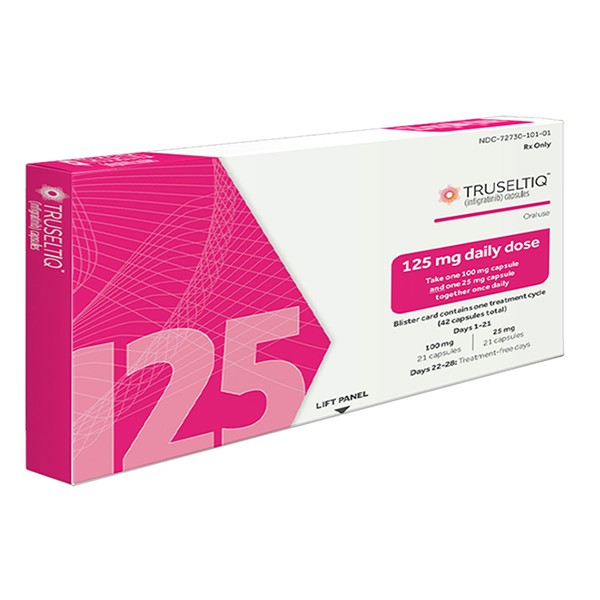
Infigratinib(Truseltiq)
Treatment of previously treated, unresectable locally advanced or metastatic...
Opicapone(Ongentys)
Opicapone(Ongentys)
Adjunctive treatment to levodopa/carbidopa for reducing "off" episodes in...
Deflazacort(Emflaza)
Treatment of Duchenne muscular dystrophy (DMD) in patients aged 2 years and...
Faricimab-svoa(Vabysmo)
Treatment of neovascular age-related macular degeneration, diabetic macular...
Counselling Service
Global Drug Search
Clinical Research Recruitment
Overseas Medical Treatment
Remote Consultations
Note: Our medical consultant will contact you as soon as possible. We promise to strictly protect your privacy.
Submit
Business
  • Core products
  • Antitumor drugs
  • General drug
  • Antiviral drugs
  • Biological agents
Contact Us 
  • haiousales@gmail.com
Welcome to consult
Seagull Pharmacy.,Ltd All rights reserved