Lapatinib (Tykerb) is an oral small-molecule tyrosine kinase inhibitor, primarily used for the targeted treatment of HER2-positive breast cancer. As a dual inhibitor of EGFR and HER2, it exerts its effect by blocking the growth signal pathways of tumor cells.
Indications for Lapatinib (Tykerb)
HER2-Positive Advanced or Metastatic Breast Cancer
Patients with Previous Treatment Failure: Patients with advanced breast cancer with HER2 overexpression (IHC 3+ or IHC 2+ confirmed by FISH), who have previously received treatment with anthracyclines, taxanes, and trastuzumab.
Treatment Limitation: This combination regimen must be used after disease progression during trastuzumab treatment.
Hormone Receptor-Positive/HER2-Positive Metastatic Breast Cancer
Combination with Letrozole: Indicated for postmenopausal women with hormone receptor-positive and HER2-overexpressing metastatic breast cancer who require endocrine therapy.
Efficacy Comparison: This combination regimen has not been directly compared with chemotherapy regimens containing trastuzumab.
Specifications and Properties of Lapatinib (Tykerb)
Dosage Form and Content
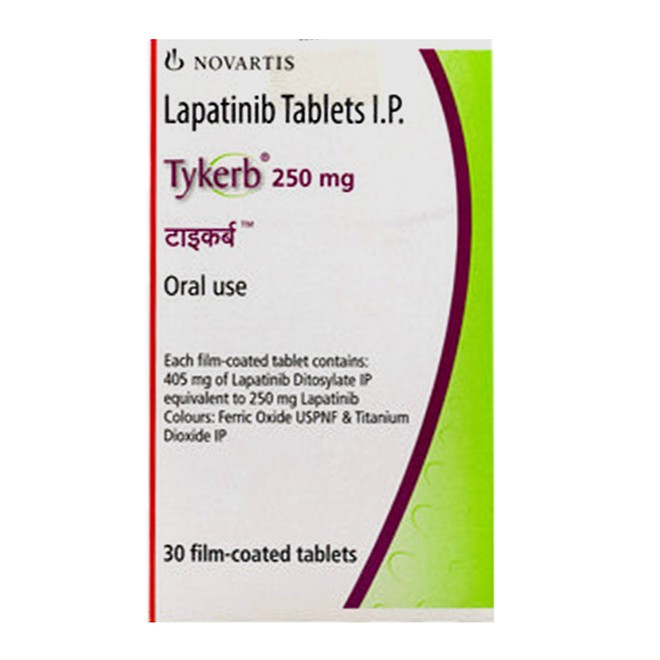
Film-Coated Tablets: Each tablet contains 250 mg of lapatinib (calculated as the free base). The tablets are oval, biconvex, and orange, with the marking "GSXJG" engraved on one side.
Packaging Specification: 150 tablets per bottle (NDC 0078-0671-19).
Chemical Properties
Chemical Name: N-(3-Chloro-4-{[(3-fluorophenyl)methoxy]phenyl})-6-[5-({[2-(methylsulfonyl)ethyl]amino}methyl)-2-furanyl]-4-quinazolinamine bis(p-toluenesulfonate) monohydrate.
Molecular Formula and Molecular Weight: C₂₉H₂₆ClFN₄O₄S·2C₇H₈O₃S·H₂O, with a molecular weight of 943.5 g/mol.
Solubility: The solubility in water is 0.007 mg/mL (at 25°C).
Excipient Components
The tablet core contains magnesium stearate, microcrystalline cellulose, etc.; the coating layer contains Sunset Yellow aluminum lake, hypromellose, etc.
Storage and Stability of Lapatinib (Tykerb)
Storage Conditions
Temperature Requirement: Store at 20°C to 25°C (68°F to 77°F). Short-term storage at 15°C to 30°C (59°F to 86°F) is permitted.
Light and Moisture Protection: Keep the original packaging tightly sealed, and avoid exposure to high temperatures or freezing.
Usage Precautions
After Opening: No special treatment is required, but ensure the bottle cap is tightly sealed.
Expired Medication Handling: Do not use expired medications; dispose of them in accordance with medical waste regulations.

Free Inquiry