info@seagull-health.com
SeagullHealth
语言:
search
new
What Are the Indications of Dimemorfan Phosphate Tablets (Astomin)?
512
Article source: Seagull Pharmacy
Nov 14, 2025

Dimemorfan Phosphate Tablets (Astomin) are non-narcotic central antitussives. Owing to their low side effects and low addictiveness, they exhibit unique value in clinical practice.

What Are the Indications of Dimemorfan Phosphate Tablets (Astomin)?

Primary Indications

Dimemorfan Phosphate Tablets are mainly indicated for the control of cough symptoms in patients aged 15 years and above, especially for coughs caused by acute and chronic respiratory diseases.

Its mechanism of action is to inhibit the medullary cough center and block the cough reflex pathway, thereby relieving symptoms quickly.

Precautions

At present, this drug has not been marketed in Mainland China, nor has it been included in the medical insurance catalog, and there are no generic drugs available on the market.

Pregnant women need to weigh the therapeutic benefits against the risks.

Lactating women should comprehensively assess the pros and cons of taking the drug versus breastfeeding.

Elderly patients need to use a reduced dose due to the decline in physiological functions.

The efficacy of this drug in children has not been clearly specified in the package insert.

Specifications and Characteristics of Dimemorfan Phosphate Tablets (Astomin)

Formulation Features

Dimemorfan Phosphate Tablets are white sugar-coated tablets, with a round shape, a diameter of 6.9 mm, a thickness of 3.4 mm, and a single tablet weight of 140 mg.

The surface of the tablet is engraved with the identification code "アストミン" (the Japanese mark for "Astomin"), which facilitates the verification of the authenticity of the drug.

Each tablet contains the main ingredient Dimemorfan Phosphate, with a dosage of 10 mg per tablet (calculated as dimemorfan phosphate).

In terms of dosage form design, this drug is packaged in PTP (Press-Through Package) aluminum foil. It is particularly important to note that the tablet must be taken out of the aluminum foil before administration to avoid accidental ingestion of the packaging material, which may lead to severe complications such as esophageal mucosal injury or even perforation.

Storage Conditions of Dimemorfan Phosphate Tablets (Astomin)

Storage Environment

Dimemorfan Phosphate Tablets should be stored at room temperature, away from direct sunlight and humid environments.

The shelf life of the drug is marked as 36 months, and the production date should be checked when using it.

It is particularly important to remind that if the drug is packaged in PTP aluminum foil, patients must be instructed to take the tablet out of the aluminum foil before taking it to prevent accidental ingestion of the packaging material and subsequent esophageal mucosal injury.

Note: For internal discussion among medical personnel only. For specific medication, please consult the attending physician. Drug information may change over time. For the latest information, we recommend adding a medical consultant or consulting for free online.
Recommended Articles
What Are the Side Effects of Enasidenib?
Enasidenib is a targeted medication for isocitrate dehydrogenase-2 (IDH2) mutations, indicated for adult patients with relapsed or refractory acute myeloid leukemia (AML). As a prescription-only drug,...
What are the Precautions for Taking Enasidenib?
Enasidenib is an isocitrate dehydrogenase-2 (IDH2) inhibitor that provides a targeted treatment option for patients with relapsed or refractory acute myeloid leukemia (AML).What are the Precautions fo...
Dosage and Administration of Enasidenib
Enasidenib is an isocitrate dehydrogenase-2 (IDH2) inhibitor approved by the U.S. Food and Drug Administration (FDA) for the treatment of adult patients with relapsed or refractory acute myeloid leuke...
Indications for Enasidenib
Enasidenib is an isocitrate dehydrogenase-2 (IDH2) inhibitor indicated for the treatment of relapsed or refractory acute myeloid leukemia (AML) with specific gene mutation types.Indications for Enasid...
What Are the Precautions for Taking Dimemorfan Phosphate Tablets (Astomin)?
Dimemorfan Phosphate Tablets (Astomin) are a type of non-narcotic central antitussive. Since its first approval in Japan in 1975, it has been widely used to relieve cough symptoms in adults due to its...
Procurement Channels for Epalrestat
Epalrestat is an aldose reductase inhibitor that was first approved in Japan in 1992. It is mainly used for the treatment of diabetic peripheral neuropathy. Its mechanism of action involves inhibiting...
What Are the Indications of Epalrestat?
Epalrestat is an aldose reductase inhibitor that holds an important position in the treatment of diabetic complications. Since its first approval in Japan in 1992, it has become one of the key medicat...
Dosage and Administration of Epalrestat: Recommended Dosage
Epalrestat is a selective aldose reductase inhibitor. Since its approval in Japan in 1992, it has become an important therapeutic agent for diabetic peripheral neuropathy.Dosage and Administration of ...
Related Articles
Mercaptopurine Tablets: Side Effect Management and Storage Guidelines
Mercaptopurine is a chemotherapy drug used to treat acute lymphoblastic leukemia. Understanding its side effects, mastering relief methods, and proper storage are crucial for treatment safety.1. Commo...
Indications, contraindications, and use in special populations for Mercaptopurine Tablets
Mercaptopurine is a chemotherapy drug used to treat acute lymphoblastic leukemia. Clarifying its indications, contraindications, and key points for use in special populations is crucial for treatment ...
Major Side Effects of Cevimeline
Cevimeline is used to improve dry mouth caused by Sjögren's syndrome, but it may cause various side effects when used.I. Major Side Effects of Cevimeline1. Digestive System Side Effects(1) The mos...
Cevimeline: Indications, Contraindications, and Use in Special Populations
Cevimeline is a cholinergic agonist that primarily promotes salivation by stimulating M receptors in the salivary glands.I. Indications1. Core IndicationCevimeline is indicated only for the improvemen...
Indications of Infigratinib
Infigratinib is an oral kinase inhibitor targeting FGFR2, indicated for patients with specific gene mutations in cholangiocarcinoma.I. Indications1. Infigratinib is indicated for adult patients with p...
Common Side Effects of Infigratinib
Infigratinib has shown clear efficacy in the treatment of FGFR2-mutant cholangiocarcinoma, but may also cause various side effects.I. Common Side Effects1. Ocular Side Effects:(1) The most common ocul...
What is Momelotinib?
Momelotinib is an oral kinase inhibitor indicated for the treatment of adults with intermediate or high-risk myelofibrosis with anemia, including primary and secondary myelofibrosis.I. What is Momelot...
What are the common side effects of Momelotinib
Momelotinib is a targeted therapy used for the treatment of intermediate/high-risk myelofibrosis with anemia. Understanding its common side effects, mastering management strategies, and proper storage...
New Drugs
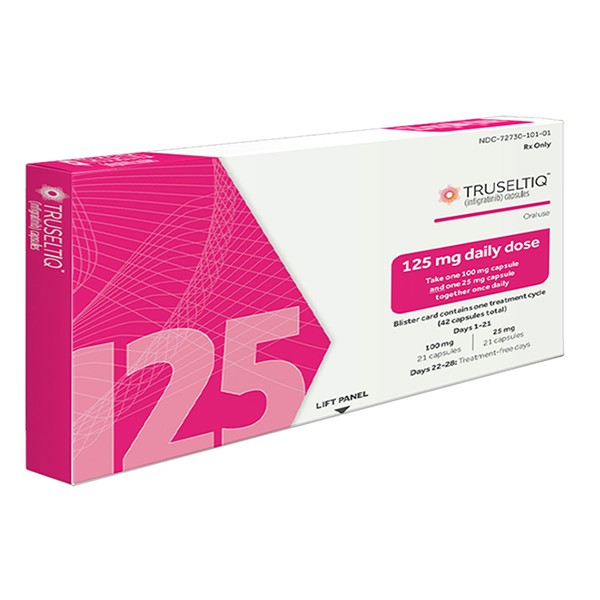
Infigratinib(Truseltiq)
Treatment of previously treated, unresectable locally advanced or metastatic...
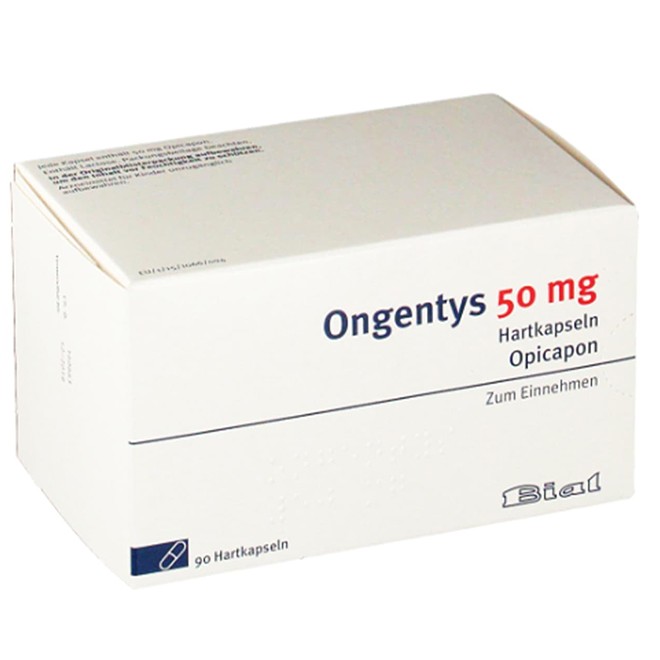
Opicapone(Ongentys)
Opicapone(Ongentys)
Adjunctive treatment to levodopa/carbidopa for reducing "off" episodes in...
Deflazacort(Emflaza)
Treatment of Duchenne muscular dystrophy (DMD) in patients aged 2 years and...
Faricimab-svoa(Vabysmo)
Treatment of neovascular age-related macular degeneration, diabetic macular...
Counselling Service
Global Drug Search
Clinical Research Recruitment
Overseas Medical Treatment
Remote Consultations
Note: Our medical consultant will contact you as soon as possible. We promise to strictly protect your privacy.
Submit
Business
  • Core products
  • Antitumor drugs
  • General drug
  • Antiviral drugs
  • Biological agents
Contact Us 
  • haiousales@gmail.com
Welcome to consult
Seagull Pharmacy.,Ltd All rights reserved