info@seagull-health.com
SeagullHealth
语言:
search
new
Instructions for Selumetinib: action and efficacy, dosage, side effects, precautions
502
Article source: Seagull Pharmacy
Jun 24, 2025

Selumetinib is a MEK1/2 inhibitor developed by AstraZeneca and approved by the US FDA in April 2020 for the treatment of neurofibromatosis type 1 (NF1)-associated plexiform neurofibromas in children aged 2 years and older. The drug works by selectively inhibiting MEK protein kinase and is the first targeted drug approved for the treatment of this rare disease.

The role and efficacy of Selumetinib

Selumetinib is an innovative targeted drug with a unique mechanism of action that provides a new treatment option for patients with NF1-related plexiform neurofibroma, which can effectively reduce tumor volume and improve clinical symptoms.

Pharmacological mechanism of action

Selumetinib blocks the RAS/MAPK signaling pathway by specifically inhibiting MEK1/2 protein kinase activity. This pathway plays a key role in the growth of NF1-associated tumors, and drugs can significantly slow tumor progression.

Clinical treatment effect

Clinical trials have shown that about 66% of patients have tumors that shrink by ≥20% after treatment. Most patients have improved symptoms, including pain reduction and functional recovery, and the effect of treatment usually begins to appear after 12 weeks of treatment.

The drug has not yet been officially marketed in China, and is currently mainly obtained through special channels.

Dosage of Selumetinib dosage

The use of Selumetinib needs to strictly follow the standard medication regimen, and the correct dosage directly affects the therapeutic effect and safety.

Standard dosing regimen

The recommended dose is 25mg/㎡, orally twice a day (about 12 hours apart). The dose should be calculated accurately based on body surface area, with a maximum single dose not exceeding 50 mg.

Dosage requirements

It must be taken on an empty stomach and fasted 2 hours before each dose and 1 hour after taking the medicine. The drug should be swallowed whole, not crushed or chewed. If the next dose is less than 6 hours before the next dose, skip it.

Principle of dose adjustment

In the case of grade 2 toxicity, the dose should be reduced by 20%, and the dose of grade 3 toxicity should be suspended until it recovers to grade ≤ 1, and the dose reduction of 40% will continue. Grade 4 toxicity usually requires permanent discontinuation.

Tumor response and drug tolerance should be assessed regularly during treatment.

Side effects and precautions of Selumetinib

Selumetinib may cause a variety of adverse effects, and understanding these risks can help with early identification and timely treatment. Rational use of medication can minimize the incidence of adverse reactions.

Common adverse reactions

The most common side effects included vomiting (80%), rash (78%), diarrhea (73%), and nausea (60%). Most are grade 1 to 2 and can be relieved by symptomatic management. About 15% of patients need to be reduced due to adverse effects.

Serious Risk Warning

May cause decreased left ventricular ejection fraction (LVEF), retinopathy, and elevated CPK. Cardiac function tests, visual acuity, and CPK monitoring are done regularly. If you have symptoms, you should seek medical attention immediately.

Growth and development should be monitored for children taking medication. Women of childbearing age should use reliable contraception. Patients with hepatic and renal insufficiency require dose adjustment. Drug interactions are common, and concomitant use of other drugs requires consultation with a doctor.

Note: For internal discussion among medical personnel only. For specific medication, please consult the attending physician. Drug information may change over time. For the latest information, we recommend adding a medical consultant or consulting for free online.
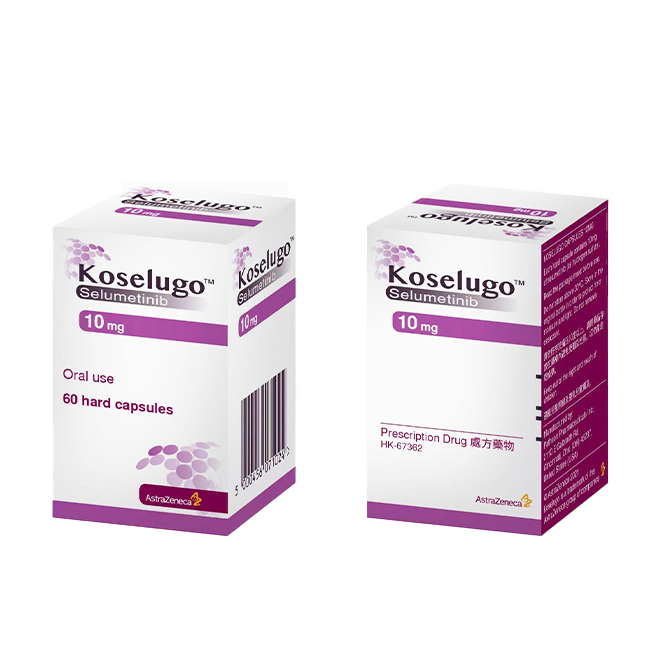
Selumetinib(Koselugo)
KOSELUGO (selumetinib) is indicated for the treatment of pediatric patients...
WeChat Scan
Free Inquiry
Recommended Articles
Side effects of Selumetinib
Selumetinib is a MEK1/2 inhibitor that has shown promising efficacy in the treatment of neurofibromatosis type 1 (NF1)-associated plexiform neurofibromas, but also comes with a specific risk of s...
Adverse reactions caused by Selumetinib bisulfate capsules
The U.S. FDA Approved Selumetinib (Koselugo) for the Treatment of Pediatric Patients 2 years of age and older with Neurofibromatosis Type 1 (NF1) and Symptomatic, Inoperable Plexiform Neurofibromas (P...
Selumetinib side effects
Selumetinib is a targeted drug for the treatment of neurofibromatosis type 1 (NF1)-associated plexiform neurofibromas, which may also bring a series of side effects. Mastering the correct mitigat...
Adverse effects of Selumetinib
As a highly effective tyrosine kinase inhibitor, Selumetinib has shown significant anti-lesion effect in clinical treatment, bringing new hope to many patients with lesions. As with many potent d...
The efficacy of the neurofibromatosis type 1 drug Selumetinib and the management of precautions
Selumetinib is the first and only drug approved in China for the treatment of pediatric patients with neurofibromatosis type 1 (NF1) with symptomatic and inoperable plexiform neurofibromas (PN), ...
Dosage Overview: Selumetinib
Selumetinib is a targeted drug specifically designed for the treatment of neurofibromatosis type 1 (NF1)-associated plexiform neurofibromas (PN). This article will provide a detailed description ...
Introduction to Metyrapone in the treatment of Cushing syndrome (CS)
Metyrapone, also known as Metyrapone, is a medication used to treat Cushing's syndrome (CS). It helps control the symptoms of Cushing's syndrome by inhibiting the enzyme 11β-hydroxylase (CYP11...
Indications for Metyrapone
Metyrapone is a drug specifically used to diagnose adrenal insufficiency, and its scope of use, contraindications, and interactions with other drugs are key information that must be understood du...
Related Articles
How to Purchase Selumetinib (Koselugo)
Selumetinib (Koselugo) is a MEK1/2 kinase inhibitor specifically indicated for the treatment of symptomatic, inoperable plexiform neurofibromas (PN) in pediatric patients aged 1 year and older with ne...
How to Use Selumetinib (Koselugo)
Selumetinib (Koselugo) is a MEK1/2 kinase inhibitor that plays a key role in the treatment of symptomatic, inoperable plexiform neurofibromas (PN) associated with neurofibromatosis type 1 (NF1) in chi...
What is Selumetinib (Koselugo)?
Selumetinib (Koselugo) is a kinase inhibitor primarily used for the treatment of specific types of nervous system tumors. As a targeted therapy drug, its unique pharmacological effects provide an impo...
What is Selumetinib (Koselugo)?
Selumetinib (Koselugo) is a targeted therapeutic drug for diseases caused by specific gene mutations. Developed by AstraZeneca, it was first approved for marketing by the U.S. FDA in 2020.What is Selu...
Dosage Overview: Selumetinib
Selumetinib is a targeted drug specifically designed for the treatment of neurofibromatosis type 1 (NF1)-associated plexiform neurofibromas (PN). This article will provide a detailed description ...
The efficacy of the neurofibromatosis type 1 drug Selumetinib and the management of precautions
Selumetinib is the first and only drug approved in China for the treatment of pediatric patients with neurofibromatosis type 1 (NF1) with symptomatic and inoperable plexiform neurofibromas (PN), ...
Instructions for Selumetinib: action and efficacy, dosage, side effects, precautions
Selumetinib is a MEK1/2 inhibitor developed by AstraZeneca and approved by the US FDA in April 2020 for the treatment of neurofibromatosis type 1 (NF1)-associated plexiform neurofibromas in child...
Side effects of Selumetinib
Selumetinib is a MEK1/2 inhibitor that has shown promising efficacy in the treatment of neurofibromatosis type 1 (NF1)-associated plexiform neurofibromas, but also comes with a specific risk of s...
New Drugs
Infigratinib(Truseltiq)
Treatment of previously treated, unresectable locally advanced or metastatic...
Opicapone(Ongentys)
Opicapone(Ongentys)
Adjunctive treatment to levodopa/carbidopa for reducing "off" episodes in...
Deflazacort(Emflaza)
Treatment of Duchenne muscular dystrophy (DMD) in patients aged 2 years and...
Faricimab-svoa(Vabysmo)
Treatment of neovascular age-related macular degeneration, diabetic macular...
Counselling Service
Global Drug Search
Clinical Research Recruitment
Overseas Medical Treatment
Remote Consultations
Note: Our medical consultant will contact you as soon as possible. We promise to strictly protect your privacy.
Submit
Business
  • Core products
  • Antitumor drugs
  • General drug
  • Antiviral drugs
  • Biological agents
Contact Us 
  • mailbox:info@lucius.la
Welcome to consult
ucius Pharmaceuticals (Lao) Co.,Ltd All rights reserved