info@seagull-health.com
SeagullHealth
语言:
search
new
Overview, Mechanism of Action and Missed Dose Management of Sotorasib
506
Article source: Seagull Pharmacy
Apr 20, 2026

Sotorasib is a precise targeted therapeutic agent against KRAS G12C mutations, providing new treatment options for patients with lung cancer and colorectal cancer who have received prior therapy.

I. Introduction to Sotorasib

1. Drug Name and Dosage Form

Sotorasib is administered as oral tablets, available in three strengths: 320 mg, 240 mg and 120 mg.

2. Approved Indications

(1) Monotherapy for locally advanced or metastatic non-small cell lung cancer with KRAS G12C mutation in adult patients who have received at least one prior systemic therapy.

(2) Combination therapy with panitumumab for metastatic colorectal cancer with KRAS G12C mutation in adult patients previously treated with fluoropyrimidine, oxaliplatin and irinotecan chemotherapy.

3. Pre-Treatment Testing

(1) Confirmation of KRAS G12C mutation via an FDA-approved assay is mandatory prior to treatment initiation.

(2) For lung cancer, testing may be performed using tumor tissue or plasma specimens; for colorectal cancer, testing must be conducted on tumor tissue specimens.

II. Mechanism of Action and Drug-Drug Interactions

1. Mechanism of Action

(1) Sotorasib is a KRAS G12C inhibitor.

(2) It forms an irreversible covalent bond with the unique cysteine residue on the KRAS G12C protein, locking the protein in its inactive conformation, blocking downstream signal transduction, while exerting no effect on wild-type KRAS.

(3) In KRAS G12C-mutant tumor cells, sotorasib inhibits cell proliferation and induces apoptosis. In colorectal cancer, combination treatment with panitumumab, an EGFR antagonist, enhances anti-tumor activity.

2. Pharmacokinetic Properties

(1) The median time to peak plasma concentration of sotorasib is approximately 1 hour, with a terminal half-life of around 5 hours.

(2) It is primarily metabolized by the CYP3A4 enzyme. Meanwhile, sotorasib induces CYP3A4, CYP2C8, CYP2C9 and CYP2B6, and inhibits P-glycoprotein and BCRP transporters.

3. Effects of Other Drugs on Sotorasib

(1) Acid-reducing agents (proton pump inhibitors such as omeprazole, H2 receptor antagonists such as famotidine): These agents markedly reduce the plasma concentration of sotorasib (omeprazole reduces peak concentration by 65%), and concomitant use should be avoided. If topical antacids are unavoidable, administration must be separated by more than 4 hours (sotorasib administered first) or more than 10 hours (antacids administered first).

(2) Strong CYP3A4 inducers (e.g., rifampin): Such agents decrease the peak concentration of sotorasib by 35% and area under the curve (AUC) by 51%, and concurrent use is contraindicated.

4. Effects of Sotorasib on Other Drugs

(1) CYP3A4 substrates (e.g., midazolam): Sotorasib reduces the peak concentration of the substrate by 48% and AUC by 53%. Concomitant use with sensitive substrates is not recommended.

(2) P-glycoprotein substrates (e.g., digoxin): Sotorasib increases the peak concentration of the substrate by 91%. Concomitant use with sensitive substrates should be avoided.

(3) BCRP substrates (e.g., rosuvastatin): Sotorasib elevates the peak concentration of the substrate by 70% and AUC by 34%.

III. Management of Missed, Vomited and Overdosed Doses

1. Management of Missed Doses

(1) Administer the medication at a fixed daily time.

(2) If more than 6 hours have elapsed since the scheduled dosing time, skip the missed dose. Resume the regular next dose at the prescribed time on the following day.

(3) Do not take a double dose to compensate for the missed dose under any circumstances.

2. Management of Vomiting After Dosing

(1) Do not take an additional supplementary dose if vomiting occurs following drug administration.

(2) Continue the regular scheduled dose on the subsequent day.

3. Management of Overdosage

(1) Sotorasib overdosage may result in significant hypotension; severe cases may lead to decreased consciousness or even circulatory collapse.

(2) Place the patient in a supine position and seek immediate medical intervention.

Note: For internal discussion among medical personnel only. For specific medication, please consult the attending physician. Drug information may change over time. For the latest information, we recommend adding a medical consultant or consulting for free online.
Recommended Articles
Canakinumab (Ilaris): Dosage and Administration, Precautions, and Healthy Lifestyle
Canakinumab is an IL-1β inhibitor used for the treatment of various autoinflammatory diseases.I. Dosage and Administration of Canakinumab1. Route of AdministrationFor subcutaneous use only; intravenou...
Canakinumab (Ilaris): Side Effects, Management Strategies and Storage Instructions
Canakinumab is an IL-1β inhibitor indicated for various autoinflammatory diseases.I. Common Side Effects of Canakinumab1. Common Side Effects in CAPS Patients(1) Side effects with an incidence rate ex...
Selpercatinib (Retevmo): Dosage, Precautions, and Healthy Living
Selpercatinib (Retevmo) is an oral, precision-targeted antineoplastic agent that selectively inhibits the RET driver gene.I. Dosage and Administration1. Adults and Adolescents Aged 12 Years and OlderD...
Selpercatinib (Retevmo): Side Effects, Management Strategies, and Storage Guidelines
Selpercatinib (Retevmo) demonstrates significant efficacy in the treatment of various RET-driven tumors, yet it may also induce a range of adverse reactions.I. Common Side Effects1. Common Adverse Rea...
Indications, Contraindications and Special Population Administration Precautions of Sotorasib
Sotorasib is a precise targeted therapeutic agent for KRAS G12C mutations, indicated for patients with specific genotypes of lung cancer and colorectal cancer.I. IndicationsLocally advanced or metasta...
Ponatinib (Iclusig): Guidelines on Indications, Contraindications and Special Population Use
Ponatinib is a potent oral kinase inhibitor indicated for the treatment of specific types of leukemia and chronic myeloid leukemia, with particularly remarkable efficacy in patients harboring the T315...
Ponatinib (Iclusig): Side Effects, Mitigation Measures and Storage Guidelines
While ponatinib is effective in treating specific hematological malignancies, it may also induce a variety of adverse reactions.I. Major Side Effects1. Severe Adverse ReactionsHigh-risk severe side ef...
Capmatinib (Tabrecta): Dosage, Precautions and Healthy Lifestyle Guidelines
Standardized medication is the cornerstone for the efficacy of capmatinib. Combined with scientific health management, it can reduce adverse reactions and improve quality of life.I. Dosage and Adminis...
Related Articles
Mercaptopurine Tablets: Side Effect Management and Storage Guidelines
Mercaptopurine is a chemotherapy drug used to treat acute lymphoblastic leukemia. Understanding its side effects, mastering relief methods, and proper storage are crucial for treatment safety.1. Commo...
Indications, contraindications, and use in special populations for Mercaptopurine Tablets
Mercaptopurine is a chemotherapy drug used to treat acute lymphoblastic leukemia. Clarifying its indications, contraindications, and key points for use in special populations is crucial for treatment ...
Major Side Effects of Cevimeline
Cevimeline is used to improve dry mouth caused by Sjögren's syndrome, but it may cause various side effects when used.I. Major Side Effects of Cevimeline1. Digestive System Side Effects(1) The mos...
Cevimeline: Indications, Contraindications, and Use in Special Populations
Cevimeline is a cholinergic agonist that primarily promotes salivation by stimulating M receptors in the salivary glands.I. Indications1. Core IndicationCevimeline is indicated only for the improvemen...
Indications of Infigratinib
Infigratinib is an oral kinase inhibitor targeting FGFR2, indicated for patients with specific gene mutations in cholangiocarcinoma.I. Indications1. Infigratinib is indicated for adult patients with p...
Common Side Effects of Infigratinib
Infigratinib has shown clear efficacy in the treatment of FGFR2-mutant cholangiocarcinoma, but may also cause various side effects.I. Common Side Effects1. Ocular Side Effects:(1) The most common ocul...
What is Momelotinib?
Momelotinib is an oral kinase inhibitor indicated for the treatment of adults with intermediate or high-risk myelofibrosis with anemia, including primary and secondary myelofibrosis.I. What is Momelot...
What are the common side effects of Momelotinib
Momelotinib is a targeted therapy used for the treatment of intermediate/high-risk myelofibrosis with anemia. Understanding its common side effects, mastering management strategies, and proper storage...
New Drugs
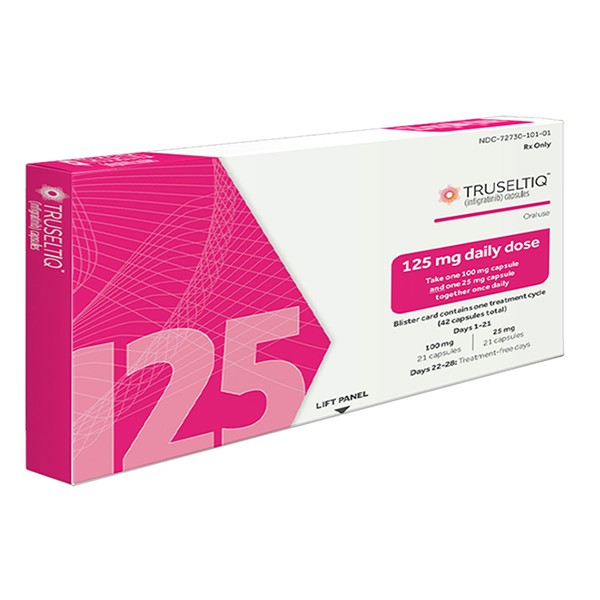
Infigratinib(Truseltiq)
Treatment of previously treated, unresectable locally advanced or metastatic...
Opicapone(Ongentys)
Opicapone(Ongentys)
Adjunctive treatment to levodopa/carbidopa for reducing "off" episodes in...
Deflazacort(Emflaza)
Treatment of Duchenne muscular dystrophy (DMD) in patients aged 2 years and...
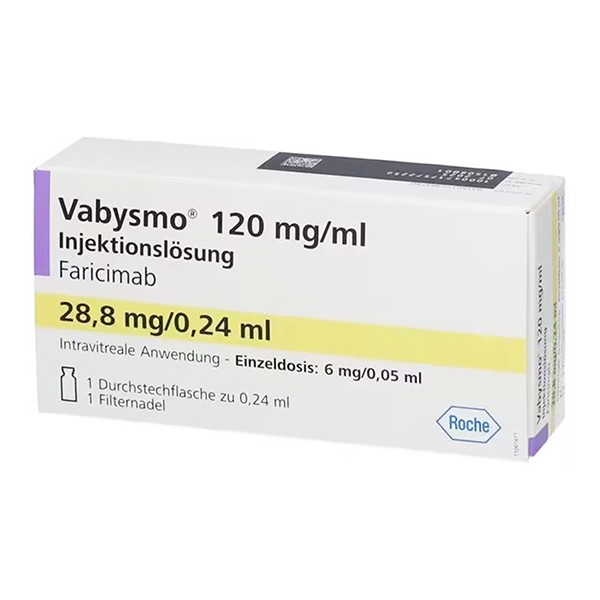
Faricimab-svoa(Vabysmo)
Treatment of neovascular age-related macular degeneration, diabetic macular...
Counselling Service
Global Drug Search
Clinical Research Recruitment
Overseas Medical Treatment
Remote Consultations
Note: Our medical consultant will contact you as soon as possible. We promise to strictly protect your privacy.
Submit
Business
  • Core products
  • Antitumor drugs
  • General drug
  • Antiviral drugs
  • Biological agents
Contact Us 
  • haiousales@gmail.com
Welcome to consult
Seagull Pharmacy.,Ltd All rights reserved