info@seagull-health.com
SeagullHealth
语言:
search
new
Selumetinib dosage
501
Article source: Seagull Pharmacy
Jun 24, 2025

Selumetinib(Koselugo) has demonstrated significant clinical efficacy as a kinase inhibitor in pediatric patients with neurofibromatosis type 1 (NF1) who are 2 years of age and older with symptomatic, inoperable plexiform neurofibromas (PN). However, in order to maximize its efficacy and minimize side effects, patients and families must strictly follow its dosage and precautions.

Selumetinib dosage

The recommended dosage and administration of Selumetinib is key to ensuring efficacy. Here's a closer look at its usage.

Recommended dose

The recommended dose of Selumetinib is 25 mg/m² orally twice daily (approximately every 12 hours) until disease progression or unacceptable toxicity. This dose is calculated based on the patient's body surface area (BSA) and varies from one BSA patient to another.

Time to take

Patients should take Selumetinib on an empty stomach, i.e., do not eat 2 hours before each dose or 1 hour after each dose. This ensures optimal absorption of the drug in the body.

Directions

Selumetinib should be taken with water, not broken or chewed. This medicine should be avoided in patients who are unable to swallow the entire capsule. If you have any other questions about Selumetinib, you can also click on the free online consultation

Following the dosage described above ensures that Selumetinib works best in the body. In addition to the correct dosage, patients should also pay attention to their daily diet while taking Selumetinib to avoid affecting the efficacy of the drug or increasing side effects.

Daily dietary precautions for Selumetinib

The following are some of the daily dietary precautions of the drug.

Avoid taking with specific foods

While taking Selumetinib, it should be avoided with certain foods, especially high-fat foods, as they may affect the absorption and metabolism of the drug.

Maintain a balanced diet

Patients should maintain a balanced diet and consume sufficient nutrients during the period of taking the drug to enhance the body's immunity and fight the disease.

Follow your doctor's instructions

When it comes to diet, patients should also follow their doctor's instructions, especially specific recommendations on which foods to avoid or restrict.

A reasonable diet can not only improve the efficacy of the drug, but also reduce the occurrence of side effects.

Pharmacokinetics of Selumetinib

Understanding the pharmacokinetic properties of Selumetinib can help patients better understand its absorption, distribution, metabolism and excretion processes in the body, so as to use drugs more scientifically.

Absorption and distribution

The absorption and distribution of Selumetinib in the body is affected by a variety of factors, including the patient's age, gender, liver and kidney function, etc. Therefore, there may be differences in pharmacokinetic properties between different patients.

Metabolism and excretion

Selumetinib is metabolized and excreted mainly through the liver and kidneys. Patients with hepatic insufficiency or renal insufficiency may need to adjust the dose or keep a close eye on how well the drug is metabolized in the body.

Drug interactions

Selumetinib may interact with other medications, affecting each other's efficacy or increasing side effects. Therefore, while taking Selumetinib, patients should inform their doctor about other medications they are taking to avoid potential drug interactions.

By understanding the pharmacokinetic properties of Selumetinib, patients can better grasp the medication rules and improve the treatment effect. Selumetinib dosage and precautions are essential to ensure efficacy and reduce side effects. Patients and their families should strictly follow the doctor's instructions, use drugs rationally, and pay attention to issues such as diet and drug interactions to achieve the best treatment effect.

Note: For internal discussion among medical personnel only. For specific medication, please consult the attending physician. Drug information may change over time. For the latest information, we recommend adding a medical consultant or consulting for free online.
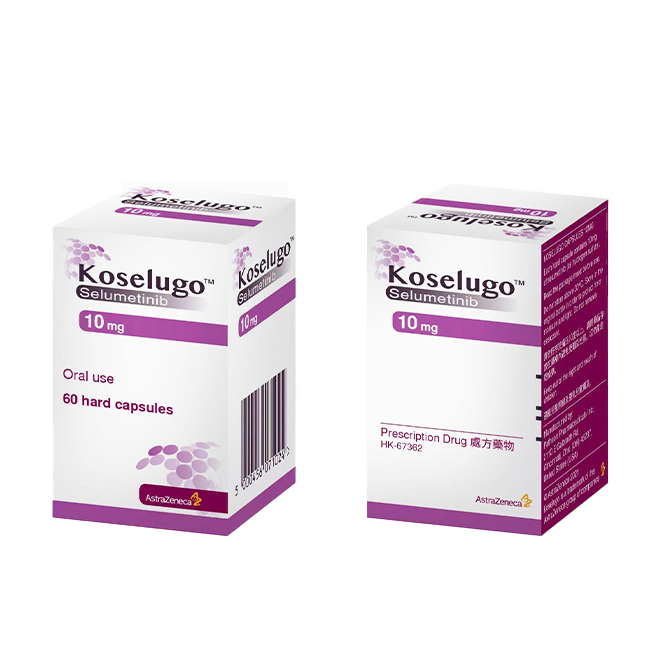
Selumetinib(Koselugo)
KOSELUGO (selumetinib) is indicated for the treatment of pediatric patients...
WeChat Scan
Free Inquiry
Recommended Articles
Selumetinib effect
Selumetinib is a targeted therapy drug that is primarily used to treat specific types of neurofibromatosis. This article will delve into the mechanism of action of Selumetinib, its clinical efficacy, ...
Efficacy of Selumetinib
Selumetinib is a targeted drug specifically designed for the treatment of neurofibromatosis type 1 (NF1)-associated plexiform neurofibromas (PN). This article will detail the efficacy of Selumetinib, ...
Is Selumetinib a targeted drug?
Selumetinib is a targeted therapy that specifically targets specific genetic mutations, primarily for the treatment of plexiform neurofibromas associated with neurofibromatosis type 1. This artic...
What kind of drug is Selumetinib?
Selumetinib is a targeted therapy that specifically targets specific types of neurofibromatosis. This article will introduce the basic information, dosage, and precautions of Selumetinib in ...
Adverse effects of Selumetinib
As a highly effective tyrosine kinase inhibitor, Selumetinib has shown significant anti-lesion effect in clinical treatment, bringing new hope to many patients with lesions. As with many potent d...
Selumetinib side effects
Selumetinib is a targeted drug for the treatment of neurofibromatosis type 1 (NF1)-associated plexiform neurofibromas, which may also bring a series of side effects. Mastering the correct mitigat...
Adverse reactions caused by Selumetinib bisulfate capsules
The U.S. FDA Approved Selumetinib (Koselugo) for the Treatment of Pediatric Patients 2 years of age and older with Neurofibromatosis Type 1 (NF1) and Symptomatic, Inoperable Plexiform Neurofibromas (P...
Side effects of Selumetinib
Selumetinib is a MEK1/2 inhibitor that has shown promising efficacy in the treatment of neurofibromatosis type 1 (NF1)-associated plexiform neurofibromas, but also comes with a specific risk of s...
Related Articles
How to Purchase Selumetinib (Koselugo)
Selumetinib (Koselugo) is a MEK1/2 kinase inhibitor specifically indicated for the treatment of symptomatic, inoperable plexiform neurofibromas (PN) in pediatric patients aged 1 year and older with ne...
How to Use Selumetinib (Koselugo)
Selumetinib (Koselugo) is a MEK1/2 kinase inhibitor that plays a key role in the treatment of symptomatic, inoperable plexiform neurofibromas (PN) associated with neurofibromatosis type 1 (NF1) in chi...
What is Selumetinib (Koselugo)?
Selumetinib (Koselugo) is a kinase inhibitor primarily used for the treatment of specific types of nervous system tumors. As a targeted therapy drug, its unique pharmacological effects provide an impo...
What is Selumetinib (Koselugo)?
Selumetinib (Koselugo) is a targeted therapeutic drug for diseases caused by specific gene mutations. Developed by AstraZeneca, it was first approved for marketing by the U.S. FDA in 2020.What is Selu...
Dosage Overview: Selumetinib
Selumetinib is a targeted drug specifically designed for the treatment of neurofibromatosis type 1 (NF1)-associated plexiform neurofibromas (PN). This article will provide a detailed description ...
The efficacy of the neurofibromatosis type 1 drug Selumetinib and the management of precautions
Selumetinib is the first and only drug approved in China for the treatment of pediatric patients with neurofibromatosis type 1 (NF1) with symptomatic and inoperable plexiform neurofibromas (PN), ...
Instructions for Selumetinib: action and efficacy, dosage, side effects, precautions
Selumetinib is a MEK1/2 inhibitor developed by AstraZeneca and approved by the US FDA in April 2020 for the treatment of neurofibromatosis type 1 (NF1)-associated plexiform neurofibromas in child...
Side effects of Selumetinib
Selumetinib is a MEK1/2 inhibitor that has shown promising efficacy in the treatment of neurofibromatosis type 1 (NF1)-associated plexiform neurofibromas, but also comes with a specific risk of s...
New Drugs
Infigratinib(Truseltiq)
Treatment of previously treated, unresectable locally advanced or metastatic...
Opicapone(Ongentys)
Opicapone(Ongentys)
Adjunctive treatment to levodopa/carbidopa for reducing "off" episodes in...
Deflazacort(Emflaza)
Treatment of Duchenne muscular dystrophy (DMD) in patients aged 2 years and...
Faricimab-svoa(Vabysmo)
Treatment of neovascular age-related macular degeneration, diabetic macular...
Counselling Service
Global Drug Search
Clinical Research Recruitment
Overseas Medical Treatment
Remote Consultations
Note: Our medical consultant will contact you as soon as possible. We promise to strictly protect your privacy.
Submit
Business
  • Core products
  • Antitumor drugs
  • General drug
  • Antiviral drugs
  • Biological agents
Contact Us 
  • mailbox:info@lucius.la
Welcome to consult
ucius Pharmaceuticals (Lao) Co.,Ltd All rights reserved