info@seagull-health.com
SeagullHealth
语言:
search
new
Therapeutic effect of Fidaxomicin
500
Article source: Seagull Pharmacy
Jul 07, 2025

Fidaxomycin (DIFICID) is a narrow-spectrum antibiotic that precisely kills pathogens by inhibiting the RNA polymerase of Clostridium difficile. Its unique pharmacological properties make it the first choice for the treatment of Clostridium difficile-associated diarrhea (CDAD), especially in reducing the recurrence rate.

Therapeutic effect of Fidaxomycin

Precise antibacterial and reduced risk of recurrence

Fidaxomycin inhibits the activity of bacterial RNA polymerase, blocks the transcription process of Clostridium difficile, and thus inhibits its proliferation. Compared with vancomycin, fidaxomycin has less effect on normal intestinal flora, and the recurrence rate after treatment is reduced by about 50%. The recommended dose for adults and children over 6 months old is 200 mg twice a day for 10 consecutive days.

Indications and restrictions on use

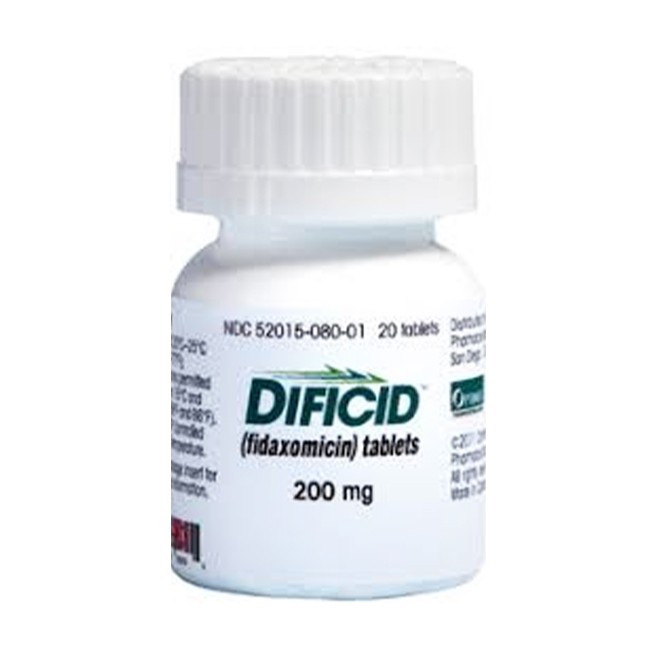
Fidaxomycin is only suitable for diarrhea that is confirmed or highly suspected to be caused by Clostridium difficile. Undiagnosed use may accelerate the development of drug-resistant bacteria. The specifications of the original Japanese drug are 200 mg*20 tablets.

After understanding the core role of the drug, patients need to pay attention to the physical reactions that may occur during treatment. The following content will explain common side effects in detail.

Common side effects of Fidaxomicin

The systemic absorption rate of Fidaxomicin is extremely low, and adverse reactions are mainly concentrated in the digestive tract and blood system. Timely identification and treatment of side effects can improve treatment compliance.

Adverse reactions in adult patients

About 2% of adult patients experience nausea, vomiting or abdominal pain, and very few may experience gastrointestinal bleeding. It is recommended to take the medicine after meals to reduce gastrointestinal irritation. The incidence of neutropenia is about 1.5%. Blood routine tests should be performed every two weeks during treatment. If the absolute value of neutrophils is less than 1.0×10⁹/L, the medication should be suspended.

Special reactions in pediatric patients

About 5% of children aged 6 months to 18 years have fever or rash, and the incidence of elevated transaminases is about 3%. It is recommended to evaluate liver function before treatment. If ALT/AST exceeds 3 times the upper limit of normal, the dose needs to be adjusted or the drug should be discontinued. Children weighing ≥12.5 kg can swallow tablets, otherwise the oral suspension (40 mg/mL) should be used.

After mastering the side effect management method, the correct storage of the drug is an important part of ensuring the efficacy. The following will explain the storage specifications of Fidaxomicin.

Storage method of Fidaxomicin

Fidaxomicin is sensitive to storage conditions. Improper storage may cause the drug to lose efficacy or increase the risk of adverse reactions. Strictly following the storage guidelines can extend the shelf life of the drug and maintain stable efficacy.

Temperature and light control

Unopened tablets or suspensions should be stored at room temperature of 15°C-30°C away from light, avoid high temperature or freezing. The reconstituted oral suspension should be refrigerated (2°C-8°C) and used within 12 days. After opening, the tablets should be sealed to prevent moisture and placed in a dry place.

Package integrity and dosage form differences

Tablets should be kept in the original aluminum foil bag and sealed immediately after each medication. Suspension granules are stored in amber glass bottles. Check whether the granules are agglomerated before reconstitution. If the drug solution changes color or precipitates, it should be discarded. Laos generic drugs (200mg*20 tablets) need to pay special attention to temperature fluctuations during transportation.

Avoid using it with P-glycoprotein inhibitors (such as cyclosporine) during treatment to prevent abnormal increases in blood drug concentrations. If allergic reactions such as dyspnea and rash occur, stop taking the drug immediately and seek medical attention. Through standardized medication and scientific management, Fidaxomicin can provide an efficient and safe treatment option for patients with Clostridium difficile infection.

Note: For internal discussion among medical personnel only. For specific medication, please consult the attending physician. Drug information may change over time. For the latest information, we recommend adding a medical consultant or consulting for free online.
Fidaxomicin(DIFICID)
Indicated for the treatment of Clostridium difficile-associated diarrhea (CDAD)...
WeChat Scan
Free Inquiry
Recommended Articles
Recommended dose of Fidaxomicin
Fidaxomicin is a macrolide antibiotic that fights Clostridium difficile infection by inhibiting bacterial RNA polymerase and plays a role in the treatment of Clostridium difficile-associated diar...
Fidaxomicin instructions: effects and efficacy
Fidaxomicin(DIFICID) is a narrow-spectrum macrolide antibiotic specifically used to treat Clostridium difficile-associated diarrhea (CDAD). It precisely inhibits the growth of pathogens and reduc...
What diseases can Fidaxomicin treat?
Fidaxomicin was officially approved by the U.S. Food and Drug Administration (FDA) on May 27, 2011 and was launched in the U.S. market. So far, the drug has not been launched in China and has not...
How to buy Fidaxomicin
Fidaxomicin is an antibiotic used to treat Clostridium difficile-associated diarrhea (CDAD) and was developed by Astellas of Japan. Since the drug is not yet available in China, patients need to ...
What are the side effects of Fidaxomicin?
Fidaxomicin is approved for the treatment of Clostridium difficile-associated diarrhea in adults (18 years and older). Compared with existing drugs, Fidaxomicin has higher efficacy and lower...
What are the precautions for Fidaxomicin?
Fidaxomicin is a drug specifically used to fight Clostridium difficile infection. Fidaxomicin interferes with the metabolic process of Clostridium difficile, prevents the reproduction and sp...
Canakinumab(ILARIS) instructions: use, usage
Canakinumab(ILARIS) is a monoclonal antibody targeting interleukin-1β (IL-1β) and is used to treat a variety of autoinflammatory diseases. It effectively controls disease symptoms and reduces the...
Instructions for Canakinumab
Canakinumab is a monoclonal antibody against interleukin-1β (IL-1β), mainly used to treat a variety of autoinflammatory diseases and gout attacks. Its mechanism of action is to reduce the inflammatory...
Related Articles
How to Use Dificid (Fidaxomicin)
Dificid (fidaxomicin) is a macrolide antibacterial agent, primarily used to treat Clostridioides difficile - associated diarrhea (CDAD) in adult patients and pediatric patients aged 6 months and older...
What Kind of Drug Is Dificid (Fidaxomicin)?
Dificid (fidaxomicin) is a new-generation macrolide antibacterial agent. It plays an important role in the treatment of Clostridioides difficile infections through a unique targeted mechanism of actio...
How to Purchase Dificid (Fidaxomicin)
Dificid (fidaxomicin) is a macrolide antibacterial agent used for the treatment of Clostridioides difficile - associated diarrhea (CDAD). It is indicated for adult patients and pediatric patients aged...
How to Use Dificid (Fidaxomicin)
Dificid (Fidaxomicin) is a macrolide antibacterial agent used for the treatment of Clostridioides difficile-associated diarrhea (CDAD) in pediatric patients aged 6 months and older, as well as adult p...
Precautions for Administration of Dificid (Fidaxomicin)
Dificid (Fidaxomicin) is a macrolide antibacterial agent specifically indicated for the treatment of diarrhea caused by Clostridioides difficile (CDAD). It is suitable for pediatric patients aged 6 mo...
How Effective is Dificid (Fidaxomicin) in Treatment?
Dificid (Fidaxomicin) is a macrolide antibacterial agent primarily indicated for the treatment of Clostridioides difficile-associated diarrhea (CDAD). As an antibacterial drug that selectively inhibit...
What are the Side Effects of Dificid (Fidaxomicin)?
Dificid (Fidaxomicin) is a macrolide antibiotic specifically indicated for the treatment of diarrhea caused by Clostridioides difficile (CDAD).What are the Side Effects of Dificid (Fidaxomicin)?Common...
What Kind of Drug Is Dificid (Fidaxomicin)?
Dificid (fidaxomicin) is a macrolide antibacterial drug developed by Merck & Co., Inc. It was approved for marketing by the U.S. FDA in 2011. As a narrow-spectrum antibacterial agent, fidaxomicin ...
New Drugs
Infigratinib(Truseltiq)
Treatment of previously treated, unresectable locally advanced or metastatic...
Opicapone(Ongentys)
Opicapone(Ongentys)
Adjunctive treatment to levodopa/carbidopa for reducing "off" episodes in...
Deflazacort(Emflaza)
Treatment of Duchenne muscular dystrophy (DMD) in patients aged 2 years and...
Faricimab-svoa(Vabysmo)
Treatment of neovascular age-related macular degeneration, diabetic macular...
Counselling Service
Global Drug Search
Clinical Research Recruitment
Overseas Medical Treatment
Remote Consultations
Note: Our medical consultant will contact you as soon as possible. We promise to strictly protect your privacy.
Submit
Business
  • Core products
  • Antitumor drugs
  • General drug
  • Antiviral drugs
  • Biological agents
Contact Us 
  • mailbox:info@lucius.la
Welcome to consult
ucius Pharmaceuticals (Lao) Co.,Ltd All rights reserved