

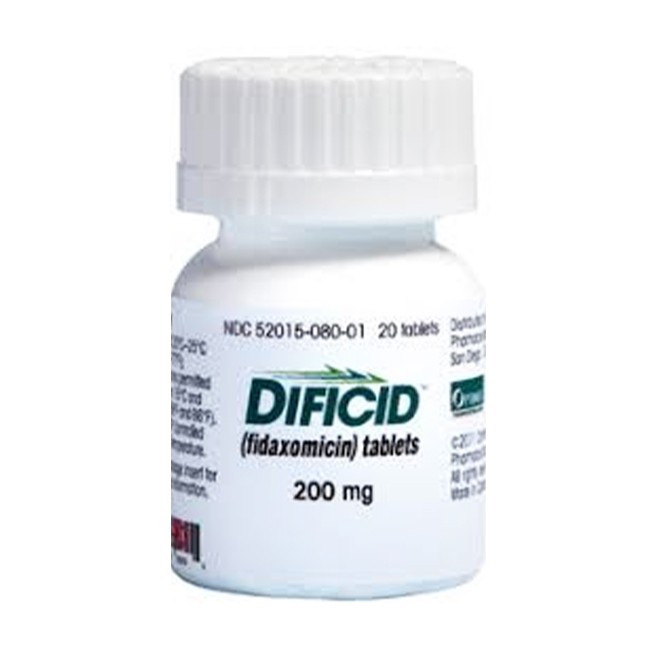
Fidaxomicin (Dificid) is a macrolide antibiotic specifically indicated for Clostridioides difficile-associated diarrhea, acting locally in the intestine with minimal systemic absorption.
Indications: Only for Clostridioides difficile-associated diarrhea
1. Indication
(1) Fidaxomicin is indicated for the treatment of Clostridioides difficile-associated diarrhea (CDAD) in adults and pediatric patients aged 6 months and older.
(2) Clostridioides difficile is a bacterium that can cause severe diarrhea and even fatal colitis, typically occurring after the use of other antibiotics.
2. Prerequisites for use
(1) This drug should only be used when the infection caused by Clostridioides difficile is confirmed or highly suspected.
(2) Because fidaxomicin is almost not absorbed into the bloodstream after oral administration and acts only locally in the intestine, it is ineffective against other types of infections (e.g., systemic bacterial infections).
(3) When selecting or adjusting antibacterial therapy, physicians should consider bacterial culture and susceptibility results.
(4) In the absence of such data, empirical therapy may be based on local epidemiology and resistance patterns.
Contraindications
1. The contraindications for fidaxomicin are straightforward: it is contraindicated in patients with known hypersensitivity to fidaxomicin or any of its excipients.
2. Hypersensitivity reactions may manifest as acute dyspnea, rash, pruritus, angioedema of the lips/throat/face.
3. If a severe hypersensitivity reaction occurs, discontinue the drug immediately and seek medical attention.
Key points for special populations
1. Pregnant women:
Use in pregnant women should only be considered after a physician's assessment that the benefits outweigh the risks.
2. Breastfeeding women:
Considering the health benefits of breastfeeding for the infant and the mother's clinical need for the drug, a decision on whether to breastfeed should be made after weighing the pros and cons under medical guidance.
3. Children:
(1) Safety and effectiveness have been established in pediatric patients aged 6 months to less than 18 years, and no dose adjustment is required.
(2) Safety and effectiveness in infants younger than 6 months have not been established.
4. Elderly (≥65 years):
(1) Plasma concentrations of fidaxomicin and its metabolite in elderly patients are 2 to 4 times higher than in non-elderly patients, but still at extremely low nanogram/mL levels, which is not clinically significant.
(2) No dose adjustment is required, and safety is generally similar to that in younger patients.
5. Hepatic or renal impairment:
(1) No dose adjustment is required for patients with mild to severe renal impairment (based on creatinine clearance).
(2) Since fidaxomicin and its metabolite are not significantly dependent on hepatic metabolism, hepatic impairment is not expected to markedly affect drug clearance, but this has not been formally evaluated.
6. Drug interactions:
(1) Fidaxomicin and OP-1118 are substrates of P-glycoprotein.
(2) When coadministered with cyclosporine (a P-glycoprotein inhibitor), blood concentrations rise but remain in the nanogram/mL range, and no dose adjustment is required.
(3) Fidaxomicin does not affect the metabolism of drugs such as digoxin, midazolam, warfarin, or omeprazole.

Free Inquiry