info@seagull-health.com
SeagullHealth
语言:
search
new
What Are the Side Effects of Capmatinib (Tabrecta)?
501
Article source: Seagull Pharmacy
Oct 13, 2025

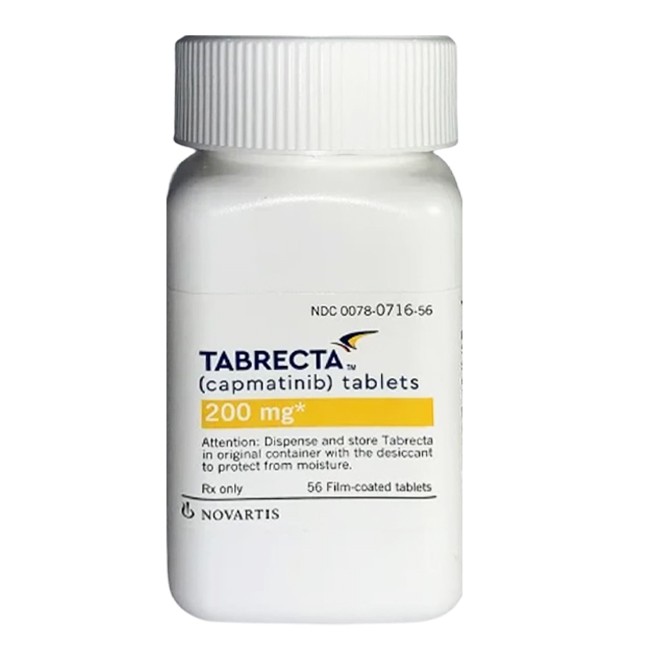
Capmatinib (Tabrecta) is a targeted MET kinase inhibitor indicated for the treatment of adult patients with metastatic non-small cell lung cancer (NSCLC) harboring MET exon 14 skipping mutations. As a targeted therapeutic agent, while capmatinib demonstrates excellent efficacy, it is also associated with a series of side effects and medication precautions that require vigilance.

What Are the Side Effects of Capmatinib (Tabrecta)?

Common Side Effects

Peripheral edema: Occurs in approximately 52% of patients.

Nausea: Incidence of approximately 44%.

Fatigue: Occurs in approximately 32% of patients.

Vomiting: Incidence of 28%.

Dyspnea: Incidence of 24%.

Decreased appetite: Occurs in approximately 21% of patients.

Serious Side Effects of Capmatinib (Tabrecta) That Require Vigilance

Interstitial Lung Disease (ILD)/Pneumonitis

Approximately 4.5% of patients develop ILD/pneumonitis during capmatinib treatment.

If patients experience new or worsening pulmonary symptoms such as dyspnea, cough, or fever, they should seek medical attention immediately.

Once ILD/pneumonitis is diagnosed and other causes are ruled out, capmatinib must be permanently discontinued.

Hepatotoxicity

Approximately 13% of patients experience elevated ALT/AST levels.

It is recommended to monitor liver function (ALT, AST, and total bilirubin) regularly before and during treatment—every 2 weeks for the first 3 months, then monthly or more frequently based on clinical needs.

Depending on the severity of hepatotoxicity, it may be necessary to suspend medication, reduce the dose, or permanently discontinue treatment.

Risk of Photosensitivity Reaction

Animal studies indicate that capmatinib may cause photosensitivity reactions.

Although the incidence of photosensitivity reactions has not been clearly reported in clinical studies, patients are advised to limit direct ultraviolet (UV) exposure during treatment and take sun protection measures such as using sunscreen or wearing protective clothing.

Embryo-Fetal Toxicity

Animal experiments show that capmatinib can cause fetal malformations at doses lower than the clinical exposure levels in humans.

Use in pregnant women may cause fetal harm. Women of childbearing age should use effective contraceptive measures during treatment and for 1 week after the last dose.

Female partners of male patients should also use contraceptive measures during the same time period.

Precautions for Capmatinib (Tabrecta) Administration

Patient Selection

Capmatinib is only indicated for adult patients with metastatic NSCLC confirmed to have MET exon 14 skipping mutations via FDA-approved testing methods.

The mutation status must be confirmed by molecular testing before initiating treatment.

Drug Interactions

Strong and moderate CYP3A inducers: Concomitant use should be avoided, as they can significantly reduce capmatinib plasma concentrations, potentially weakening its anti-tumor activity.

Strong CYP3A inhibitors: Close monitoring for adverse reactions is required, as they may increase capmatinib exposure.

Drugs that are substrates of CYP1A2, P-gp, or BCRP: Capmatinib can increase the exposure of these drugs; if concomitant use is necessary, consideration should be given to reducing the dose of these drugs.

Proton pump inhibitors: May reduce capmatinib absorption and should be used with caution.

Patient Monitoring and Follow-Up

Pulmonary symptoms and liver function should be monitored regularly during treatment.

Educate patients to recognize the early symptoms of ILD/pneumonitis and hepatotoxicity.

Advise patients to avoid direct sunlight exposure and take sun protection measures.

Patients of childbearing age should use effective contraceptive measures.

Note: For internal discussion among medical personnel only. For specific medication, please consult the attending physician. Drug information may change over time. For the latest information, we recommend adding a medical consultant or consulting for free online.
Capmatinib(Tabrecta)
Treatment of metastatic non-small cell lung cancer (NSCLC) with MET exon 14...
WeChat Scan
Free Inquiry
Recommended Articles
How Effective is Capmatinib (Tabrecta) in Treatment?
Capmatinib (Tabrecta) is a targeted therapeutic agent that has demonstrated favorable efficacy in the treatment of specific types of non-small cell lung cancer (NSCLC) in recent years. As a kinase inh...
Precautions for Capmatinib (Tabrecta) Administration
Capmatinib (Tabrecta) is a kinase inhibitor targeting metastatic non-small cell lung cancer (NSCLC) with METex14 skipping mutation. Its efficacy has been verified in clinical trials; however, during m...
Precautions for Capmatinib (Tabrecta) Administration
Capmatinib (Tabrecta) is a kinase inhibitor targeting metastatic non-small cell lung cancer (NSCLC) with MET exon 14 (METex14) skipping mutations. Its efficacy has been validated in clinical trials; h...
Indication of Capmatinib (Tabrecta)
Capmatinib (Tabrecta) is a small-molecule inhibitor targeting the MET kinase, developed by Novartis and granted accelerated approval by the U.S. FDA in 2020. As a precision therapy, it has demonstrate...
How to Use Anagrelide (Agrylin)
Anagrelide (Agrylin) is a selective thrombocytopenic agent primarily used to treat thrombocythemia secondary to myeloproliferative neoplasms. It reduces the risk of thrombosis and improves related sym...
Precautions for Anagrelide (Agrylin) Administration
Anagrelide (Agrylin) is a thrombocytopenic agent primarily used to treat thrombocythemia secondary to myeloproliferative neoplasms. It reduces platelet counts, lowers the risk of thrombosis, and impro...
Indications for Cemiplimab
Cemiplimab is an important immunotherapeutic agent classified as a programmed death receptor-1 (PD-1) blocking antibody. As a significant breakthrough in the field of cancer immunotherapy in recent ye...
How to Purchase Cemiplimab
Cemiplimab is a PD-1 inhibitor approved for the treatment of patients with metastatic or locally advanced cutaneous squamous cell carcinoma (CSCC) who are not suitable for curative surgery or curative...
Related Articles
Dosage and Administration, Recommended Dosage of Capmatinib (Tabrecta)
Capmatinib (Tabrecta) is a highly selective MET inhibitor, offering a precision treatment option for patients with metastatic non-small cell lung cancer (NSCLC) harboring MET exon 14 skipping mutation...
What Are the Indications for Capmatinib (Tabrecta)?
Capmatinib (Tabrecta) is a targeted therapy medication that plays an important role in the treatment of non-small cell lung cancer associated with specific gene mutations. As a MET kinase inhibitor, i...
What Are the Purchase Channels for Capmatinib (Tabrecta)?
Capmatinib (Tabrecta) is a highly selective MET inhibitor that has demonstrated significant efficacy in patients with metastatic non-small cell lung cancer (NSCLC) harboring MET exon 14 skipping mutat...
Dosage and Administration, Recommended Dose of Capmatinib (Tabrecta)
Capmatinib (Tabrecta) is a kinase inhibitor indicated for the treatment of adult patients with metastatic non-small cell lung cancer (NSCLC) harboring MET exon 14 skipping mutation.Dosage and Administ...
What Are the Indications for Capmatinib (Tabrecta)?
Capmatinib (Tabrecta) is a highly selective MET kinase inhibitor targeting specific gene mutations, developed by Novartis and approved for marketing by the U.S. FDA in 2020.What Are the Indications fo...
What Are the Purchase Channels for Capmatinib (Tabrecta)?
Capmatinib (Tabrecta) is a targeted therapy for metastatic non-small cell lung cancer (NSCLC) with MET exon 14 skipping mutation, offering a new treatment option for patients with this specific geneti...
How to Use Capmatinib (Tabrecta)
Capmatinib (Tabrecta) is a targeted therapy drug for metastatic non-small cell lung cancer (NSCLC) with MET exon 14 skipping mutation.How to Use Capmatinib (Tabrecta)Standard Dosage RegimenThe recomme...
What Are the Side Effects of Capmatinib (Tabrecta)?
Capmatinib (Tabrecta) is a targeted MET kinase inhibitor indicated for the treatment of adult patients with metastatic non-small cell lung cancer (NSCLC) harboring MET exon 14 skipping mutations. As a...
New Drugs
Infigratinib(Truseltiq)
Treatment of previously treated, unresectable locally advanced or metastatic...
Opicapone(Ongentys)
Opicapone(Ongentys)
Adjunctive treatment to levodopa/carbidopa for reducing "off" episodes in...
Deflazacort(Emflaza)
Treatment of Duchenne muscular dystrophy (DMD) in patients aged 2 years and...
Faricimab-svoa(Vabysmo)
Treatment of neovascular age-related macular degeneration, diabetic macular...
Counselling Service
Global Drug Search
Clinical Research Recruitment
Overseas Medical Treatment
Remote Consultations
Note: Our medical consultant will contact you as soon as possible. We promise to strictly protect your privacy.
Submit
Business
  • Core products
  • Antitumor drugs
  • General drug
  • Antiviral drugs
  • Biological agents
Contact Us 
  • mailbox:info@lucius.la
Welcome to consult
ucius Pharmaceuticals (Lao) Co.,Ltd All rights reserved