info@seagull-health.com
SeagullHealth
语言:
search
new
Indications for Elacestrant
504
Article source: Seagull Pharmacy
Jun 19, 2025

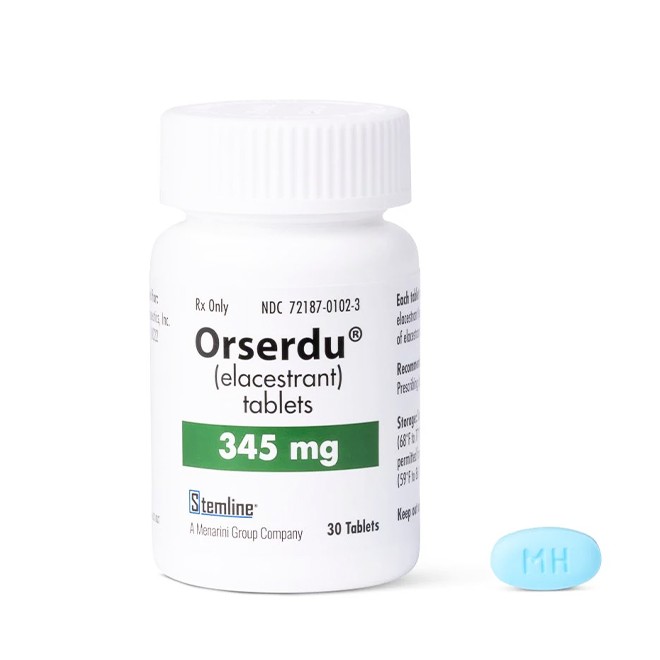
Elacestrant is a novel estrogen receptor antagonist that is primarily used to treat specific types of breast cancer. It inhibits the growth of tumor cells by targeting the ERα receptor and is suitable for patients with advanced or metastatic breast cancer who are ER-positive, HER2-negative and carry ESR1 mutations.

Indications for Elacestrant

Erastratran is a targeted therapy for selected breast cancer patients with well-defined and targeted indications. The specifics of its indications are discussed in detail below.

Treatment of ER-positive breast cancer

Eralastrant is mainly used to treat estrogen receptor (ER)-positive breast cancer patients. ER positivity means that the growth of tumor cells is dependent on estrogen stimulation, and alastran blocks this signaling pathway by antagonizing estrogen receptors, thereby inhibiting tumor progression. Clinical trials have shown that Elacestrant has shown significant efficacy in ER-positive patients.

Use in patients with ESR1 mutations

For breast cancer patients with ESR1 mutations, alalastran shows a unique advantage. ESR1 mutations may lead to resistance to traditional endocrine therapy, and Elacestrant can effectively overcome this resistance, providing a new treatment option for these patients. The study data showed that alalastrant significantly prolonged progression-free survival in patients with ESR1 mutations.

The indication of Elacestrant is focused on ER-positive breast cancer patients with ESR1 mutations, and its unique mechanism brings hope to patients who have failed traditional treatments. Let's look at who is a good candidate for this medication.

Who is Elacestrant suitable for?

Erastatran is indicated for a population with well-defined characteristics, including patients of specific gender, age, and disease status. The following is a detailed analysis of the conditions under which it applies.

Postmenopausal female patients

Erastratran is mainly indicated for postmenopausal female breast cancer patients. Postmenopausal women have low levels of estrogen in their bodies, but tumors may still rely on the ER signaling pathway to grow. Erastratran can effectively inhibit tumor progression by antagonizing the ER receptor, which has become an important treatment option for such patients.

Adult male patients

Although breast cancer is rare in men, Elacestrant is also indicated in adult men who are ER-positive and HER2-negative. Male breast cancer patients are often sensitive to endocrine therapy, and Elacestrant offers a new treatment, especially after traditional treatments have failed.

Erastratrant is indicated in postmenopausal women and adult men, but its use should be strictly clinically indicated. Next, we will discuss which groups of people should avoid this drug.

Who is the prohibited group of Elacestrant?

Erastatran is not suitable for all breast cancer patients, and certain populations should be contraindicated or used with caution. The following is a detailed analysis of the conditions under which it is disabled.

Pregnant and lactating women

Erastratran is potentially harmful to the fetus and should be contraindicated by pregnant women. Animal experiments have shown that Elacestrant may cause abnormal embryonic development. Breastfeeding women should also avoid using the drug, which can cause adverse effects on the baby through breast milk.

Patients with severe hepatic impairment

Erastratran should be contraindicated in patients with severe hepatic impairment (Child-Pugh class C). Drug metabolism is dependent on liver function, and hepatic insufficiency may lead to drug accumulation, increasing the risk of toxicity. Patients with moderate hepatic impairment should adjust the dose and use it under the guidance of a physician.

Erastratrant is prohibited in pregnant and lactating women, and patients with severe hepatic impairment, and these restrictions reflect the need for safe drug use. By understanding the indications, suitable populations, and contraindicated populations, patients and physicians can use the drug more rationally.

Note: For internal discussion among medical personnel only. For specific medication, please consult the attending physician. Drug information may change over time. For the latest information, we recommend adding a medical consultant or consulting for free online.
Elacestrant(Orserdu)
Advanced or metastatic breast cancer that is ER-positive, HER2-negative, and...
WeChat Scan
Free Inquiry
Recommended Articles
Can pregnant and lactating women use Binimetinib?
Binimetinib, also known as Mektovi, is a drug used to treat certain types of diseases, particularly melanotic lesions associated with specific gene mutations. It belongs to a class of drugs called MEK...
Precautions for Binimetinib use
Binimetinib is a targeted therapy drug that is primarily used to treat certain types of diseases, especially those associated with BRAF gene mutations.Basic information about BinimetinibBinimetinib is...
Precautions for the use of Binimetinib(Mektovi)
Binimetinib is a targeted drug used to treat specific types of lesions. This article will introduce the precautions for the use of Binimetinib to help patients better understand how to use the drug sa...
Are the adverse effects of Binimetinib(Mektovi) serious?
The severity of adverse reactions to Binimetinib(Mektovi) varies from individual to individual, but in general, most adverse reactions are manageable and not too severe, but some may be serious and re...
Elacestrant is used for the treatment of advanced or metastatic breast lesions
Elacestrant, also known as Orserdu, is an estrogen receptor antagonist used to treat advanced or metastatic breast lesions. It is indicated for postmenopausal women or adult men, especially those who ...
Elacestrant detailed instructions, precautions, efficacy, dosage introduction
Elacestrant, is an estrogen receptor antagonist used to treat ER-positive, HER2-negative, ESR1-mutated advanced or metastatic breast lesions. It blocks the growth and spread of diseased cells by inhib...
Dosage and Administration of Elacestrant(Orserdu)
Elacestrant(Orserdu) is a novel estrogen receptor antagonist designed for patients with ER-positive, HER2-negative advanced or metastatic breast cancer harboring ESR1 mutations. It inhibits the growth...
How to use Elacestrant?
Elacestrant is a novel estrogen receptor antagonist suitable for patients with specific types of advanced breast cancer. Correct use of this drug can not only improve the efficacy, but also reduce the...
Related Articles
What are the Precautions for Taking Elacestrant (Orserdu)?
Elacestrant (Orserdu) is the first oral selective estrogen receptor degrader (SERD). It was approved by the FDA in 2023 for the treatment of advanced or metastatic breast cancer that is estrogen recep...
Side Effects of Elacestrant (Orserdu)
Elacestrant (Orserdu) is an estrogen receptor antagonist, primarily indicated for the treatment of estrogen receptor (ER)-positive, human epidermal growth factor receptor 2 (HER2)-negative, ESR1-mutat...
Dosage and Administration, Recommended Dose of Elacestrant (Orserdu)
Elacestrant (Orserdu) is an estrogen receptor antagonist, primarily indicated for the treatment of postmenopausal women or adult men with ER-positive, HER2-negative, ESR1-mutated advanced or metastati...
What Are the Indications of Elacestrant (Orserdu)?
Elacestrant (Orserdu) is a novel estrogen receptor antagonist. It was approved for marketing by the U.S. FDA in 2023, providing a precise treatment option for patients with advanced breast cancer harb...
What Are the Purchase Channels for Elacestrant (Orserdu)?
Elacestrant (Orserdu) is a novel estrogen receptor antagonist that plays an important role in the treatment of ER-positive, HER2-negative, ESR1-mutated advanced or metastatic breast cancer.What Are th...
Side effects caused by Elacestrant
Elacestrant, the main component of Elacestrant, is mainly adapted to postmenopausal women or adult men with breast-related diseases. As a novel selective estrogen receptor degrader, it has shown signi...
Side effects of Elacestrant
Elacestrant is a novel estrogen receptor antagonist that provides an important therapeutic option for specific breast cancer patients. However, similar to other drugs, a series of side effects may occ...
What is the therapeutic effect of Elacestrant?
Elacestrant was developed and produced by Stemline, the United States, and was approved by the U.S. Food and Drug Administration (FDA) in January 2023, becoming the only oral selective estrogen recept...
New Drugs
Infigratinib(Truseltiq)
Treatment of previously treated, unresectable locally advanced or metastatic...
Opicapone(Ongentys)
Opicapone(Ongentys)
Adjunctive treatment to levodopa/carbidopa for reducing "off" episodes in...
Deflazacort(Emflaza)
Treatment of Duchenne muscular dystrophy (DMD) in patients aged 2 years and...
Faricimab-svoa(Vabysmo)
Treatment of neovascular age-related macular degeneration, diabetic macular...
Counselling Service
Global Drug Search
Clinical Research Recruitment
Overseas Medical Treatment
Remote Consultations
Note: Our medical consultant will contact you as soon as possible. We promise to strictly protect your privacy.
Submit
Business
  • Core products
  • Antitumor drugs
  • General drug
  • Antiviral drugs
  • Biological agents
Contact Us 
  • mailbox:info@lucius.la
Welcome to consult
ucius Pharmaceuticals (Lao) Co.,Ltd All rights reserved