info@seagull-health.com
SeagullHealth
语言:
search
new
Indications of Symproic
501
Article source: Seagull Pharmacy
Jul 02, 2025

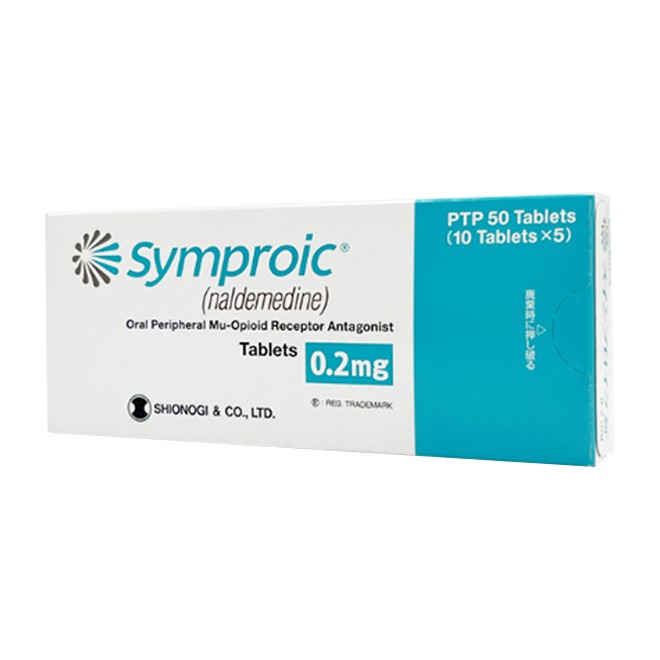
Naldemedine(Symproic) is a targeted treatment for opioid-induced constipation (OIC), and its clinical application provides a new solution for specific patient groups. This article will systematically analyze the characteristics and usage specifications of the drug from three core dimensions: indications, contraindications, and treatment effects, to help medical practitioners and patients understand its application value more comprehensively.

Indications of Symproic

The core indications of Symproic focus on constipation caused by opioids in patients with chronic non-disease pain. By precisely acting on μ opioid receptors, the drug can relieve intestinal dysfunction while taking into account the stability of patient pain management.

Application in adult patients with chronic non-disease pain

Symproic is suitable for adult patients who use opioids for a long time, especially those who need continuous analgesia for chronic non-disease pain (such as osteoarthritis or neuropathic pain). Its mechanism of action can relieve intestinal motility inhibition and improve constipation symptoms without interfering with the analgesic effect of opioids.

Expanded use in patients with chronic pain related to diseases

For patients with chronic pain caused by previous disease treatment or the disease itself, if opioids are needed for a long time and the dose is not adjusted frequently, Naldemedine is also suitable. This expansion of the scope of application provides support for intestinal function management for disease survivors or patients in a stable period.

The design of the indications of Naldemedine reflects the attention to the individual needs of patients. Its scope of application covers both common scenarios of non-disease pain and the particularity of disease-related pain, providing flexible options for clinical treatment.

Contraindications of Naldemedine

Although Naldemedine has obvious efficacy in specific populations, some patients need to strictly avoid using it due to physiological characteristics or potential risks. Identifying contraindications is a key link in the safety of patient medication.

Pregnant women and lactating women

The use of Naldemedine by pregnant women may cause fetal opioid withdrawal reactions. The existing data is insufficient to evaluate its safety. It should be used with caution only when the potential benefits clearly outweigh the risks. Lactating women need to weigh the potential effects of the drug on the baby. It is recommended to suspend breastfeeding or stop the drug to avoid withdrawal symptoms in the baby.

Patients with severe liver dysfunction

This drug is contraindicated in patients with severe liver damage because its metabolism may be significantly affected, increasing the risk of adverse reactions. Although patients with mild or moderate liver dysfunction do not need to adjust the dose, they still need to closely monitor liver function changes.

The definition of contraindications is based on the principle of safety first. Clinicians need to conduct risk assessment based on the specific conditions of the patients and make sure that the treatment plan meets the requirements of individualized medicine.

Is Naldemedine effective?

The therapeutic effect of Naldemedine needs to be comprehensively evaluated from three dimensions: effectiveness, safety, and long-term management. Existing clinical data show that it has a clear advantage in alleviating OIC, but the medication strategy needs to be optimized based on the specific conditions of the patients.

Effectiveness data and clinical feedback

Studies have shown that a daily dose of 0.2 mg of Naldemedine can significantly improve the frequency of intestinal movements in patients, and about 70% of the users have symptom relief within 4 weeks of treatment. Its rapid onset (Tmax is about 0.75 hours) further improves treatment compliance.

Adverse reactions and risk management

Common adverse reactions include abdominal pain, diarrhea and nausea, with an incidence of about 2%-5%. For patients at risk of gastrointestinal perforation or damaged blood-brain barrier, monitoring should be strengthened and medication regimens should be adjusted in a timely manner to balance efficacy and safety.

The therapeutic effect of Naldemedine acid is good in most patients, but the risk needs to be minimized through standardized medication and regular evaluation. In clinical practice, formulating a dynamic management plan based on individual differences in patients is the core strategy to improve overall efficacy.

Note: For internal discussion among medical personnel only. For specific medication, please consult the attending physician. Drug information may change over time. For the latest information, we recommend adding a medical consultant or consulting for free online.
Naldemedine(Symproic)
Opioid-induced constipation (OIC) in adult patients with chronic non-cancer...
WeChat Scan
Free Inquiry
Recommended Articles
How much is a course of treatment for Quviviq?
Quviviq is a drug for the treatment of insomnia in adults, and its course cost, specifications and storage methods have attracted much attention from patients. This article will elaborate on thes...
How to buy Quviviq?
Quviviq, a drug used to treat insomnia in adults, has gained attention for its unique effects. Since the drug is not yet available in China, patients need to purchase it through specific channels. Thi...
Quviviq indications
Quviviq is a new generation of insomnia treatment drugs, and its unique pharmacological effects provide a new option for improving sleep disorders. This article will introduce the clinical applic...
Instructions for Quviviq: action and efficacy, dosage, side effects, precautions
Quviviq is a novel dual orexin receptor antagonist that was approved by the US FDA in 2022 for the treatment of insomnia in adults. This article will systematically introduce the core information...
Instructions for Naldemedine: effects and efficacy, dosage, side effects, precautions
Naldemedine (Symproic) is a drug used to treat opioid-induced constipation (OIC) in adult patients with chronic non-cancer pain. It works by targeting μ opioid receptors and can effectively relieve co...
How to buy Naldemedine?
The main ingredient of Naldemedine is Symproic. As an effective drug for treating constipation, it is especially suitable for patients with constipation caused by long-term use of opioids.How to ...
How much does Naldemedine cost?
Naldemedine is a drug used to treat opioid-induced constipation (OIC) in adult patients with chronic non-pathological pain. It helps relieve constipation symptoms by selectively antagonizing μ op...
How to relieve the side effects of Naldemedine?
Naldemedine is a drug used to treat constipation caused by opioids. Although it is effective, it may also be accompanied by some side effects, such as abdominal pain, diarrhea, nausea, etc. Under...
Related Articles
Side Effects of Naldemedine (Symproic)
Naldemedine (Symproic) is a weekly-acting opioid antagonist used for the treatment of opioid-induced constipation (OIC), providing patients with an effective relief option.Side Effects of Naldemedine ...
What Are the Precautions for Taking Naldemedine (Symproic)?
Naldemedine (Symproic) is a dedicated medication for the treatment of opioid-induced constipation (OIC). As a peripherally acting opioid receptor antagonist, it effectively relieves OIC symptoms while...
What Are the Indications of Naldemedine (Symproic)?
Naldemedine (Symproic) is an oral medication specifically designed for the treatment of opioid-induced constipation (OIC). As a selective peripheral μ-opioid receptor antagonist, it relieves constipat...
What Are the Purchase Channels for Naldemedine (Symproic)?
Naldemedine (Symproic) is a specific medication for treating opioid-induced constipation (OIC), and its clinical application has become increasingly widespread. With the growth in demand, the market h...
Usage and Dosage of Symproic
Symproic is a targeted drug used to treat constipation (OIC) in patients with chronic non-pathological pain caused by opioids. It works by selectively antagonizing μ opioid receptors, helping to relie...
Side effects and precautions of Naldemedine
Symproic(Naldemedine) is a drug used to treat opioid-induced constipation (OIC) in adult patients with chronic non-cancer pain. This article will focus on side effects and precautions, indications, an...
Effects and efficacy of Naldemedine
Naldemedine is a therapeutic drug for opioid-induced constipation (OIC). It relieves the problem of intestinal function inhibition by specifically antagonizing μ opioid receptors. Its unique mech...
How to relieve the side effects of Naldemedine?
Naldemedine is a drug used to treat constipation caused by opioids. Although it is effective, it may also be accompanied by some side effects, such as abdominal pain, diarrhea, nausea, etc. Under...
New Drugs
Infigratinib(Truseltiq)
Treatment of previously treated, unresectable locally advanced or metastatic...
Opicapone(Ongentys)
Opicapone(Ongentys)
Adjunctive treatment to levodopa/carbidopa for reducing "off" episodes in...
Deflazacort(Emflaza)
Treatment of Duchenne muscular dystrophy (DMD) in patients aged 2 years and...
Faricimab-svoa(Vabysmo)
Treatment of neovascular age-related macular degeneration, diabetic macular...
Counselling Service
Global Drug Search
Clinical Research Recruitment
Overseas Medical Treatment
Remote Consultations
Note: Our medical consultant will contact you as soon as possible. We promise to strictly protect your privacy.
Submit
Business
  • Core products
  • Antitumor drugs
  • General drug
  • Antiviral drugs
  • Biological agents
Contact Us 
  • haiousales@gmail.com
Welcome to consult
Seagull Pharmacy.,Ltd All rights reserved